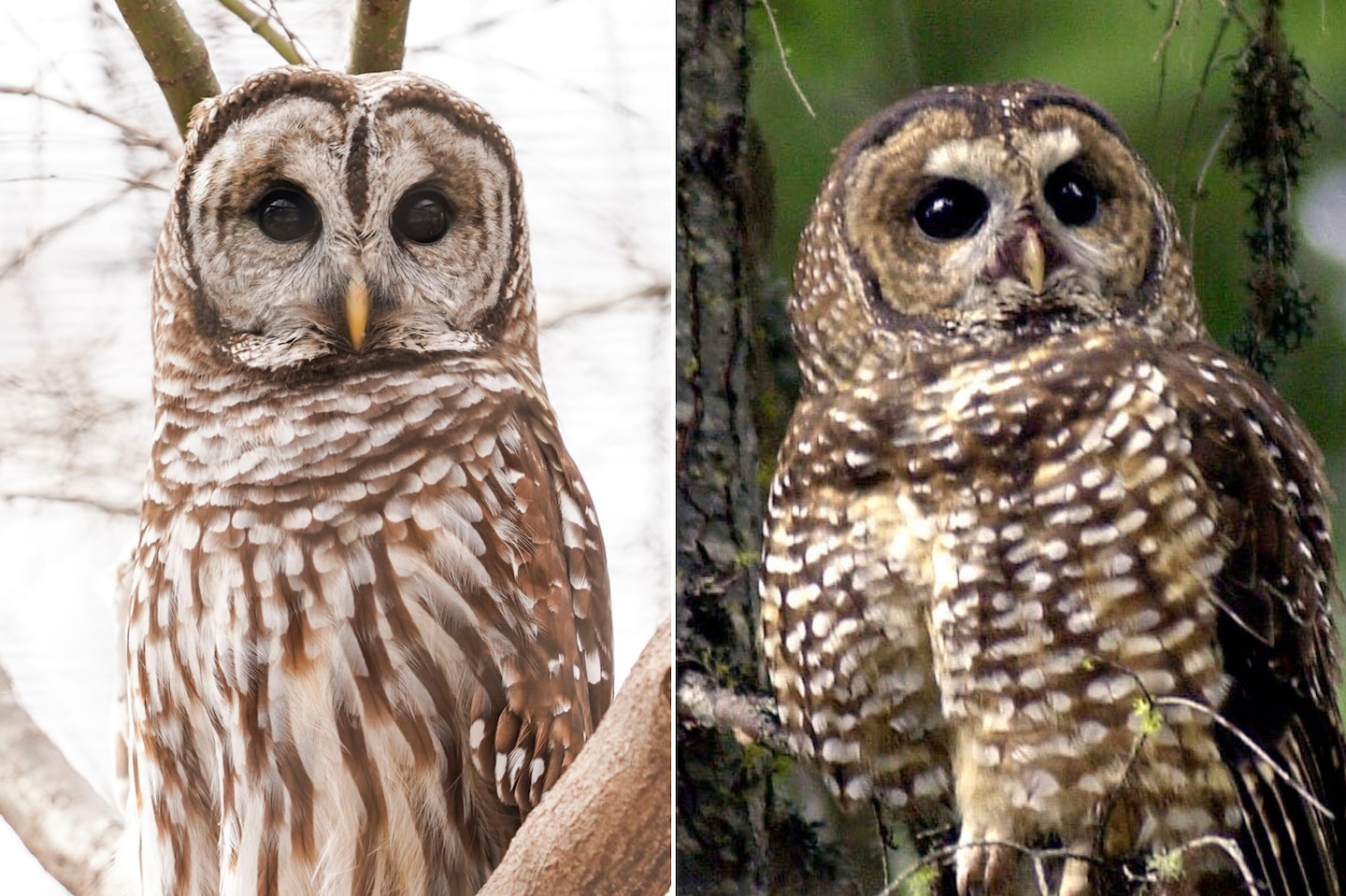
In the dense, shadowed forests of the Pacific Northwest, a silent battle unfolds—one that will determine the survival of a species and redefine the ecological balance of an entire region. The barred owl, with its booming call and adaptable nature, has encroached upon the historical domain of the spotted owl, a creature whose reproductive success is crucial for its persistence. The growing dominance of barred owls is not merely a story of one species overwhelming another; it is a complex ecological narrative laced with consequences that ripple throughout the environment. Understanding the profound impact of barred owls on the reproductive success of spotted owls requires a deep dive into the interplay of competition, behavioral changes, habitat dynamics, and conservation efforts.
Ecological Encroachment: Barred Owl Expansion and Its Consequences
The barred owl, native to eastern North America, began expanding its range westward in the early 20th century, arriving in the Pacific Northwest where the spotted owl had reigned almost unchallenged for millennia. This territorial expansion is more than a shift in geography; it is a clash of ideologies in the animal kingdom—adaptability versus specialization. Barred owls thrive in a broader range of habitats, including fragmented forests and urban-adjacent environments, while spotted owls are habitat specialists relying on old-growth forests with dense canopies. The arrival of barred owls has brought about intense interspecific competition, significantly affecting the reproductive habits and success of their spotted counterparts.
Direct Competition and its Effect on Spotted Owl Nesting Behavior
Competition between barred and spotted owls manifests most visibly during the breeding season. Barred owls, larger and more aggressive, frequently usurp prime nesting territories, displacing spotted owls from their preferred sites. This displacement forces spotted owls to seek suboptimal habitats—areas with denser underbrush, younger forests, or locations closer to human disturbances. The resultant stress and habitat degradation have cascading effects on the reproductive cycle of spotted owls.
Whereas spotted owls traditionally select nesting sites that offer extensive cover and proximity to suitable prey, competition-induced relocations reduce accessibility to resources essential for successful breeding. Nesting in less ideal territories often leads to smaller clutch sizes, lower hatchling survival rates, and reduced fledgling success. Furthermore, barred owls’ frequent territorial intrusions lead to nest abandonment or destruction, directly curbing reproductive output.
Alterations in Prey Dynamics and Nutritional Stress
Both barred and spotted owls rely heavily on small mammals such as flying squirrels and woodrats. However, barred owls’ broader dietary spectrum enables them to outcompete spotted owls for prime prey. This disparity causes a notable shift in prey availability and quality for the spotted owl population, precipitating nutritional stress.
The consequence of diminished prey abundance resonates acutely during the incubation and chick-rearing phases. Nutritional deficits delay egg laying and elongate incubation periods, while insufficient food reduces chick growth rates and survival prospects. The plight of the spotted owl in this nutritional tug-of-war accentuates the species’ vulnerability, especially in the face of fluctuating environmental conditions.
Behavioral Shifts and Reproductive Timing Disruption
In an environment overshadowed by the barred owl’s presence, spotted owls exhibit notable alterations in breeding behaviors. Stress induced by territorial threats triggers earlier or delayed breeding attempts, sometimes disrupting the synchrony necessary for optimal reproductive success. Such phenological shifts carry profound implications; mistimed breeding may lead to asynchronous hatching, exposing hatchlings to peak periods of scarce food or adverse weather conditions.
Additionally, chronic stress from barred owl encounters destabilizes pair bonds among spotted owls. The weakening of these bonds compromises joint nesting efforts and efficient provisioning of offspring, further imperiling reproduction. The intricacies of these behavioral adaptations reflect an ongoing evolutionary pressure—one that the spotted owl must navigate carefully or face extinction.
Genetic Implications and Long-Term Population Viability
Beyond immediate reproductive challenges, the barred owl’s dominance insinuates genetic repercussions for spotted owls. Reduced numbers and breeding success translate into smaller, more fragmented populations, increasing the likelihood of inbreeding and genetic drift. The resultant decrease in genetic diversity undermines the species’ resilience to disease, environmental changes, and habitat disturbances.
Moreover, barred and spotted owls occasionally interbreed, raising concerns about genetic swamping, where spotted owl genes are diluted. This hybridization blurs species boundaries and complicates conservation strategies aimed at preserving the genetic integrity of spotted owls. The stakes are high—not only is the physical survival of spotted owls at risk, but their evolutionary identity hangs in the balance as well.
Conservation Responses: Active Management and Future Outlook
Mitigating the detrimental impact of barred owls on spotted owl reproduction has demanded unprecedented conservation efforts. Wildlife officials have undertaken active management strategies, including the controversial removal of barred owls within critical spotted owl habitats. These interventions aim to alleviate competition pressure and restore breeding ground sanctity.
Beyond direct population control, conservationists emphasize habitat preservation and restoration—safeguarding old-growth forests that provide the necessary structural complexity for spotted owl breeding success. Ensuring contiguous corridors and minimizing human disturbance are central pillars in these conservation blueprints.
Additionally, ongoing research into the ecological interactions between these owls, alongside monitoring reproductive indicators, informs adaptive management. The hope is that a nuanced, multifaceted approach can bolster spotted owl populations and preserve their silent call amid the forest canopy for generations to come.