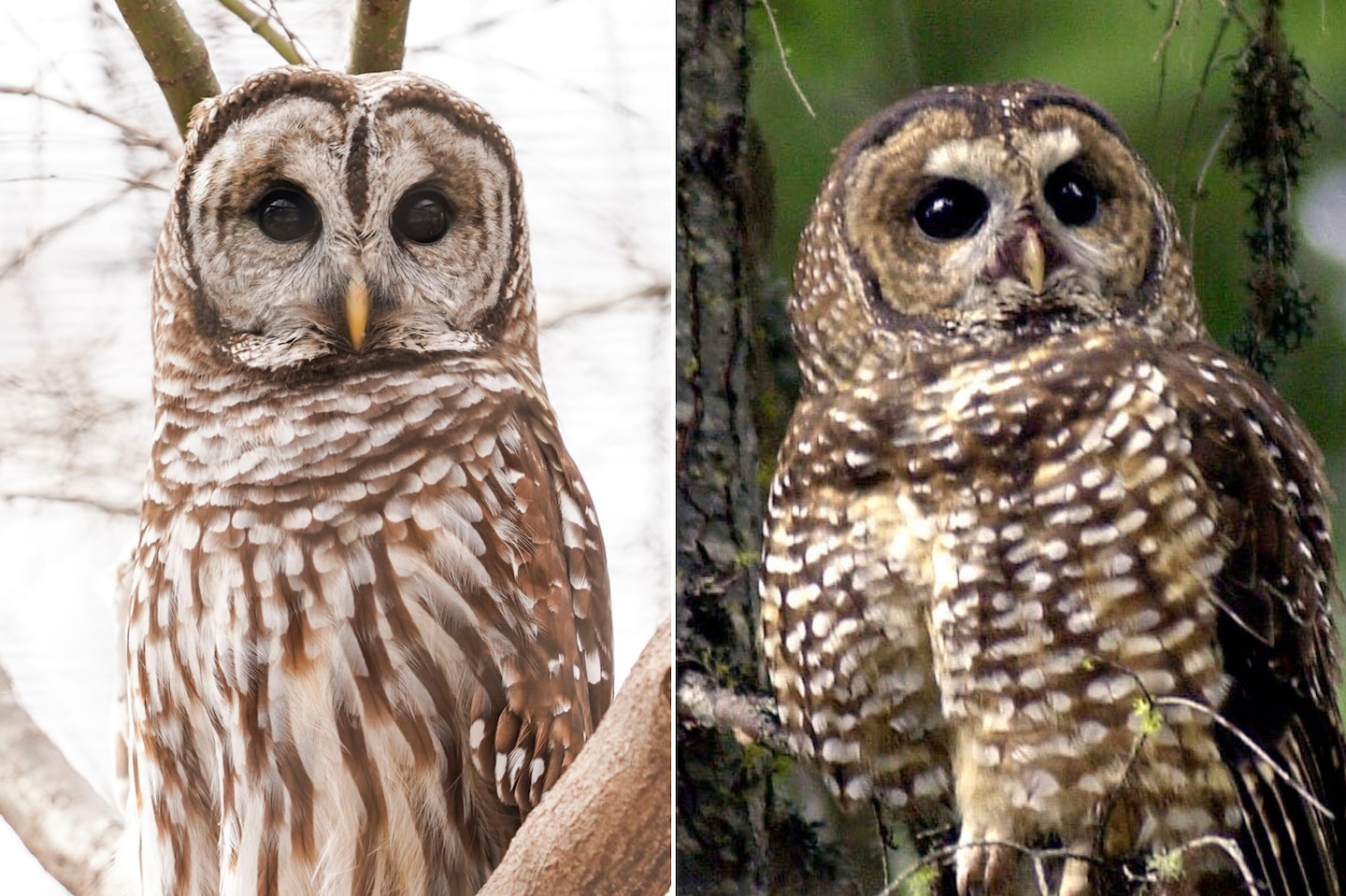
The forests of the Pacific Northwest hum with secrets—ancient whispers of moss-draped firs, the rustle of unseen wings, and the haunting trill of the spotted owl, a bird so emblematic of wilderness that its survival has become a battleground for conservation ethics. Yet, in the shadow of this iconic creature, another owl thrives: the barred owl, a relative newcomer whose unchecked expansion threatens to unravel decades of conservation efforts. The proposed solution? Lethal removal of half a million barred owls. But is this a pragmatic necessity or a moral failure disguised as ecological pragmatism? The answer lies not in the trees, but in the way we frame the natural world—and who gets to decide which lives are worth saving.
The Illusion of Balance: When Conservation Becomes Erasure
To call the barred owl an “invasive species” is to oversimplify a complex ecological narrative. Unlike the deliberate introductions of starlings or cane toads, barred owls arrived naturally, their range expanding southward as climate shifts and deforestation fragmented their northern habitats. Yet, their presence has become a convenient scapegoat for the spotted owl’s decline—a decline hastened by logging, habitat loss, and the very policies that now seek to “save” it by eliminating its competitor. The irony is stark: we mourn the spotted owl’s dwindling numbers while sanctioning the systematic culling of another species, as if nature’s balance can be restored through bloodshed rather than coexistence.
This isn’t just about owls. It’s about the anthropocentric hubris that assumes we can engineer ecosystems without consequence. Conservation, at its core, is an act of humility—a recognition that human intervention, no matter how well-intentioned, distorts the very wildness we claim to protect. When we reduce biodiversity to a ledger of winners and losers, we betray the interconnectedness of life, where every creature, no matter how common, plays a role in the grand symphony of the forest.
The Specter of Nativism: Who Decides Which Species Belongs?
The barred owl’s crime, in the eyes of conservationists, is its success. It outcompetes the spotted owl in shared territories, adapting with alarming efficiency to the altered landscapes humans have created. But adaptation is not a moral failing. The barred owl did not ask to be here; it followed the same ecological imperatives that once guided the spotted owl’s ancestors. To label it an invader is to impose a human-centric value system onto nature, where indigenous species are granted sacred status while newcomers are deemed disposable.
This nativist logic is dangerous. It echoes the xenophobic rhetoric that permeates human societies, where borders and belonging are policed with violence. If we justify the eradication of barred owls because they “don’t belong,” what’s to stop us from extending that same ruthless logic to other species—or, indeed, to human communities deemed “out of place”? The spotted owl, after all, is not native to the Pacific Northwest either; it evolved elsewhere and found refuge in these forests. Nature, unlike human borders, has no fixed addresses. To enforce ecological nativism is to deny the fluidity of life itself.
The Cost of Convenience: Can We Save One Species Without Destroying Another?
The proposed culling of 450,000 barred owls is framed as a last resort, a desperate measure to buy time for the spotted owl. But at what cost? The logistics alone are staggering: trained sharpshooters, helicopters, and the inevitable collateral damage of non-target species. And for what? To preserve a habitat that has already been irrevocably altered by human hands? The spotted owl’s decline is not solely the barred owl’s fault; it is the result of decades of industrial logging, urban sprawl, and climate change. Yet, instead of addressing these root causes, we turn to a quick fix that satisfies our need for control.
There are alternatives. Habitat restoration, nest site management, and even assisted migration have been proposed as less violent solutions. But these require patience, investment, and a willingness to accept that some losses are inevitable. The barred owl is not the enemy; it is a symptom of our own failures. By focusing on its removal, we avoid confronting the harder truth: that conservation is not just about saving species, but about reckoning with the ways we have reshaped the planet in our image.
The Moral Weight of the Gun: Who Pulls the Trigger?
There is a chilling detachment in the language used to describe this culling. “Lethal removal” sounds clinical, almost sanitized. But make no mistake: this is a euphemism for mass killing. The barred owl, like all creatures, experiences fear, pain, and the instinct to survive. To reduce its existence to a number on a balance sheet is to strip it of its intrinsic value. And who are we to decide which lives are expendable? Conservationists, policymakers, and the public all share in this moral burden, yet the act itself is outsourced to marksmen whose hands will bear the weight of every trigger pull.
This is not just an ecological dilemma; it is a philosophical one. If we accept that some species must die so others may live, where do we draw the line? Will we next cull coyotes to save pronghorns? Cull raccoons to save songbirds? The slippery slope is real, and it leads to a world where nature is not a thriving ecosystem but a curated zoo, where only the species we deem “worthy” are allowed to persist. Is this the legacy we want to leave—a planet where life is preserved only at the whim of human preference?
The Deeper Fascination: Why Do We Cling to the Spotted Owl’s Survival?
There is something deeply human about our obsession with the spotted owl. It is a creature of myth and symbolism, its large, dark eyes gazing out from conservation posters as a silent plea for wilderness. But our fascination is not purely altruistic. The spotted owl has become a proxy for our guilt—our complicity in deforestation, our failure to curb climate change, our inability to coexist with the wild without dominating it. In saving the spotted owl, we seek redemption, a way to prove that we are not the architects of its demise but its saviors.
Yet, this narrative is incomplete. The barred owl, too, is a symbol—of nature’s resilience, of the unpredictability of life, and of the ways in which human intervention, no matter how well-intentioned, can backfire. To demonize it is to ignore the lessons it offers: that life adapts, that ecosystems are not static, and that our attempts to control nature are often futile. Perhaps the real moral dilemma is not whether to kill barred owls, but whether we can accept that some losses are part of the natural order—and that our role is not to play god, but to witness, to learn, and to adapt alongside the creatures we share this planet with.