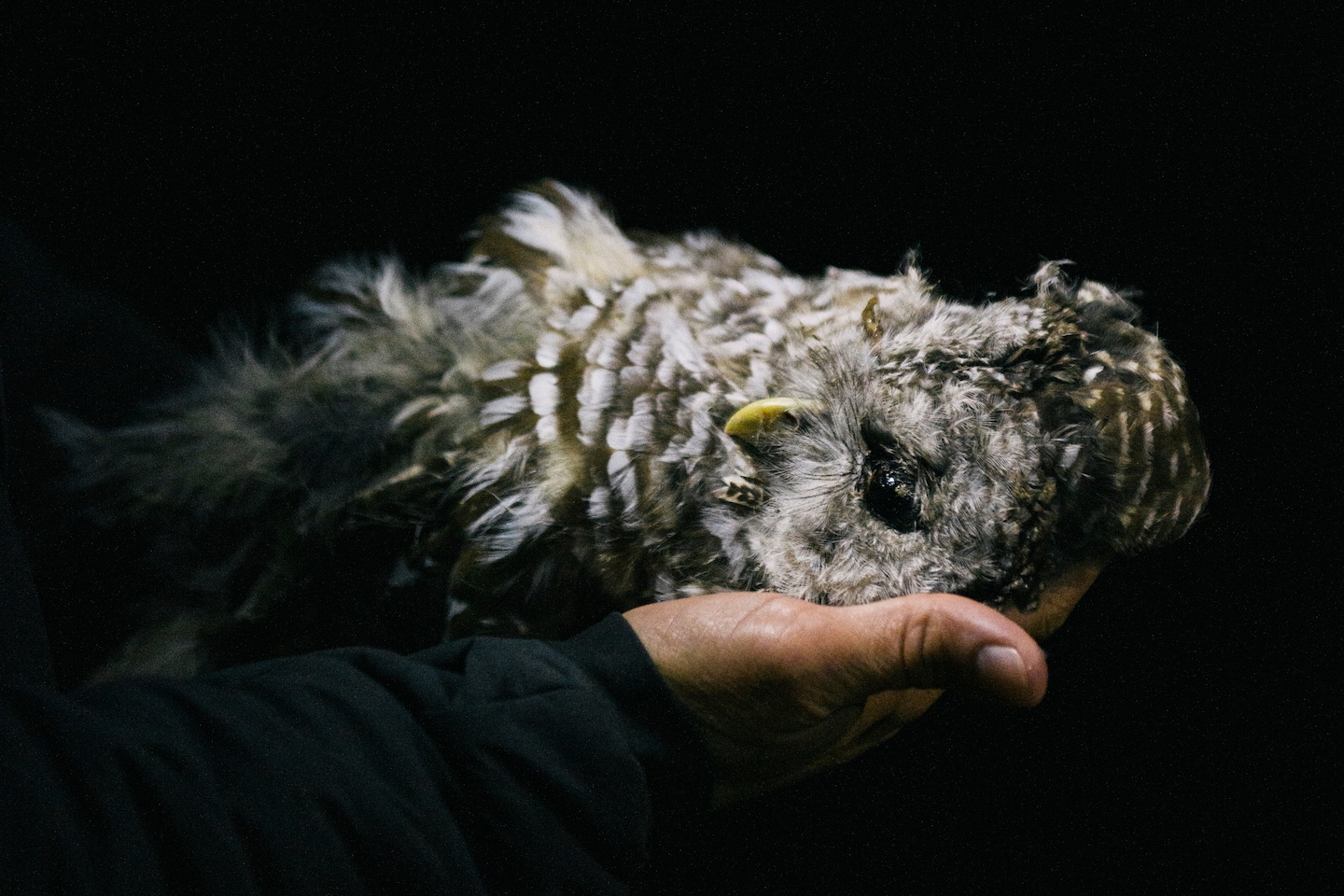
The symphony of ancient forests, where the hoot of the spotted owl once echoed like a whispered secret of the wild, now faces a discordant disruption. In the shadowed canopies of the Pacific Northwest, a silent war rages—not between predator and prey, but between conservation and eradication. Government agencies, universities, and conservation groups have forged an uneasy alliance, their collective gaze fixed on two feathered protagonists: the barred owl, an interloper from the east, and the beleaguered spotted owl, a symbol of ecological fragility. This collaboration is not merely a scientific endeavor; it is a high-stakes negotiation with nature itself, where every data point could tip the scales toward survival or extinction. For those who care deeply about the fate of these birds, the story unfolding is one of urgency, innovation, and the uneasy balance between human intervention and the autonomy of the wild.
The Collaborative Framework: Agencies, Universities, and NGOs in Concert
The effort to study and manage the barred and spotted owl populations is a testament to the power of collective action. At the heart of this collaboration are government agencies like the U.S. Fish and Wildlife Service, the U.S. Forest Service, and state wildlife departments, each bringing their own mandates and resources to the table. They are joined by academic institutions—from the University of Washington to Oregon State University—whose researchers design studies, analyze data, and publish findings that shape policy. Non-governmental organizations, such as the Audubon Society and Defenders of Wildlife, act as watchdogs and advocates, ensuring that the science translates into tangible protections for the owls.
This alliance is not without its tensions. Agencies operate under legal constraints, universities prioritize peer-reviewed breakthroughs, and NGOs demand swift, decisive action. Yet, when these entities converge, their synergy creates a robust ecosystem of knowledge. Field biologists track owl movements via GPS tags, geneticists unravel the mysteries of hybridization between the two species, and ecologists model the cascading effects of barred owl removals on forest dynamics. The result is a multi-layered approach that leaves no stone unturned—no feather unexamined.
Field Studies: Tracking the Silent Hunters of the Canopy
To understand the owls, one must first learn to listen. Field studies are the backbone of this collaborative effort, where researchers venture into the dense, mist-shrouded forests to observe these nocturnal hunters. Equipped with parabolic microphones and thermal imaging cameras, teams record the distinctive calls of spotted and barred owls, mapping their territories with precision. These acoustic surveys are not merely academic exercises; they are lifelines. By documenting the decline of spotted owl populations in areas where barred owls have established dominance, scientists provide the empirical evidence needed to justify controversial management actions.
But the work is grueling. Researchers endure weeks of isolation, battling the elements and the sheer physical demands of navigating rugged terrain. Some employ drones to survey remote nests, while others rely on trained detection dogs to locate owl pellets—tiny time capsules of dietary clues. Each data point, whether a feather found beneath a roost or a GPS ping from a tagged bird, contributes to a growing body of knowledge that could determine the future of these species. The dedication is unwavering, for the stakes are nothing less than the soul of the forest.
Genetic Insights: The Dance of DNA and Adaptation
Beneath the feathers and talons lies a deeper story—one written in the language of genes. Genetic studies have revealed a troubling truth: the barred owl, once a stranger to the West Coast, is now interbreeding with the spotted owl, creating hybrids that blur the lines of species identity. This hybridization is not a mere curiosity; it is an existential threat. The spotted owl’s genetic purity is eroding, and with it, the unique adaptations that have allowed it to thrive in its niche for millennia.
Researchers are racing to decode the implications of this genetic mixing. Are the hybrids more resilient, or do they dilute the spotted owl’s resilience? Can the barred owl’s adaptability be harnessed to bolster the spotted owl’s survival, or is intervention the only recourse? The answers are complex, but the urgency is clear. In laboratories from Seattle to Corvallis, scientists are sequencing genomes, analyzing mitochondrial DNA, and modeling the evolutionary trajectories of these birds. Their work is a reminder that conservation is not just about habitats and policies—it is about the very essence of life.
Policy and Public Perception: The Delicate Art of Advocacy
Science alone cannot save the owls; it must be translated into action, and that requires navigating the treacherous waters of policy and public opinion. Government agencies face a Herculean task: balancing the ecological imperative to protect the spotted owl with the ethical dilemma of culling the barred owl. The latter, though invasive, is not inherently evil—it is simply following the dictates of survival in a landscape altered by human hands. Yet, the public’s perception of such actions is often colored by emotion rather than ecology. Animal rights activists decry the killings as barbaric, while conservationists argue that inaction is a death sentence for the spotted owl.
This tension plays out in public forums, legislative hearings, and media campaigns. Advocacy groups leverage social media to amplify the plight of the spotted owl, while industry stakeholders—timber companies, for instance—push back against restrictions that could hamper economic activity. The result is a fraught dialogue, where data and rhetoric collide. Yet, the collaborative efforts of agencies and NGOs have begun to bridge this divide. Transparent reporting, community engagement, and adaptive management strategies are slowly shifting the narrative from conflict to collaboration. The goal is not to demonize the barred owl but to acknowledge the role of human activity in its proliferation—and to act accordingly.
Technology and Innovation: The Future of Owl Conservation
The fight to save the spotted owl is being waged not just in the forests but in the realm of technology. Innovations in tracking, modeling, and data analysis are revolutionizing conservation efforts. Artificial intelligence now assists in analyzing vast datasets of owl calls, identifying individual birds with eerie accuracy. Satellite imagery and LiDAR mapping reveal the subtle changes in forest structure that could make or break an owl’s territory. Even the humble camera trap has evolved, capturing not just images but behavioral patterns that were once invisible to human observers.
One of the most promising advancements is the use of bioacoustics—recording and analyzing the vocalizations of owls to monitor populations without direct human interference. This non-invasive technique allows researchers to study owls in their natural habitats without causing disturbance, a critical consideration in conservation. Meanwhile, predictive modeling is helping agencies anticipate the spread of barred owls and identify priority areas for intervention. These tools are not just gadgets; they are lifelines, offering a glimpse into a future where technology and tradition converge to protect the wild.
Community Engagement: The Role of Local Voices in Conservation
No conservation effort can succeed without the support of the communities that share the land with these birds. Indigenous tribes, whose ancestral ties to the forest run deep, have become vital partners in owl conservation. Their traditional ecological knowledge, passed down through generations, offers insights that modern science often overlooks. Collaborative projects, such as habitat restoration and cultural education, are fostering a sense of stewardship among local residents. Meanwhile, citizen science initiatives invite hikers, birdwatchers, and schoolchildren to contribute to data collection, turning passive observers into active participants in the owls’ survival.
The engagement extends beyond the forest. Ranchers, loggers, and rural residents are being brought into the conversation, their concerns and livelihoods acknowledged in the push for sustainable management. This inclusivity is not just a moral imperative; it is a strategic one. When communities feel invested in the outcome, they become advocates, not adversaries. The result is a conservation model that is as much about people as it is about owls—a reminder that the fate of the wild is intertwined with the fate of humanity.
The Road Ahead: Challenges and Hope in Equal Measure
The path forward is fraught with challenges, but it is not without hope. The barred owl’s expansion is relentless, its adaptability a testament to nature’s tenacity. The spotted owl, once a symbol of resilience, now faces an uncertain future. Yet, the collaborative efforts of agencies, scientists, and communities offer a glimmer of optimism. Each study, each policy adjustment, each technological leap is a step toward equilibrium. The question is not whether we can save the owls, but how far we are willing to go to do so.
For those who listen closely, the forests still whisper their secrets. The hoot of an owl, whether spotted or barred, is a reminder of the wild’s enduring spirit. And in that spirit lies the hope that, with care and collaboration, we can strike a balance—one that honors the past, protects the present, and secures the future of these magnificent birds.