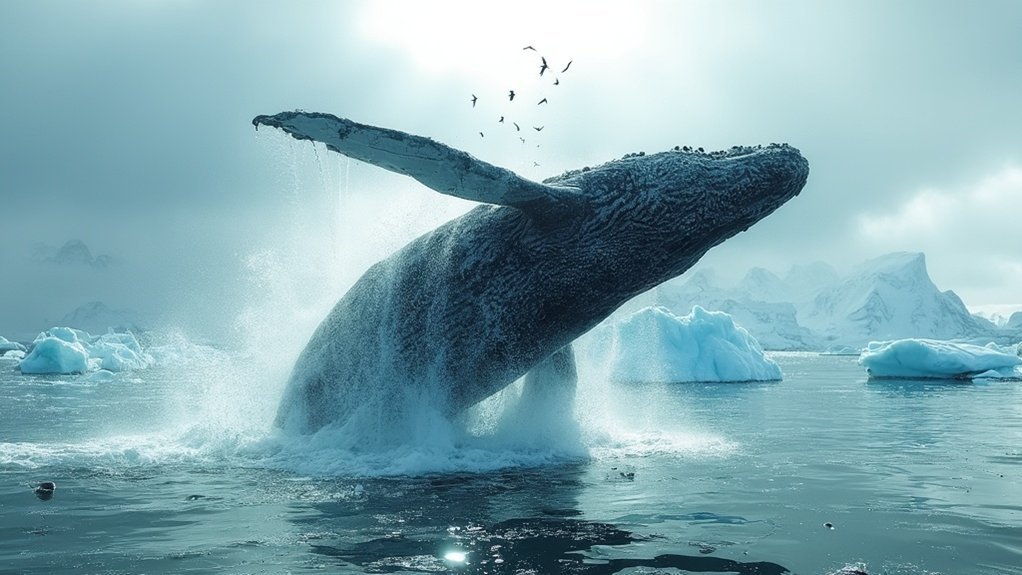
The Arctic is a realm of stark beauty and relentless extremes, where the snow whispers secrets to those who listen. Yet beneath its frozen veneer, a crisis unfurls—one that threatens the survival of its most iconic inhabitants. Among them, the snowy owl, a creature of paradox, thrives in the cold yet depends on the delicate balance of its habitat. As the Arctic warms at an alarming rate, these birds face a precarious future. But hope flickers in the form of habitat restoration, a beacon of resilience that could help them adapt to a changing world. This is not just a story of survival; it’s a testament to the interconnectedness of life and the power of human intervention.
The Arctic’s Fragile Balance and the Snowy Owl’s Plight
The Arctic is a land of contradictions—a place where perpetual daylight in summer gives way to months of unyielding darkness, where temperatures plummet to levels that would freeze most creatures solid. Yet, the snowy owl, with its piercing golden eyes and snowy plumage, has evolved to master this unforgiving environment. These birds are not merely survivors; they are apex predators, their presence a barometer of ecological health. But their world is unraveling. The Arctic is warming at more than twice the global average, a phenomenon known as Arctic amplification. Ice retreats, permafrost thaws, and ecosystems fracture under the strain. For the snowy owl, this means dwindling prey populations, disrupted nesting grounds, and a landscape that no longer aligns with its ancient rhythms.
The snowy owl’s diet, once a reliable tapestry of lemmings and other small mammals, is now a patchwork of scarcity. Lemmings, those unassuming rodents that form the backbone of the Arctic food web, are declining due to shifting vegetation patterns and increased predation. Without them, the owls starve. Their breeding success hinges on the abundance of these prey, and as the cycles of abundance falter, so too does the owl’s ability to reproduce. The Arctic is no longer the predictable fortress it once was; it is a place of flux, where the old rules no longer apply.
The Science of Habitat Restoration: A Lifeline for the Future
Habitat restoration is not a mere act of charity; it is a strategic intervention, a deliberate effort to rewild the Arctic’s fractured landscapes. Scientists and conservationists are turning to this approach with growing urgency, recognizing that passive protection is no longer sufficient. Restoration is about more than planting a few shrubs or reintroducing lost species—it is about reconstructing the very fabric of an ecosystem. In the Arctic, this means addressing the root causes of decline: thawing permafrost, eroding coastlines, and the loss of critical vegetation.
One of the most promising strategies is the restoration of peatlands, those waterlogged ecosystems that act as carbon sinks and havens for biodiversity. Peatlands cover vast swaths of the Arctic, but they are under siege from warming temperatures and human encroachment. By stabilizing these wetlands, conservationists can slow the release of stored carbon, mitigate further warming, and create refuges for lemmings and other prey species. These restored habitats become oases in a desert of change, offering the snowy owl a fighting chance.
Another frontier in restoration is the revival of willow and birch shrublands, which are expanding in some parts of the Arctic due to warming. While this might seem beneficial, it can also lead to overgrowth that outcompetes the low-lying vegetation lemmings depend on. Careful management—such as controlled burns or targeted grazing—can restore balance, ensuring that the understory remains a haven for prey. These interventions are not without risk, but they are a necessary hedge against the chaos of unchecked change.
The Role of Indigenous Knowledge in Restoration Efforts
The Arctic has been stewarded by Indigenous peoples for millennia, their knowledge woven into the land like the roots of ancient trees. Their insights are not just valuable; they are indispensable. Indigenous communities have long observed the subtle shifts in animal behavior, plant growth, and weather patterns, and their traditional ecological knowledge offers a roadmap for restoration that Western science alone cannot provide. Collaborative projects that blend Indigenous wisdom with modern conservation techniques are proving to be the most effective.
For example, the Inuit have long used controlled burns to manage landscapes, a practice that can be adapted to restore shrublands without the need for heavy machinery. Similarly, their understanding of animal migration routes can guide the placement of protected areas, ensuring that snowy owls and their prey have safe passage. These partnerships are not just about saving a species; they are about preserving a way of life, one that has coexisted with the Arctic’s rhythms for generations.
The Snowy Owl’s Adaptive Strategies: A Glimpse into Resilience
Nature is not static, and neither are its creatures. The snowy owl, in its quiet way, is already adapting to the changes wrought by a warming Arctic. Some populations are shifting their ranges northward, following the retreating ice. Others are altering their hunting strategies, taking advantage of new prey species that are moving into the region. These adaptations are a testament to the owl’s evolutionary ingenuity, but they are not without limits. Without restored habitats, these adaptations may not be enough to prevent collapse.
The owl’s ability to thrive in such extreme conditions has long fascinated scientists and laypeople alike. Their nomadic lifestyle, their ability to endure months of darkness, and their striking appearance have earned them a place in folklore and art. But beneath the surface of this fascination lies a deeper truth: the snowy owl is a mirror, reflecting the health of the Arctic itself. When the owl struggles, the ecosystem is in distress. Restoration, then, is not just about saving a bird—it is about healing a land.
The Challenges and Ethical Considerations of Restoration
Restoration is not a panacea. It is a complex, often contentious process that requires careful consideration of unintended consequences. Introducing species to restore balance, for example, can backfire if those species become invasive. Similarly, large-scale interventions like geoengineering to cool the Arctic carry risks that are not yet fully understood. The ethical dimensions of restoration are profound: Who decides which habitats to restore? Who benefits from these efforts? These questions demand transparency, collaboration, and a commitment to equity.
There is also the challenge of scale. The Arctic is vast, and restoration efforts are, by necessity, localized. A restored peatland in one region may not offset the loss of habitat elsewhere. This is where global action becomes essential. Reducing carbon emissions, protecting migratory corridors, and supporting Indigenous-led conservation are all critical components of a broader strategy. Restoration cannot exist in a vacuum; it must be part of a holistic approach to climate resilience.
A Call to Action: Why This Matters for All of Us
The fate of the snowy owl is not just a concern for Arctic scientists or Indigenous communities—it is a concern for all of us. The Arctic is the planet’s thermostat, regulating global climate patterns. Its degradation has ripple effects that extend far beyond its borders. When we restore habitats, we are not just saving a species; we are stabilizing the climate, preserving biodiversity, and honoring the interconnectedness of life. This is a moral imperative, one that transcends borders and ideologies.
The snowy owl, with its silent wings and watchful gaze, reminds us that adaptation is possible—but only if we act with urgency and intention. The tools are at our disposal: science, Indigenous knowledge, policy, and collective will. The question is not whether we can restore the Arctic’s balance, but whether we are willing to try. The owls are watching. The ice is listening. The time to act is now.