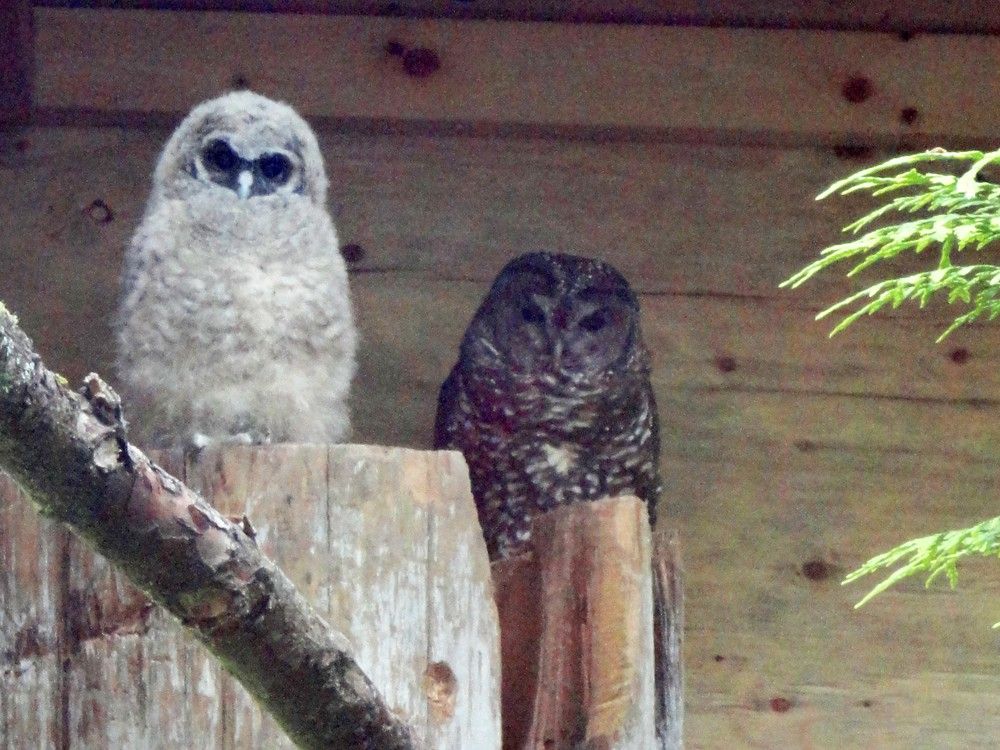
What if the fate of a single bird could unravel the very fabric of an ecosystem? What if the survival of the spotted owl, a creature of quiet dignity and ancient forests, hinged not on the whims of nature but on the bureaucratic whims of human institutions? The U.S. Fish and Wildlife Service (USFWS) stands at this precipice, tasked with the Herculean labor of balancing conservation with economic voracity. But does it wield its power with the precision of a surgeon’s scalpel—or the clumsiness of a bear in a china shop?
The Spotted Owl: A Canary in the Coal Mine of Biodiversity
The northern spotted owl, Strix occidentalis caurina, is no ordinary bird. Cloaked in mottled brown plumage and haunting, dark eyes, it is the silent sentinel of the Pacific Northwest’s old-growth forests. These forests, with their towering Douglas firs and ancient cedars, are not merely trees—they are cathedrals of time, where each ring tells a story of centuries past. The spotted owl, however, is not just a resident of these woods; it is a keystone species, its presence a barometer of ecological health. When its numbers dwindle, the entire ecosystem trembles. Yet, this bird is not alone in its struggle. The barred owl, a more aggressive and adaptable cousin, has muscled its way into the spotted owl’s territory, outcompeting it for food and nesting sites. The question lingers: Is the USFWS equipped to navigate this ecological chess match, or will it be checkmated by forces beyond its control?
The USFWS: Guardian or Paper Tiger?
The U.S. Fish and Wildlife Service, an agency under the Department of the Interior, is the designated protector of the nation’s imperiled species. Its mandate is clear: to conserve, protect, and enhance fish, wildlife, and plants and their habitats. Yet, the reality is far murkier. The spotted owl’s plight is a case study in the agency’s Sisyphean struggle between conservation and compromise. In 1990, the owl was listed as threatened under the Endangered Species Act (ESA), a move that sparked fierce backlash from logging interests. The USFWS responded with a recovery plan, but implementation has been a rollercoaster of delays, legal battles, and half-measures. The agency’s decisions are often hamstrung by political pressures, budget constraints, and the sheer complexity of ecological systems. Can an institution so mired in bureaucracy truly be the savior the spotted owl deserves?
The Barred Owl: The Uninvited Guest That Won’t Leave
Enter the barred owl, Strix varia, a bird that has become the spotted owl’s most formidable adversary. Native to the eastern United States, the barred owl expanded its range westward in the 20th century, likely due to habitat changes and climate shifts. Unlike the spotted owl, which is a creature of deep, undisturbed forests, the barred owl thrives in fragmented landscapes and is far more aggressive in defending its territory. It outcompetes the spotted owl for food, displaces it from nesting sites, and even hybridizes with it, diluting the genetic purity of the species. The USFWS has proposed a controversial solution: culling barred owls to reduce their population and give the spotted owl a fighting chance. But is this ethical? Is it even effective? Critics argue that such measures are a bandage on a gaping wound, ignoring the root causes of the spotted owl’s decline—namely, habitat loss and fragmentation. Can the USFWS afford to play God with ecosystems it barely understands?
The Habitat Conundrum: Old-Growth Forests vs. Industry
The spotted owl’s survival is inextricably linked to the fate of old-growth forests. These forests are not just biological treasures; they are economic goldmines. The timber industry, a powerful lobby with deep pockets and deep roots in the Pacific Northwest, has long viewed old-growth forests as a resource to be exploited, not preserved. The USFWS’s recovery plan for the spotted owl includes critical habitat designations, which restrict logging in certain areas. But these protections are often watered down by political interference. The agency’s decisions are frequently challenged in court, and its scientific findings are second-guessed by industry-backed politicians. The spotted owl’s habitat is not just a patch of trees; it is a battleground where conservationists and industrialists wage a war of attrition. Can the USFWS hold the line, or will it be forced to surrender to the relentless march of progress?
The Legal Labyrinth: Battles in the Courtroom and the Wild
The USFWS’s efforts to protect the spotted owl have been mired in legal battles since the day it was listed under the ESA. Environmental groups, timber companies, and government agencies have all clashed in courtrooms across the country, each side wielding scientific studies, economic reports, and political influence like weapons. The agency’s recovery plan has been revised multiple times, each iteration a compromise between conservation and compromise. The spotted owl’s fate is not just a biological question; it is a legal one. The courts have become the arbiters of its survival, and the USFWS is merely a player in a game it cannot control. Can the agency navigate this legal labyrinth without losing sight of its mission?
The Climate Wildcard: A Threat Beyond Human Control
Even if the USFWS could magically resolve the barred owl crisis and halt habitat destruction, a new threat looms on the horizon: climate change. Rising temperatures, shifting precipitation patterns, and increasing wildfires are reshaping the Pacific Northwest’s forests. The spotted owl’s habitat is becoming drier, hotter, and more fragmented, conditions that favor invasive species like the barred owl and stress the owl’s already fragile population. The USFWS’s recovery plan does not adequately address climate change, leaving the spotted owl vulnerable to forces beyond its control. Can the agency adapt its strategies to a world where the rules of ecology are being rewritten by a warming planet?
The Future of the Spotted Owl: A Test of Our Values
The spotted owl is more than a bird; it is a symbol of our relationship with the natural world. Its survival depends not just on the USFWS’s actions, but on our collective will to prioritize conservation over convenience. The agency’s efforts to protect the owl are a microcosm of the broader struggle to balance human needs with ecological integrity. Can we afford to lose the spotted owl? More importantly, can we afford to lose the forests it represents? The USFWS’s role in this drama is crucial, but it is not the only player. The fate of the spotted owl rests in the hands of policymakers, industry leaders, and ordinary citizens who must decide what kind of world we want to leave for future generations. The owl’s haunting call echoes through the ancient forests, a reminder that nature does not negotiate. It only endures—or it does not.