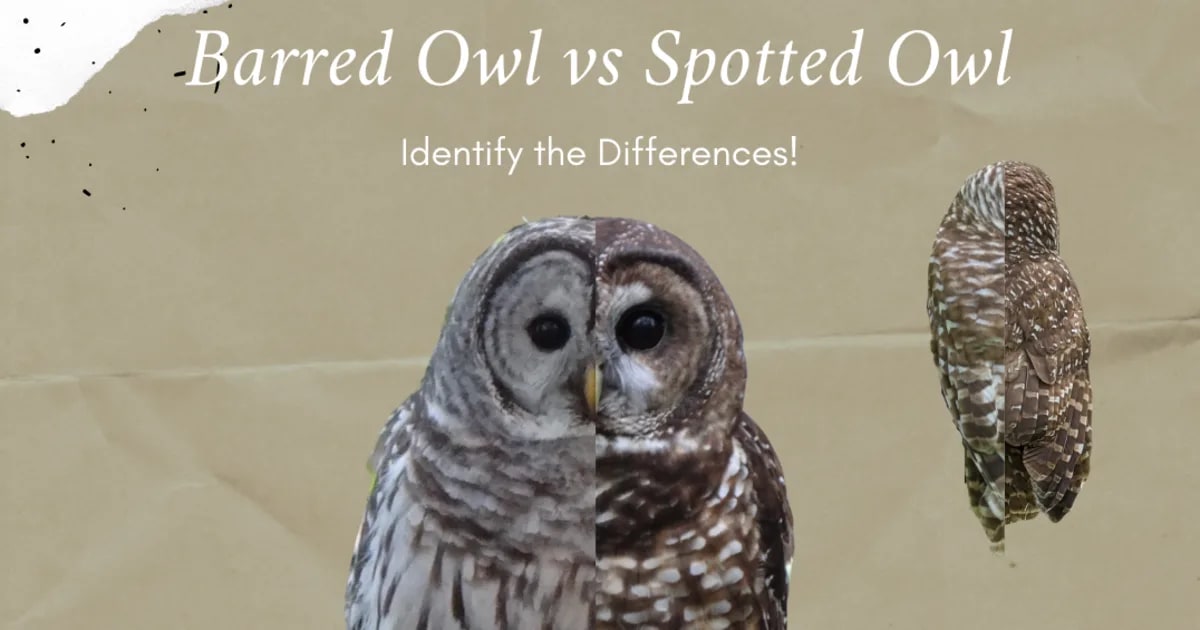
In the dim and whispering forests of North America, two enigmatic avian sentinels claim the nocturnal stage: the Barred Owl and the Spotted Owl. Observing these majestic creatures is akin to deciphering nature’s own secret code, each feathered silhouette a cryptogram of evolutionary artistry. Their calls weave through the twilight like elusive sonnets — inviting those who dare to embark on a journey of owl watching, where patience and keen perception unravel the mysteries cloaked in shadow and silence.
The Enigmatic Ambassadors of the Night: An Overview
The Barred Owl and the Spotted Owl are more than mere birds; they are sentinels of the forest’s soul. The Barred Owl, often dubbed the “Hoot Owl” for its distinctive, rhythmic calls, occupies a vast range stretching across the eastern United States and parts of Canada. In contrast, the Spotted Owl, veiled in more elusive habits, graces the ancient old-growth forests of the Pacific Northwest with its presence, earning a reputation as a symbol of wilderness conservation.
Both species boast an aura of quiet dignity—masters of twilight concealment. Yet, their subtle distinctions in appearance, habitat preferences, and vocalizations transform owl watching into a nuanced dance between observer and opportunity. Recognizing the distinguishing features is essential to truly appreciate the unique narrative each owl unfolds.
Deciphering Plumage Patterns: A Visual Lexicon
To the untrained eye, the Barred and Spotted Owls may initially seem near twins; however, their plumage tells a tale far richer than mere resemblance. The Barred Owl is adorned with horizontal bars across its chest, reminiscent of the slats of an ancient forest gate, with a palette dominated by soft grays and muted browns. These bold bands create a striking contrast, offering a canvas that seems etched by the brushstrokes of twilight itself.
In juxtaposition, the Spotted Owl dons a more speckled ensemble—spots punctuating its chest like scattered constellations against a darker background. This patterning evokes a starlit sky, a cryptic map leading the astute watcher into the heart of old-growth sanctuaries. Its overall hue is deeper, tending toward a richer brown, allowing it to vanish amidst the giant conifers and shadowed groves where it dwells.
Vocal Symphonies: Distinctive Calls in the Silence
Sound often trumps sight in the realm of nocturnal birding. The Barred Owl’s call, a sonorous cascade of “Who cooks for you? Who cooks for you all?” is immediately recognizable—an auditory emblem echoing through the forest corridors. This melodic phrase acts as both a territorial proclamation and a nocturnal serenade, anchoring the keen observer’s attention in the otherwise impenetrable darkness.
Conversely, the Spotted Owl’s voice is more somber, a wavering series of hoots that ebb and flow like distant waves. Less melodic and more plaintive, these calls serve as a ghostly counterpart to the Barred Owl’s confident refrain. Their subtle variations vary with location and individual, yet they resonate with a haunting, almost melancholic quality, mirroring the fragility of their threatened environments.
Habitat Preferences: Reading the Landscape Behind the Birds
Owl watching transcends mere bird identification; it is an immersive encounter with habitat narratives. The Barred Owl thrives in mixed woodlands, adaptable and somewhat cosmopolitan in its tastes. Found near water-rich environments, it navigates swampy woodlands and deciduous forests with equal ease. This flexibility allows it to flourish in suburban green belts as well—where the chorus of evening hoots bridges natural and human worlds.
In stark contrast, the Spotted Owl is an emblem of habitat specificity, intricately tied to the majestic tapestry of old-growth forests. Towering Douglas firs, ancient cedars, and moss-draped firs form its exclusive realm. It demands dense canopy cover and complex vertical forest structure, making it highly sensitive to deforestation and habitat fragmentation. Spotting one becomes a pilgrimage—a testament to forests that have stood resilient through centuries.
Behavioral Nuances: The Artistry of Nocturnal Habits
Beyond appearance and sound, both owls reveal their identity through behavioral subtleties. The Barred Owl is often more vocal and social, displaying a tenure of territorial calls throughout the night. It is less shy of human presence and may sometimes be seen soaring silently in the moonlight, a ghost gliding between reality and legend.
The Spotted Owl, in contrast, embodies reticence. It is furtive, favoring seclusion, and often requires the observer to embrace stillness and patience. Its flight is deliberate and haunted, moving with measured grace amidst the cathedral groves. These behavioral differences enrich each encounter, transforming owl watching from a mere checklist exercise to a meditative communion with wilderness.
Practical Tips for Aspiring Owl Watchers
Embarking on an owl watching expedition invites both challenge and profound reward. Begin by researching the local ecosystems—knowing where Barred and Spotted Owls favor to perch dramatically increases sighting opportunities. Dusk and dawn are prime windows, when owls are most active and the forest hums with subtle activity.
Equipping oneself with a high-quality flashlight featuring a red filter reduces disturbance. Utilizing binoculars with enhanced low-light capabilities lends clarity without intruding upon the owl’s realm. Patience reigns supreme; silence is golden, as even the faintest noise may send these ethereal beings into deeper concealment.
Recording calls—either by memory or with audio devices—can assist in identification, while respectful distance ensures minimal impact on their fragile habitats. As twilight deepens, remember that observing these owls is not merely about snapping photographs or ticking boxes, but about embracing an ancient connection that threads through moonlight and mist.
The Unique Appeal: Why These Owls Captivate Our Imagination
The magnetic allure of the Barred and Spotted Owls transcends their physical characteristics. They serve as living metaphors for mystery and survival, each embodying a different story about adaptation and conservation. The Barred Owl’s adaptability contrasts with the Spotted Owl’s vulnerability, reminding us of the delicate balance within ecosystems.
Engaging with these owls is an invitation to slow down, to listen deeply, and to marvel at the intricate beauty of nocturnal life. The Barred Owl’s familiar call welcomes us into ambient shadows, while the Spotted Owl’s elusive presence beckons toward forgotten forests and the profound need for preservation. Watching them is a poetic act—one that enriches our understanding of wilderness and our place within it.