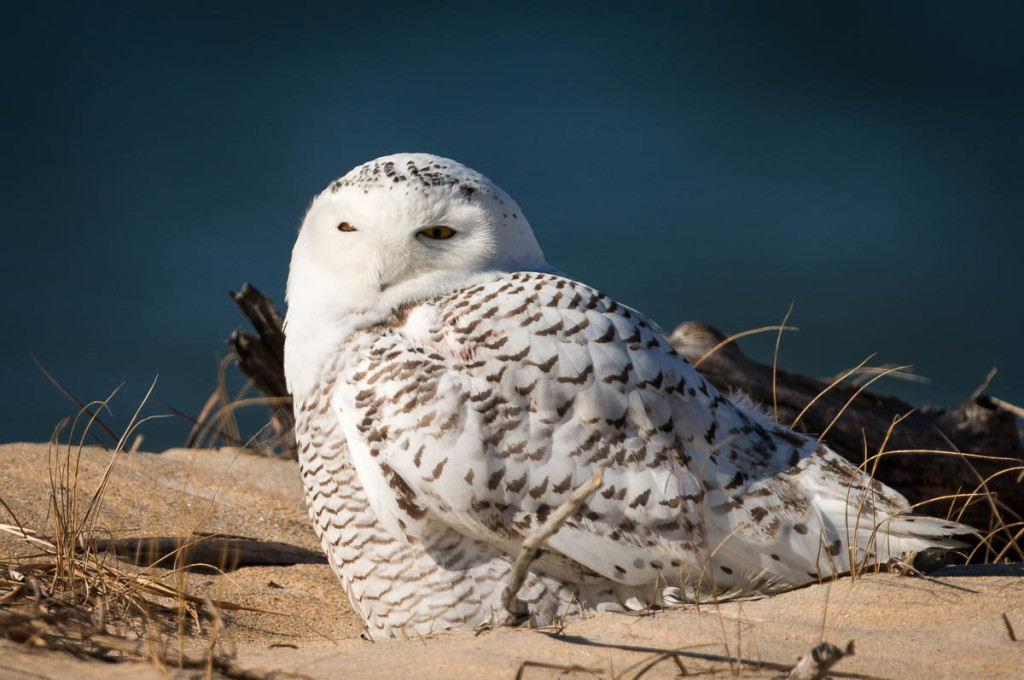
Can the enigmatic snowy owl really narrate a century’s tale of transformation, or does it simply challenge us to rethink how we perceive nature’s grand theater? As the frosty wings of this spectral bird brush against the canvases of 1926 and 2026, they provoke a curious inquiry: how have the ebbs and flows of a century shaped the majestic snowy owl’s irruption patterns, and what might this portend for the future? This isn’t merely about avian migration; it’s a vivid chronicle of environmental metamorphosis, ecological uncertainty, and the subtle interplay between human influence and the rhythms of the wild.
The Phenomenon of Snowy Owl Irruptions: A Brief Prelude
Snowy owls, with their ethereal white plumage and piercing yellow eyes, have long captivated both scholars and bird enthusiasts. Their irruptions—mass movements from their typical Arctic habitats to more temperate climes—occur sporadically and unpredictably. The 1926 irruption was one such extraordinary event, where these owls appeared in unprecedented numbers far beyond their usual northern haunts.
What triggers these dramatic shifts? Intrinsic factors such as prey abundance, especially fluctuations in lemming populations, set the stage. But beyond that lies a dance between survival instinct and climatic variables—a complex matrix where nature’s elements converse subtly yet deeply, compelling these regal birds to wander far afield in search of sustenance and security.
1926: The Year of the Great Northern Exodus
The snowy owl irruption of 1926 was no mere footnote; it was a crescendo in the ecological symphony of the early 20th century. Reports flooded from the northern United States and southern Canada of ghostly owls settling in places they had seldom, if ever, been seen before. These broad-scale movements were fuelled predominantly by sharp declines in prey, forcing the owls to embark on their relentless search.
This phenomenon coincided with a period of relative climatic stability but intense ecological pressures in their Arctic strongholds. The 1920s marked a time when human industrial footprints were less intrusive upon the Arctic tundra, yet fluctuations in rodent populations—primarily cyclic lemmings—wreaked havoc on the food web. The owls’ irruption was a survival gambit, a spectacle revealing the latent vulnerability of even the most seemingly invincible Arctic predators.
Environmental Shifts Across a Century: 1926 vs. 2026
Fast forward a hundred years, and the stage has been dramatically reset. Climate change has rewritten many of nature’s scripts, forcing a reevaluation of past irruption narratives. Melting ice caps, shifting temperature zones, and altered prey dynamics present an entirely new tableau for snowy owls. Unlike the relatively stable ecosystems of 1926, the Arctic of 2026 is a mosaic of disruption, resilience, and adaptation.
In this frenetic new world, snowy owl irruptions do not merely reflect food scarcity; they also reveal a struggling balance amid habitat fragmentation and anthropogenic influences. With winter snows retreating, the owls’ hunting grounds transform, challenging their traditional survival strategies and perhaps amplifying their nomadic tendencies well beyond historical norms.
Ecological Implications: A Canary in the Arctic Coal Mine?
Snowy owls are more than magnificent creatures of the night—they are sentinels signaling the health of the Arctic ecosystem. The contrasts between the 1926 and 2026 irruptions offer fertile ground for exploring how climate perturbations ripple through trophic levels. When snowy owls flood southern latitudes in mass, it often indicates underlying stressors, from collapsing prey populations to habitat degradation.
The irruption thus becomes a living barometer of environmental change—not just a spectacle but a meaningful warning. It challenges ecologists and conservationists to decipher cues from these oscillations, urging an urgent response. Can we interpret this avian wanderlust as a clarion call to safeguard not only the snowy owl but the intricate web of life that sustains it?
Advancements in Observation and Research: Then and Now
Back in 1926, data on snowy owl irruptions were largely anecdotal or pieced together from scattered field reports. Ornithologists relied on calloused notebooks and patient field observation to decode the phenomenon’s enigmas. The contemporary era, by contrast, boasts a panoply of technological tools—satellite tracking, remote sensing, and genetic studies—that plunge deeply into the nuances of owl migration and behavior.
This century-spanning leap from pen-and-paper to digital sophistication grants unprecedented clarity yet raises new questions. Are current irruptions simply more visible thanks to modern science, or are they truly more frequent or intense? Such inquiries breath life into the challenge of balancing nostalgic interpretations with cutting-edge data, weaving a richer tapestry of understanding.
Conservation Challenges on the Horizon
The comparison between the snowy owl irruptions of 1926 and 2026 catalyzes vital contemplation about conservation strategy. The grand flight of 1926 was a vivid testament to natural cycles; the one in 2026 is tinged with the shadows of human impact. Protecting these ethereal birds now demands more than admiration—it calls for an integrated approach involving habitat preservation, climate action, and public awareness.
The challenge is formidable: how to maintain the Arctic’s delicate equilibrium while acknowledging that the world beyond it is shifting faster than ever. The snowy owl becomes both emblem and enigma, its irruptions a puzzle piece in the larger jigsaw of planetary stewardship. It dares us to ask: can humanity rise to preserve the purity of this age-old migration, or will the snowy owl become a fleeting specter in the warming skies?
A Century in Reflection: The Playful Riddle of Change
Ultimately, the snowy owl’s journey from 1926 to 2026 invites more than scientific scrutiny—it invites wonderment and humility. What lessons lie hidden in this century-long narrative of ebbs and flows? If these ghostly heralds of the north could speak, perhaps they’d pose a playful question to us: as the Arctic changes, how will you change with it? Will the story end with these magnificent creatures becoming myth, or with a new chapter of coexistence and renewal?
In the quiet flutter of white feathers and the stark silence of frosted nights, the snowy owl continues to challenge us. A century after one of its most memorable irruptions, it urges reflection on resilience, adaptability, and shared destiny within the fragile tapestry of our natural world.