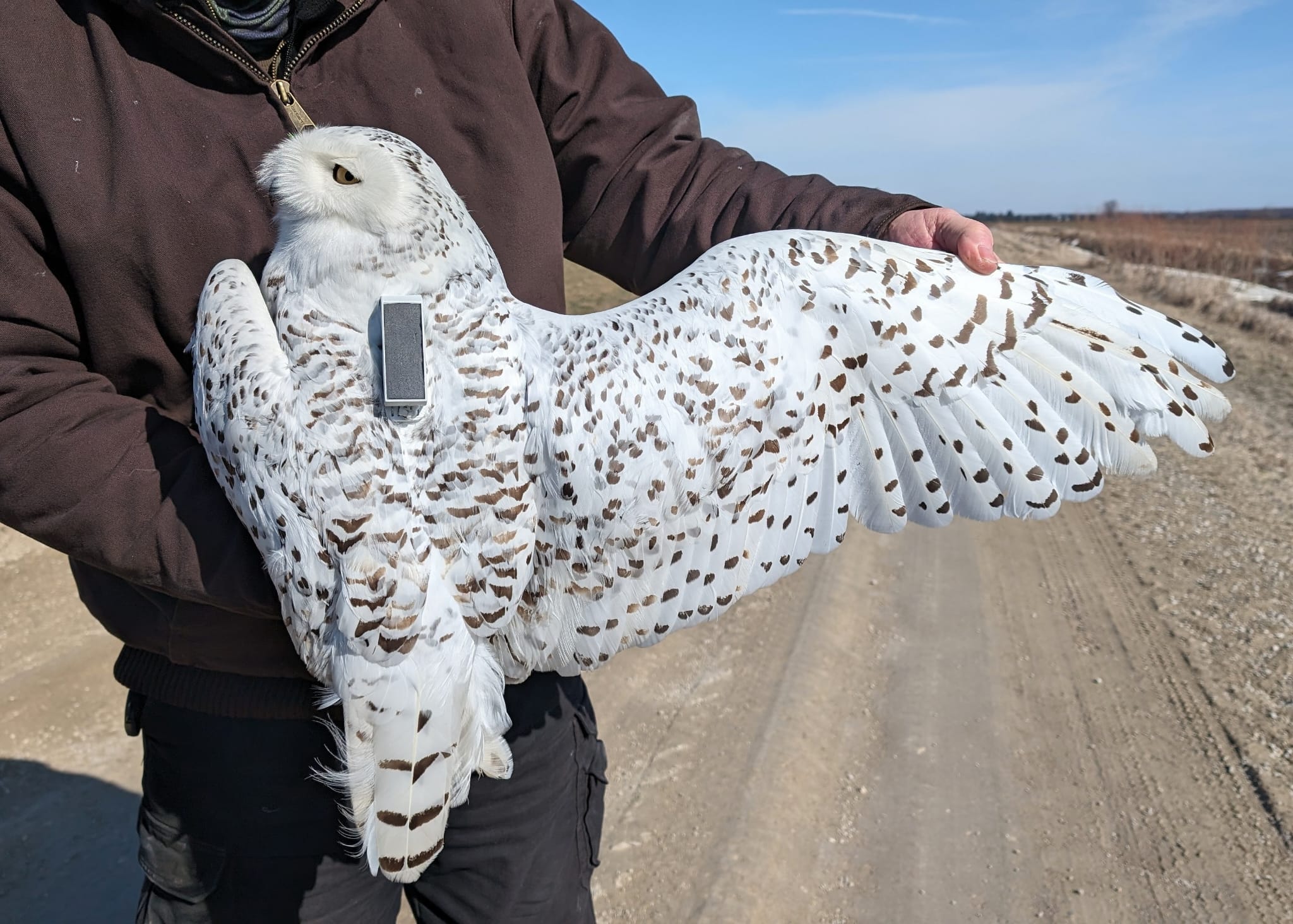
The Arctic’s icy expanse, a realm of stark beauty and relentless endurance, has long been a frontier of scientific inquiry. Yet, beyond the study of melting glaciers and shifting permafrost, a quieter revolution is unfolding—one that tracks the silent, feathered sentinels of this frozen world. Snowy owls, those enigmatic harbingers of the tundra, have become the unlikely stars of a scientific saga that blends cutting-edge technology with age-old naturalist curiosity. Arctic research stations, those remote bastions of human ingenuity, are now the nerve centers of this endeavor, unraveling the mysteries of these birds with a fervor that rivals the owls’ own relentless pursuit of prey. From the frozen tundra to the digital skies, these stations are not just observing nature—they are rewriting our understanding of survival, adaptation, and the delicate threads that bind species to their environments.
The Arctic as a Living Laboratory: Why Snowy Owls Matter
The Arctic is not merely a barren wasteland; it is a dynamic ecosystem where every creature, from the hardiest lichen to the most elusive predator, plays a role in a grand, interconnected narrative. Snowy owls, with their piercing yellow eyes and snowy plumage, are more than just charismatic megafauna—they are ecological barometers. Their presence or absence can signal shifts in prey populations, climate anomalies, or even the encroachment of human activity. Research stations, strategically scattered across this frozen wilderness, serve as gateways into this hidden world. By deploying satellite tags, camera traps, and acoustic monitors, scientists are peeling back the layers of the owls’ secret lives, revealing patterns that were once obscured by the vastness and hostility of the Arctic. These birds do not merely survive here; they thrive, and their resilience offers a masterclass in adaptation that could hold lessons for humanity in an era of rapid environmental change.
Tracking the Unseen: The Technology Behind the Research
To study snowy owls in the Arctic is to chase shadows across an endless white canvas. Traditional fieldwork, while invaluable, is limited by the sheer scale of the terrain and the owls’ nomadic tendencies. Enter the era of technological marvels—GPS transmitters the size of a paperclip, solar-powered tracking devices that cling to feathers like tiny backpacks, and drones that soar above the tundra, capturing footage without disturbing the birds. These tools are not just gadgets; they are lifelines. They allow researchers to map migration routes that span continents, monitor nesting behaviors in real-time, and even eavesdrop on the owls’ vocalizations through bioacoustic sensors. The data pouring in from these devices is revolutionizing our understanding of snowy owl ecology. We now know that some owls embark on epic journeys, traveling thousands of miles between the Arctic and temperate zones, while others remain surprisingly sedentary. Such insights were unimaginable just a few decades ago, when the Arctic’s secrets were guarded by ice and isolation.
From Tundra to Tablet: How Citizen Science Amplifies the Effort
The Arctic’s remoteness does not mean its mysteries are confined to a handful of experts. Citizen science has emerged as a powerful ally in the study of snowy owls, turning amateur naturalists into vital contributors to the research effort. Platforms where birdwatchers can upload sightings, photographers can share high-resolution images, and hikers can log unusual behaviors have created a global network of observers. These contributions are not trivial; they fill in the gaps between formal research expeditions, providing snapshots of owl populations in regions where stations are sparse. Imagine a schoolteacher in Manitoba spotting a banded snowy owl and reporting its location, or a fisherman in Alaska capturing a rare moment of an owl hunting on the ice. Each of these observations stitches together a more complete picture of the owls’ lives. The democratization of science is not just about collecting data—it is about fostering a collective stewardship of the natural world, one where every individual can play a role in conservation.
The Climate Connection: How Snowy Owls Are Becoming Climate Sentinels
As the Arctic warms at an unprecedented rate, snowy owls are finding themselves at the epicenter of a climatic upheaval. Their fate is inextricably linked to the ice, the snow, and the prey that depend on these vanishing resources. Research stations are now on the frontlines of climate science, using snowy owls as living indicators of environmental change. Declining lemming populations, a staple food source, have forced owls to adapt their diets or face starvation. Shifts in migration patterns reveal the owls’ struggle to find stable habitats as traditional breeding grounds melt away. Even their plumage, once a perfect camouflage against the snow, is becoming a liability as the landscape browns earlier in the season. These birds are not just victims of climate change; they are its messengers. Their stories, pieced together by researchers, are a clarion call for urgent action. The Arctic research stations, in their quiet way, are sounding the alarm—one snowy owl at a time.
Conservation in Action: Protecting the Future of Snowy Owls
Knowledge is power, but it is also a responsibility. The insights gleaned from Arctic research stations are not merely academic—they are the blueprints for conservation. By identifying critical habitats, understanding migration bottlenecks, and predicting future threats, scientists can advocate for targeted protections. Some stations collaborate with indigenous communities, whose traditional knowledge of the land and its creatures adds a layer of wisdom to the scientific data. Others work with policymakers to designate protected areas or mitigate the impacts of industrial development. The goal is not just to study snowy owls but to ensure their survival. Conservation efforts range from installing nest boxes in areas where natural cavities are scarce to launching public awareness campaigns that highlight the owls’ ecological importance. Every step is a testament to the belief that science and stewardship must go hand in hand if we are to preserve the Arctic’s magic for generations to come.
Beyond the Data: The Human Stories Behind the Science
Behind every graph, every satellite ping, and every nest monitoring camera lies a human story. The researchers who brave subzero temperatures to band owls. The technicians who spend months calibrating tracking devices in the lab before deploying them in the field. The local guides who share their knowledge of the land, passed down through generations. These stories are the heartbeat of Arctic research. They speak of resilience, of curiosity, and of the unyielding human spirit that seeks to understand and protect the natural world. One researcher might recount the thrill of spotting a snowy owl chick for the first time, its downy feathers still damp from hatching. Another might describe the frustration of losing a tagged bird to a predator, only to find its transmitter later, miles away, still transmitting data. These narratives remind us that science is not a cold, detached endeavor—it is a deeply personal and emotional journey, one that connects us to the owls and to each other.
The Road Ahead: What’s Next for Snowy Owl Research
The future of snowy owl research is as vast and unpredictable as the Arctic itself. Emerging technologies, such as AI-driven image recognition and machine learning algorithms, promise to sift through mountains of data with unprecedented speed, uncovering patterns we have yet to imagine. Climate models are becoming more sophisticated, offering glimpses into how the owls’ world might transform in the coming decades. Meanwhile, global collaborations are expanding, uniting researchers, conservationists, and communities across borders in a shared mission. Yet, challenges remain. Funding is scarce, the Arctic is increasingly accessible to exploitation, and the owls’ own adaptability may not be enough to outpace the speed of change. The road ahead demands not just scientific innovation but also a renewed commitment to protecting the Arctic’s fragile ecosystems. As research stations continue to push the boundaries of what we know, one thing is certain: the snowy owl will remain a symbol of both the Arctic’s enduring mystery and its urgent need for care.