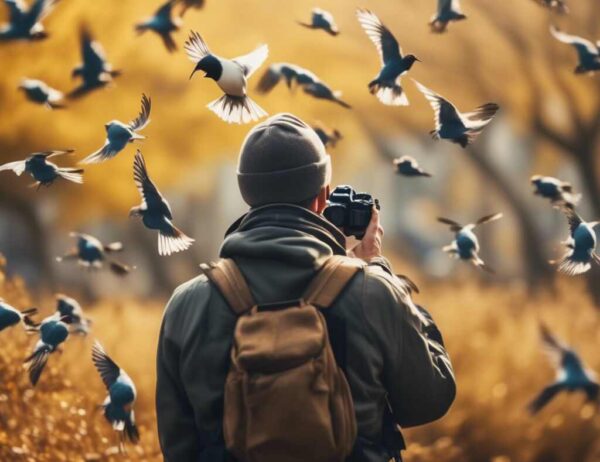
There’s something primal about the night—when the world quiets, and the veil between the seen and unseen thins. Owls, those silent sentinels of the dark, embody this mystery. Their golden eyes gleam like embers in the moonlight, and their haunting calls pierce the stillness with an eerie, almost mystical cadence. For beginners, owl watching is more than a hobby; it’s an initiation into a realm where instinct and wonder collide. Yet, beyond the thrill of spotting these nocturnal marvels lies a deeper fascination—one rooted in ancient symbolism, evolutionary brilliance, and the quiet poetry of nature’s unseen workings.
The Allure of the Owl: Why These Birds Captivate Us
Owls have long been shrouded in myth and reverence. In ancient Greece, Athena, goddess of wisdom, claimed the little owl as her sacred companion. Indigenous cultures across the Americas saw them as messengers between worlds, their calls interpreted as omens or prophecies. Even today, their enigmatic presence stirs something within us—a blend of awe and unease, as if we’re glimpsing a truth just beyond our grasp. Biologically, owls are marvels of adaptation: their silent flight, binocular vision, and asymmetrical ear placement make them the ultimate nocturnal predators. But it’s their symbolism that lingers in our collective imagination. They are the guardians of secrets, the keepers of the threshold between light and dark. When you first hear an owl’s call echoing through the trees, you’re not just listening to a bird—you’re eavesdropping on an ancient dialogue between humanity and the wild.
Choosing Your First Owl-Watching Expedition
Not all landscapes are equal when it comes to owl encounters. Start with habitats where their presence is most likely: old-growth forests, wetlands, or even suburban parks with mature trees. Owls favor areas rich in prey—rodents, insects, and small birds—so listen for the rustling of leaves or the scurrying of voles. Timing is everything. Dusk and dawn are prime, but winter offers a unique advantage: leafless trees make spotting easier, and owls are more vocal when food is scarce. Research local owl species—barn owls, great horned owls, and eastern screech-owls are common in North America, each with distinct calls and behaviors. Equip yourself with a reliable flashlight (preferably red-light to avoid disturbing them), a field guide, and a notebook. Patience is your most valuable tool; owls are elusive, and their schedules are dictated by the moon’s phases and the whims of their prey.

Decoding Owl Language: Calls, Hoots, and the Art of Listening
An owl’s voice is a language of its own, layered with meaning. The classic “hoo-hoo-hooo” of a great horned owl is a territorial declaration, a sonic boundary marker carved into the night. Barn owls, on the other hand, emit a chilling, hissing shriek that sounds like a ghostly whisper. Eastern screech-owls produce a trilling, almost horse-like whinny, while the barred owl’s “Who cooks for you? Who cooks for you-all?” is unmistakable. But listening is only half the battle. Owls also communicate through body language: a puffed-up silhouette signals agitation, while a relaxed posture with wings slightly drooped indicates curiosity. Learn to distinguish between contact calls (soft, conversational notes) and alarm calls (sharp, repetitive bursts). The key is to move slowly, speak softly, and let the sounds guide you. The forest will reveal its secrets to those who know how to listen.
Equipment Essentials: Tools for the Aspiring Owl Observer
While owl watching can be done with nothing but your senses, the right gear elevates the experience from chance encounter to intentional pursuit. A pair of binoculars with low-light capabilities (7×50 or 8×42 models) is indispensable for scanning treetops without startling your quarry. A spotting scope can be a game-changer for observing owls at roosts during daylight hours. For those serious about tracking, a parabolic microphone can amplify owl calls, turning the forest into a symphony of hidden voices. Night-vision goggles, though expensive, offer an otherworldly perspective, revealing owls in their full, ghostly glory. Don’t overlook the basics: weather-appropriate clothing, a headlamp with a red-light setting, and a thermos of hot tea to ward off the chill. Remember, the goal isn’t just to see an owl—it’s to immerse yourself in the nocturnal ecosystem they inhabit.
Ethical Owl Watching: Respecting the Night’s Inhabitants
The thrill of spotting an owl must never come at their expense. Avoid using playback calls excessively—while they can lure owls closer, overuse may stress them or disrupt their hunting patterns. Keep a respectful distance, especially during nesting season, when parents are fiercely protective. Never disturb an owl’s roost, and resist the urge to approach for a closer look. Artificial lights, while helpful for visibility, can disorient nocturnal creatures; use them sparingly and aim them downward. If you’re photographing, do so from a distance with a telephoto lens to avoid encroaching on their space. Owls are sentinels of balance in their ecosystems, and our presence should honor, not hinder, their role. By treading lightly, you ensure that future generations can experience the same magic you do.
The Deeper Magic: What Owls Teach Us About the Wild
Owl watching is more than a pastime—it’s a meditation on the unseen. These birds force us to slow down, to attune our senses to rhythms older than cities and roads. They remind us that the world doesn’t stop when the sun sets; it merely shifts into a different key. In their silent flight and piercing gaze, we glimpse the elegance of adaptation, the poetry of survival. Owls are ambassadors of the wild, bridging the gap between our human world and the mysteries that thrive beyond our comprehension. When you finally lock eyes with one, perched like a living statue on a branch, you’ll understand why they’ve fascinated us for millennia. It’s not just the thrill of the sighting—it’s the realization that you’ve been granted a glimpse into a secret world, one where the night is alive, and the dark is not empty, but full of whispers.