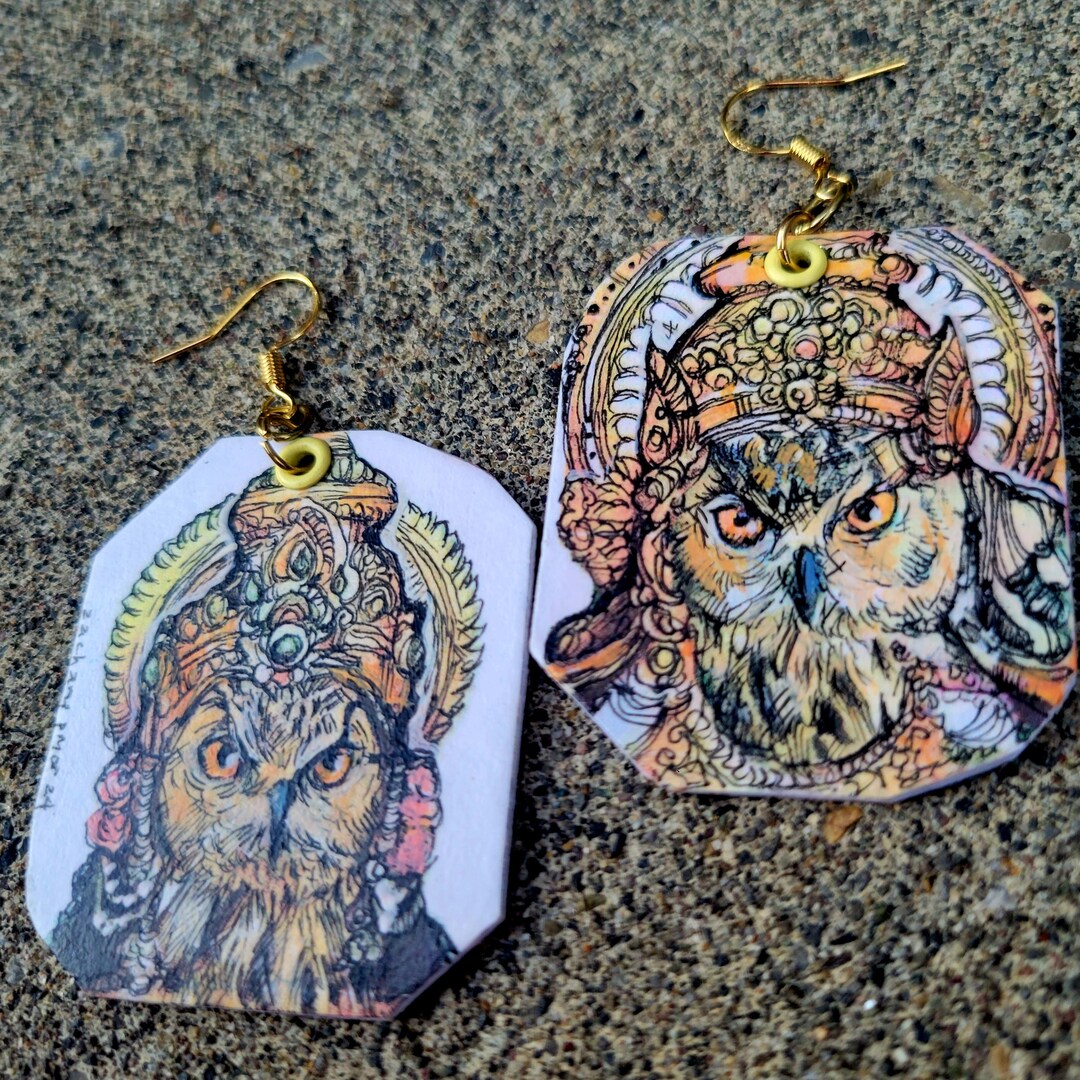
In the vast and luminous pantheon of Hindu deities, few symbols shimmer with the same enigmatic allure as the owl. Perched upon the shoulder of Lakshmi, the resplendent goddess of wealth and prosperity, this nocturnal creature transcends its humble origins to embody a paradoxical duality—both revered and reviled, a silent witness to abundance yet a harbinger of omens. The owl, in Hindu iconography, is not merely a passive companion but a dynamic metaphor, weaving together threads of wisdom, vigilance, and the untamed mysteries of the night. To understand Lakshmi’s vahana—the divine mount—is to unravel a tapestry of cultural symbolism where the owl’s piercing gaze becomes a mirror to humanity’s own contradictions: our hunger for prosperity and our fear of the unknown.
The Owl as Lakshmi’s Vahana: A Marriage of Opposites
The pairing of Lakshmi with the owl is a masterstroke of divine symbolism, a union that defies conventional expectations. While wealth is often associated with the radiant light of the sun, prosperity thrives in the shadows as much as in the sunlit fields of harvest. The owl, with its nocturnal habits, becomes the perfect foil to Lakshmi’s luminous grace. It is a creature of the twilight zone, where reality blurs with illusion, and wealth—like the owl’s flight—can vanish as swiftly as it appears. This marriage of opposites is not accidental; it is a deliberate invocation of balance. Lakshmi’s association with the owl reminds devotees that true abundance is not merely the accumulation of gold or grain but the cultivation of discernment—the ability to see through the veils of deception, to distinguish between fleeting riches and enduring prosperity.
The owl’s role as Lakshmi’s vahana also underscores a deeper philosophical truth: that wealth, in all its forms, is a double-edged sword. It can illuminate lives or blind them with avarice. The owl’s silent, watchful presence is a constant reminder that prosperity must be tempered with wisdom. To worship Lakshmi without heeding the owl’s lesson is to invite misfortune, for the goddess does not merely bestow riches—she tests the mettle of those who seek her favor.

The Owl as a Harbinger of Knowledge and Cunning
Beyond its association with Lakshmi, the owl occupies a sacred space in Hindu thought as a symbol of knowledge, albeit a knowledge that is often shrouded in ambiguity. In the Rigveda, the owl is linked to the goddess Saraswati, patron of learning, where its keen eyesight represents the scholar’s ability to perceive truths hidden from the casual observer. Yet, the owl’s reputation is not uniformly benign. In some traditions, it is cast as a trickster, a creature that lures the unwary into traps with its eerie calls and unblinking stare. This duality—between the sage and the sly—reflects the Hindu understanding of knowledge itself: a force that can liberate or ensnare, depending on the hands that wield it.
The owl’s nocturnal nature further amplifies its symbolic resonance. It is a creature of the liminal, existing in the threshold between day and night, reality and dream. In this liminality, it embodies the idea that true wisdom is not found in the glare of daylight but in the quiet introspection of the night. The owl’s flight is a metaphor for the journey of the seeker—unseen, unheard, yet ever-watchful. To invoke the owl is to acknowledge that knowledge is not a static treasure but a living, breathing entity, one that demands patience, stealth, and an acceptance of the unknown.
The Owl in Myth and Folklore: From Sacred to Stigmatized
The owl’s journey through Hindu mythology is a tale of shifting perceptions, where its symbolism evolves from reverence to revulsion and back again. In the Puranas, the owl is celebrated as a loyal companion to Lakshmi, its presence a sign of her favor. Yet, in the darker corners of folklore, the owl is cast as an omen of death or misfortune, its hoot a harbinger of doom. This dichotomy is not unique to Hinduism; it mirrors a global pattern where nocturnal creatures are alternately feared and revered. The owl’s ability to see in the dark makes it a potent symbol of foresight, but it also makes it a target of superstition—a creature that sees what others cannot, and thus becomes a scapegoat for humanity’s own anxieties.
One of the most intriguing tales involves the owl as a guardian of hidden treasures. In some regional traditions, it is believed that owls nest in the hollows of ancient trees or within the ruins of forgotten temples, where they guard the wealth of the earth. To harm an owl, in these stories, is to invite the wrath of Lakshmi herself, for the goddess’s favor is not to be trifled with. This narrative transforms the owl from a mere animal into a sacred sentinel, a keeper of secrets that must be approached with reverence. It is a reminder that wealth is not just a material possession but a living force, one that must be nurtured and protected.
The Owl’s Aesthetic Appeal: A Fusion of Grace and Grit
There is an undeniable magnetism to the owl, a creature whose physical form seems designed to captivate the human imagination. With its heart-shaped face, piercing golden eyes, and silent, feathered flight, the owl is a masterpiece of evolutionary artistry. In Hindu art, it is often depicted with an almost regal bearing, its feathers rendered in intricate detail, its gaze fixed with an intensity that borders on the hypnotic. The owl’s aesthetic appeal lies in its contradictions: soft yet fierce, gentle yet predatory, a paradox that mirrors the dual nature of Lakshmi’s wealth—both nurturing and demanding.
The owl’s appeal extends beyond the visual. Its call, a haunting melody that echoes through the night, has inspired poets and musicians for centuries. In some traditions, the owl’s hoot is believed to be the voice of the goddess herself, a whisper of guidance in the darkness. This auditory allure adds another layer to the owl’s symbolism, transforming it into a multisensory emblem of Lakshmi’s presence. To wear an owl motif, as seen in the hand-painted earrings that pay homage to this divine pairing, is to carry a talisman of prosperity, wisdom, and the quiet strength of the night.
The Owl as a Modern Symbol: Reclaiming the Night
In an era where the night is often feared or erased by artificial light, the owl’s symbolism takes on a renewed significance. It challenges us to embrace the shadows, to recognize that wisdom and wealth are not always found in the glare of the spotlight but in the quiet, introspective spaces of our lives. The owl, as Lakshmi’s vahana, invites us to see prosperity not as a static goal but as a dynamic journey—one that requires vigilance, adaptability, and a willingness to navigate the unknown.
For the modern devotee, the owl serves as a potent reminder that true wealth is not measured in material possessions alone but in the richness of knowledge, the depth of intuition, and the courage to face the darkness. It is a call to reclaim the night, to see it not as a time of fear but as a space of possibility. In a world that often equates success with visibility, the owl’s silent flight is a radical act—a declaration that some of life’s most valuable treasures are hidden in plain sight, waiting to be discovered by those who dare to look.