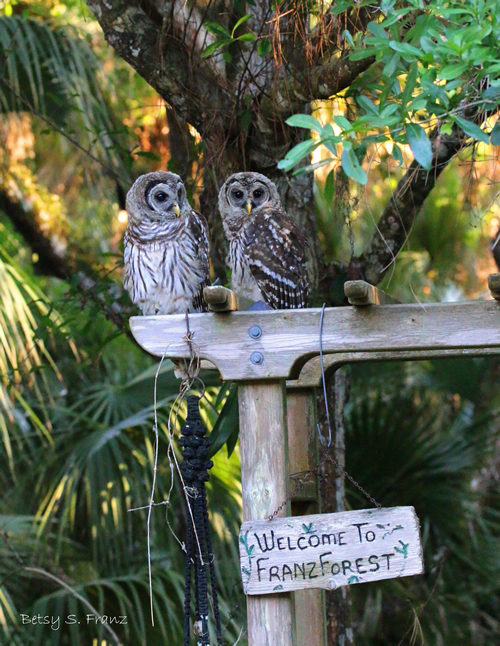
Few creatures in the annals of heraldry command the same gravitas as the owl—a bird whose silent wings and unblinking gaze have long been etched into the crests of kings, the banners of knights, and the seals of empires. More than mere embellishment, the owl in heraldry is a cipher of wisdom, a sentinel of vigilance, and a harbinger of the unseen. Its presence on shields and standards is not accidental; it is a deliberate invocation of power, protection, and the arcane knowledge that lies just beyond mortal perception. To understand the owl’s heraldic significance is to peer into the collective psyche of civilizations that revered it as both a guide and a guardian.
The Owl as a Heraldic Archetype: From Ancient Omens to Noble Crests
The owl’s journey into heraldry begins not in the scriptoria of medieval scribes, but in the twilight realms of ancient myth. The Egyptians, who adorned their temples with the effigies of owls, saw in them the embodiment of death’s mysteries and the afterlife’s silent watchers. When the Greeks later mythologized Athena, goddess of wisdom, as an owl perched upon her shoulder, they cemented the bird’s association with foresight and strategic acumen. By the time heraldry emerged as a codified art in the 12th century, the owl had already been transmuted from a celestial omen into a symbol of earthly authority.
In the heraldic bestiaries of Europe, the owl appeared with striking consistency—often clutching a branch, its talons gripping a sword, or perched atop a closed book. These motifs were not arbitrary; they were visual shorthand for the virtues a noble house wished to project. A branch might signify endurance, a sword readiness for battle, and a book the pursuit of knowledge. The owl, with its nocturnal dominion, became the perfect allegory for those who ruled in the shadows of governance, where decisions were made not in the glare of public scrutiny but in the hushed chambers of power.
The Silent Wingbeat: Owls as Emblems of Vigilance and Secrecy
What makes the owl’s heraldic presence so compelling is its paradoxical nature—it is both seen and unseen, present yet elusive. Heraldry, at its core, is a language of visibility, yet the owl thrives in the liminal spaces between light and dark. This duality made it an ideal symbol for those who governed through discretion, such as spymasters, diplomats, and rulers who navigated the treacherous waters of courtly intrigue. The owl’s ability to move without sound, to observe without being observed, mirrored the ideal of a ruler who could perceive threats before they materialized.
Consider the crest of the House of Nassau, which features an owl perched on a branch—a design that whispers of watchfulness without overt aggression. Or the owl emblazoned on the arms of certain Italian merchant families, where its presence signaled not just wisdom, but the shrewdness required to thrive in a world of shifting alliances and economic warfare. The owl, in these contexts, was less a warrior and more a strategist, a silent partner in the dance of power.
The Owl’s Dual Nature: Wisdom and War in Heraldic Imagery
Yet the owl’s heraldic symbolism is not monolithic. While it often represented wisdom, it could also embody the ferocity of the hunt. In some crests, the owl is depicted with wings outstretched, talons bared, as if ready to strike. This duality reflects the bird’s real-life behavior—both a patient observer and a lethal predator. Heraldry, ever the mirror of human ambition, embraced this contradiction. A noble house might wield the owl as a symbol of intellectual prowess by day and martial prowess by night, appealing to both the scholar and the soldier within their ranks.
Take, for instance, the arms of the von Owl family in medieval Germany, where the owl is shown clutching a sheaf of wheat—a nod to prosperity—and a sword, a reminder of defense. Here, the owl is not just a passive emblem but an active participant in the cycle of sustenance and survival. It is a reminder that wisdom, when wielded without strength, is as fragile as a reed in the wind. Conversely, strength without wisdom is a blind force, doomed to stumble in the dark.
The Owl in Battle and Statecraft: Heraldry as a Silent Weapon
The owl’s presence on a battlefield was rare, but its symbolism was not. Knights and soldiers carried banners bearing the owl’s likeness not as a call to arms, but as a psychological tool—a way to unnerve their enemies. The owl, with its reputation as a harbinger of death in some cultures, became a spectral ally on the field. When the enemy saw the owl emblazoned on a shield or standard, they were confronted with the specter of an unseen force, one that operated beyond the constraints of honor and chivalry.
In statecraft, the owl served a similar purpose. Diplomats and envoys carried seals bearing the bird’s image to convey a message of quiet authority. To receive a missive sealed with an owl was to be reminded that negotiations were not merely transactions but battles of wits, where the first to blink might lose everything. The owl, in this context, was the ultimate negotiator—a creature that never rushed, never panicked, and always saw the full board before making its move.
The Owl’s Modern Echo: From Heraldry to Corporate and Cultural Symbols
Though heraldry as a formal practice has waned, the owl’s symbolic power endures. Today, it adorns the logos of universities, the crests of modern institutions, and even the insignias of intelligence agencies. The owl’s association with wisdom has made it a favorite among academic circles, while its reputation for vigilance has lent it gravitas in fields where discretion is paramount. The CIA’s seal, for instance, features a white owl clutching a shield—a direct descendant of the heraldic traditions that saw the bird as a guardian of secrets.
Even in popular culture, the owl retains its mystique. From the wise old owl in children’s stories to the brooding, all-seeing figure in fantasy literature, the bird continues to embody the duality of knowledge and mystery. It is a symbol that transcends time, adapting to each era’s needs while retaining its core essence: a creature that sees what others cannot, and guards what must not be revealed.
The Owl’s Enduring Allure: Why It Still Captivates the Imagination
What is it about the owl that ensures its place in the pantheon of heraldic symbols? Perhaps it is the bird’s ability to straddle the line between the mundane and the mystical. It is a creature of the earth, yet it soars above it. It is silent, yet its presence is deafening. In a world where symbols are often reduced to mere logos, the owl remains a living metaphor—a reminder that power is not always loud, and protection is not always visible.
The owl in heraldry is more than an image; it is a philosophy. It teaches that true strength lies not in the clamor of battle, but in the quiet observation of the world. It whispers that wisdom is not found in the blaze of daylight, but in the shadows where secrets lurk. And it reminds us that even in an age of transparency, there are still realms where the owl’s gaze is the only light that matters.