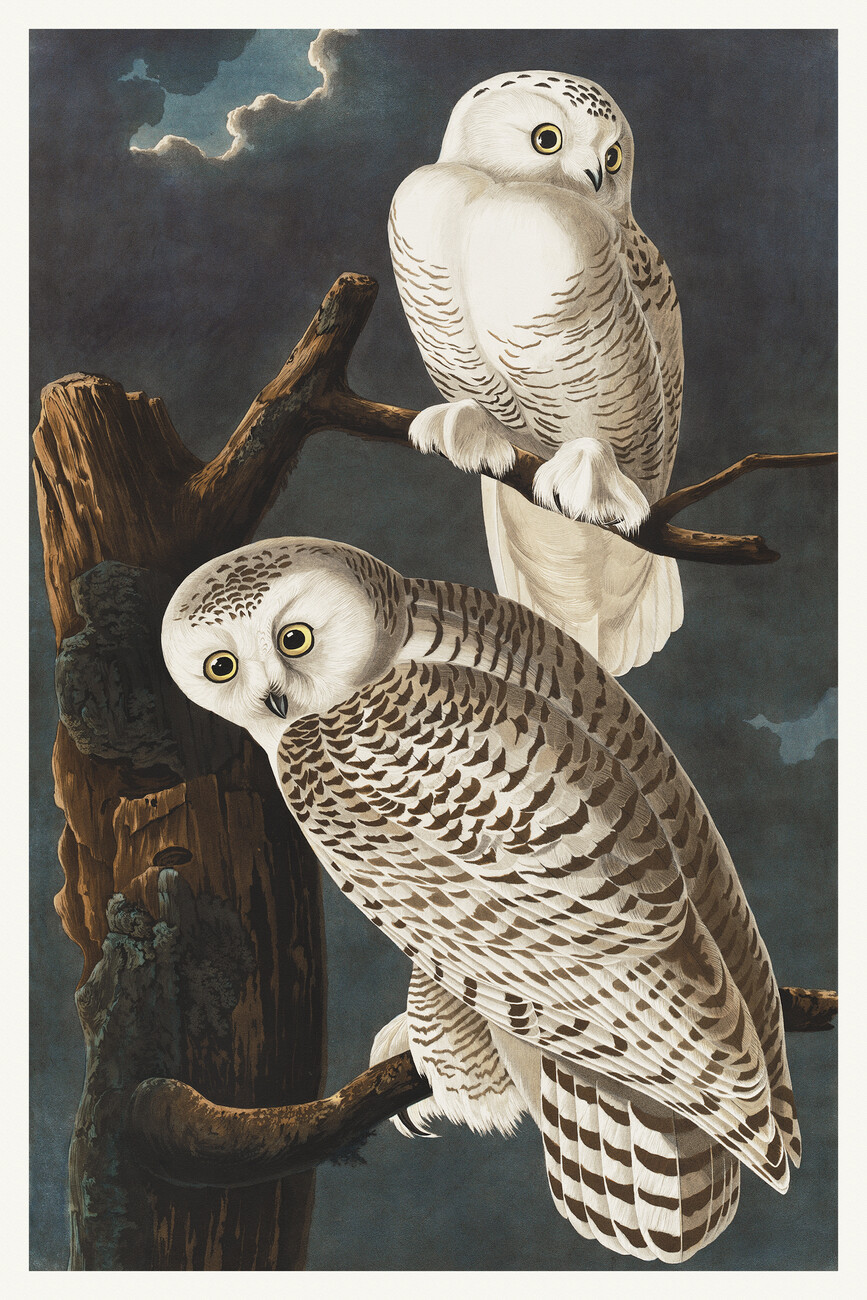
Few creatures in the natural world possess the same magnetic allure as owls—those enigmatic, feathered sentinels of the night. With eyes like molten gold, plumage that whispers of ancient forests, and a silent flight that defies gravity, owls have long captivated the human imagination. Artists, too, have been spellbound by these birds, weaving their mystique into the very fabric of art history. From the totemic carvings of pre-Columbian cultures to the hyperrealistic canvases of modern masters, owls have transcended mere subjects to become symbols of wisdom, mystery, and untamed wilderness. Their depiction in art is not merely a study of ornithology but a profound exploration of human psyche, culture, and the eternal dance between light and shadow.
The Owl as a Symbol: From Divine Messenger to Cultural Icon
In the annals of art, owls have served as chameleonic symbols, shifting meanings across civilizations like the phases of the moon. To the ancient Greeks, the owl was Athena’s favored companion, a harbinger of wisdom and strategic prowess. Vases and sculptures from this era often depict the bird perched beside the goddess, its gaze sharp and unblinking, embodying the clarity of thought that only comes under the cloak of night. Yet, paradoxically, owls also bore the weight of ominous portents in other cultures. The Romans, ever superstitious, associated them with death and ill fortune, a sentiment echoed in medieval European art where owls lurked in the margins of illuminated manuscripts, silent witnesses to humanity’s darker impulses. This duality—wisdom and foreboding—endows owls with a narrative depth that artists have exploited to evoke tension and intrigue in their work.
Medieval and Renaissance: Owls in the Shadow of Symbolism
The Middle Ages and Renaissance periods were rife with owls, though their portrayal was rarely naturalistic. Instead, they served as allegorical foils, their nocturnal habits making them perfect emblems of the unknown. In Christian iconography, owls often appeared in scenes of temptation or heresy, their presence a visual shorthand for the dangers lurking in the shadows of ignorance. Albrecht Dürer’s engraving The Owl (1512) is a masterclass in this approach. The bird’s piercing gaze and ruffled feathers convey a sense of defiance, as if challenging the viewer to confront the unseen. Meanwhile, Hieronymus Bosch’s The Garden of Earthly Delights features owls perched in surreal, dreamlike landscapes, their presence hinting at the moral decay lurking beneath the surface of paradise. These works remind us that art is not merely a reflection of reality but a mirror held up to the collective unconscious.
The Age of Naturalism: Owls as Subjects of Scientific and Artistic Fidelity
The Enlightenment brought a seismic shift in how owls were depicted. No longer confined to the realm of symbolism, they became subjects of rigorous study, their anatomy dissected with both scientific precision and artistic reverence. John James Audubon’s Birds of America (1827–1838) stands as a monumental testament to this era. His lifelike portrayals of snowy owls and great horned owls are not just ornithological records but breathtaking works of art. Audubon’s owls seem to breathe, their feathers ruffled by an unseen wind, their talons gripping branches with almost palpable tension. This newfound realism did more than satisfy curiosity; it forged a deeper emotional connection between humans and these birds, transforming owls from mythic creatures into tangible, awe-inspiring beings. The interplay of light and shadow in Audubon’s work—where the owl’s white plumage glows against the dark foliage—creates a visual poetry that elevates his subjects to the realm of the sublime.
Symbolism in the 19th and Early 20th Centuries: Owls as Emblems of the Uncanny
The Romantic and Symbolist movements of the 19th century seized upon the owl’s eerie allure, casting it as a creature of the uncanny. Francisco Goya’s Sleep of Reason Produces Monsters (1799) features an owl perched on a sleeping artist’s desk, its presence a chilling reminder of the nightmares that lurk when reason falters. Similarly, Odilon Redon’s lithographs of owls are haunting, their bulbous eyes and skeletal forms evoking a sense of otherworldly dread. These artists tapped into the owl’s ability to straddle the line between beauty and terror, using it as a visual metaphor for the subconscious mind. The owl became a bridge between the known and the unknown, a creature that could navigate the darkest recesses of the human psyche with unnerving grace.
Modern and Contemporary Art: Owls as Mirrors of Human Psyche
In the 20th and 21st centuries, owls have continued to evolve as artistic subjects, their symbolism expanding to reflect the complexities of modern life. Pablo Picasso’s Owl (1951–1952) reduces the bird to a series of bold, angular lines, its form both abstract and instantly recognizable. The owl here is a totem of modernity—minimalist, enigmatic, and devoid of the ornate symbolism of its predecessors. Meanwhile, contemporary artists like Walton Ford have reimagined owls in large-scale watercolors that blend scientific accuracy with surreal, almost cinematic narratives. Ford’s owls are not mere birds; they are characters in a dark fable, their expressions laced with mischief and menace. This shift reflects a broader cultural fascination with the owl as a creature that embodies both the wisdom of the ages and the chaos of the present moment.
The Owl in Pop Culture and Digital Art: A New Mythology
The owl’s journey through art history culminates in its ubiquity in pop culture and digital media. From the wise and benevolent Archimedes in Disney’s The Sword in the Stone to the sinister Hedwig in Harry Potter (though a snowy owl, not a true species), these birds have been repurposed as archetypes for every conceivable narrative. Digital artists, too, have embraced the owl, using its striking silhouette and expressive features to create everything from memes to high-concept illustrations. The owl’s adaptability in these mediums speaks to its timeless appeal—a creature that can be both cuddly and terrifying, wise and foolish, ancient and futuristic. In the digital age, the owl has become a blank canvas for human projection, its image morphing to suit the whims of each new generation.
The Enduring Allure of the Owl in Art
What is it about owls that makes them such enduring subjects in art? Perhaps it is their paradoxical nature—their ability to embody both light and dark, wisdom and folly, life and death. Or maybe it is their silent, watchful presence, a reminder that the world is far more mysterious than it appears. Whatever the reason, owls continue to captivate artists and audiences alike, their images resonating across centuries and cultures. They are not just birds; they are symbols, storytellers, and silent observers of the human condition. In the hands of artists, the owl becomes a metaphor for the unknown, a creature that invites us to peer into the shadows and confront the mysteries that lie beyond the edge of the light.