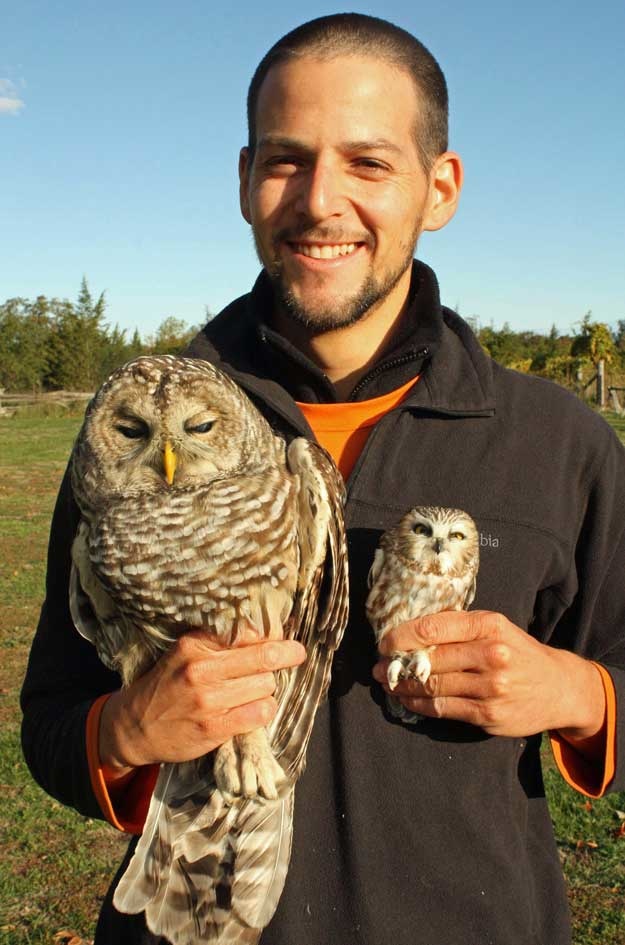
What if you could step into the silent, feathered world of owls—where every hoot carries a secret, and every wingbeat tells a story? Owl banding offers a rare glimpse into this nocturnal realm, transforming fleeting encounters into lifelong data. By carefully tracking individual owls, researchers unravel the mysteries of migration, survival, and population dynamics. But this delicate dance between science and nature is not without its challenges. How do we balance curiosity with care, and what happens when the tools we use to study these birds become part of their story?
The Art of Owl Banding: A Delicate Science
Owl banding is more than a method—it’s a meticulous ritual. Researchers set up mist nets, nearly invisible threads strung between trees, to gently capture owls as they navigate their nightly routines. Each bird is carefully extracted, its wings folded to prevent injury, and a lightweight metal band is affixed to its leg. This band, inscribed with a unique identifier, becomes a lifelong passport for the owl, linking it to a vast network of data. But the process is fraught with precision; a misplaced grip or an ill-fitted band could alter an owl’s fate. The challenge lies in ensuring that every touch is purposeful, every measurement exact—because in the world of owl banding, even the smallest error echoes through the data.
The bands themselves are marvels of engineering, designed to withstand years of wear while remaining unobtrusive. Some researchers even use colored bands or tags to track owls visually, adding a splash of color to the otherwise monochrome night. Yet, the true magic of banding lies in what happens next: the owl is released, its flight a silent testament to the success of the endeavor. But where does it go? How long will it live? The band holds the answers, waiting to be discovered.
Tracking the Unseen: Migration and Movement
Owls are wanderers, their migrations as elusive as their calls. Some species, like the Northern Saw-whet Owl, embark on epic journeys, traveling hundreds of miles between breeding and wintering grounds. Banding reveals these hidden travels, stitching together a map of movement that would otherwise remain blank. A band recovered in a distant state or country becomes a clue in a grand puzzle, revealing migration routes, stopover sites, and even unexpected detours. But the data is never complete. What if an owl’s band is never found? What if it avoids every net, every trap, every human hand? The gaps in the story are as telling as the records themselves, reminding us that nature always guards some secrets.
The challenge grows when owls cross borders, their journeys spanning jurisdictions with different research protocols. A banded owl in Canada might be recaptured in the United States, its data shared across continents. Yet, the coordination required to track these movements is a logistical labyrinth. How do we ensure that every recovery is reported? How do we prevent bands from being overlooked or discarded? The answers lie in global collaboration, where scientists, birders, and even casual observers become part of a vast, interconnected network.
The Survival Game: Life, Death, and Data Points
Every banded owl is a data point in the grand equation of survival. Researchers track recaptures to estimate population sizes, measure survival rates, and identify threats. A high recapture rate might signal a thriving population, while a sudden drop could hint at habitat loss or disease. But the story is never straightforward. Some owls vanish without a trace, their fates unknown. Others return year after year, their bands bearing the marks of time and adventure. Each recapture is a triumph, a moment where science and nature intersect.
The challenge? Distinguishing between natural mortality and human impact. A banded owl found near a road might have met its end in a collision, while another discovered in a predator’s nest could reveal the hunting patterns of a local hawk. The data must be interpreted with care, separating signal from noise. Yet, even in the face of uncertainty, banding offers a rare window into the lives of these enigmatic birds. It turns abstract numbers into living stories, where every owl is a protagonist in its own right.
Ethics and Empathy: The Human Side of Banding
Owl banding is not just a scientific endeavor—it’s an ethical one. The welfare of the birds must always come first. Researchers undergo rigorous training to minimize stress, using techniques that prioritize the owl’s comfort over the ease of capture. Yet, the process is inherently invasive. Every band, every measurement, every moment of handling is a disruption to the owl’s life. The challenge is to justify these intrusions with meaningful data, ensuring that the knowledge gained outweighs the temporary discomfort.
Public perception adds another layer of complexity. Some view banding as a necessary tool, while others see it as an unnecessary interference. How do we communicate the importance of this work without alienating those who question its methods? The answer lies in transparency—sharing not just the results, but the stories behind them. When people see a banded owl soaring overhead, they’re not just witnessing science; they’re part of a narrative that spans continents and years.
The Future of Owl Banding: Technology and Tradition
As technology advances, so too does the field of owl banding. Satellite tags and GPS trackers offer real-time data, reducing the need for recaptures. Yet, these tools come with their own challenges—battery life, weight restrictions, and the risk of entanglement. Traditional banding remains irreplaceable, a testament to the enduring power of simplicity. But the future lies in hybrid approaches, where old and new methods converge to paint a fuller picture.
The challenge? Balancing innovation with tradition. How do we integrate cutting-edge tools without losing the tactile, hands-on connection that banding provides? The answer may lie in selective adoption—using technology where it excels, while preserving the rituals that have defined owl banding for decades. After all, the most powerful stories are those that blend the old with the new, the human with the wild.
Why It Matters: Beyond the Bands
Owl banding is more than a scientific technique—it’s a bridge between humans and the natural world. Each banded owl is a reminder that we share this planet with creatures whose lives are as complex and mysterious as our own. The data collected informs conservation efforts, guides habitat protection, and deepens our understanding of ecology. But the true value lies in the intangible: the awe of holding a wild owl, the thrill of a recapture, the quiet humility of knowing we’re just one small part of a much larger story.
The challenge, then, is to keep asking questions. To keep refining our methods. To keep listening, even when the owls themselves remain silent. Because in the end, owl banding is not just about tracking individuals—it’s about understanding our place in the world, one feather at a time.