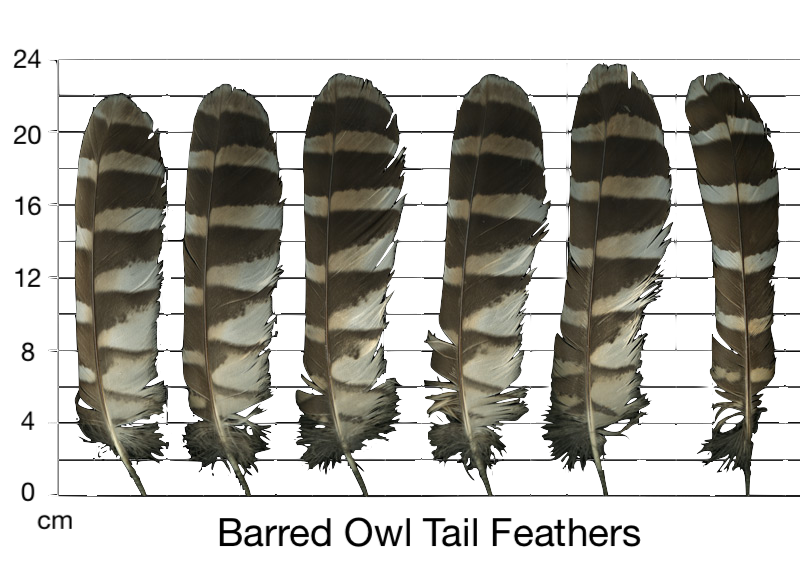
The barred owl, with its soulful eyes and haunting hoots, has become an unlikely icon of ecological transformation. Once confined to the dense forests of the eastern United States, this enigmatic raptor has embarked on a remarkable journey—one that has seen it colonize the western reaches of the continent at an astonishing pace. But how did a bird so deeply rooted in tradition break free from its ancestral confines? What forces conspired to propel its expansion, and what challenges lie ahead as it reshapes the ecosystems it now calls home? Let’s unravel the science behind this feathered phenomenon.
The Great Owl Migration: A Tale of Adaptability and Opportunity
Barred owls are, by nature, creatures of habit. They thrive in mature, mixed forests, where the interplay of light and shadow creates the perfect hunting grounds for their nocturnal pursuits. Yet, their recent westward expansion suggests a departure from tradition—a bold departure. The primary catalyst? Human intervention. As forests were cleared for agriculture and urban development in the eastern U.S., barred owls found themselves squeezed into shrinking habitats. But rather than succumbing to decline, they did something extraordinary: they adapted.
Their secret weapon? Generalism. Unlike specialists that depend on a narrow set of conditions, barred owls are opportunistic hunters. They feast on a smorgasbord of prey—from voles and mice to amphibians and even other birds. This dietary flexibility allowed them to exploit new territories as they became available. When logging and land-use changes created fragmented forests in the Midwest, barred owls seized the opportunity, inching their way westward like pioneers carving a path through uncharted wilderness.

Climate Change: The Invisible Tailwind
If adaptability was the engine of the barred owl’s expansion, climate change was the invisible tailwind pushing it forward. Rising temperatures and shifting precipitation patterns have softened the boundaries of biomes, making once-inhospitable regions suddenly hospitable. The northern forests of Canada, once too cold and dense for barred owls, are now experiencing milder winters and more open woodlands—conditions that suit these adaptable raptors.
But the owl’s journey isn’t just about warmth. It’s about resilience. Barred owls have demonstrated an uncanny ability to tolerate human presence, nesting in suburban parks and even urban green spaces. As climate change alters the landscape, these birds are not just following the food—they’re following the future. Their expansion is a living testament to how species can rewrite their own rules when the world around them does the same.
The Competitive Edge: Outmaneuvering the Competition
In the wild, competition is the name of the game. And for barred owls, the game has been rigged in their favor. Their primary rivals in the western U.S., the spotted owls, are specialists—deeply dependent on old-growth forests for survival. As barred owls moved in, they didn’t just share space; they dominated it. Their aggressive nature, larger size, and voracious appetites gave them a competitive edge. Spotted owls, already struggling from habitat loss, found themselves outcompeted in their own domain.
This ecological upset has sparked a scientific conundrum. Is the barred owl’s expansion a natural phenomenon, or is it an unintended consequence of human activity? Some researchers argue that barred owls are simply filling an ecological void left by the decline of other species. Others warn that their unchecked spread could further imperil the already vulnerable spotted owl populations. The debate underscores a harsh truth: nature’s balance is delicate, and even the most adaptable species can tip the scales in unpredictable ways.
The Silent Invaders: Barred Owls and the Ecosystem at Large
The barred owl’s arrival isn’t just a story of two birds—it’s a story of entire ecosystems in flux. These owls are apex predators, and their presence sends ripples through the food web. Small mammals, already under pressure from habitat fragmentation, now face an additional threat. Amphibians, too, may suffer as barred owls expand their hunting grounds into wetlands. Even other bird species are not immune; barred owls have been known to prey on smaller owls and songbirds, disrupting the delicate balance of nocturnal ecosystems.
Yet, for all their disruptive potential, barred owls also play a role in maintaining ecological health. By preying on overabundant rodents, they may help control populations that could otherwise spiral out of balance. Their presence could even benefit forest regeneration by reducing herbivore pressure on young trees. The question is no longer whether barred owls belong in the West—it’s how their arrival will reshape the landscape for generations to come.
The Human Factor: Can We Coexist?
As barred owls continue their march across the continent, humans are left grappling with a paradox. We are both the architects of their success and the potential victims of their dominance. Logging practices that once fragmented eastern forests have inadvertently paved the way for their expansion. Now, the same industries face the challenge of mitigating the owl’s impact on western ecosystems.
Some conservationists advocate for culling barred owl populations in critical spotted owl habitats to protect the endangered species. Others argue for a more hands-off approach, allowing nature to find its own equilibrium. The debate is fraught with ethical dilemmas. Is it right to intervene in an ecological process that is, in many ways, a product of our own making? Or should we accept that barred owls are the new tenants of the West, and adapt our conservation strategies accordingly?
The Future: A World of Barred Owls
The barred owl’s expansion is more than a scientific curiosity—it’s a glimpse into the future of wildlife in a changing world. As habitats shift and species boundaries blur, we are witnessing the dawn of a new ecological order. Barred owls, with their adaptability and tenacity, are leading the charge. But their story is a reminder that nature’s resilience often comes at a cost.
What will the West look like in 50 years? Will barred owls reign supreme, their hoots echoing through forests that once belonged to others? Or will a new equilibrium emerge, one where both barred and spotted owls coexist in a delicate dance of competition and adaptation? One thing is certain: the barred owl’s journey is far from over. And as it continues, it challenges us to rethink our relationship with the wild—where the line between invader and pioneer blurs, and the only constant is change.