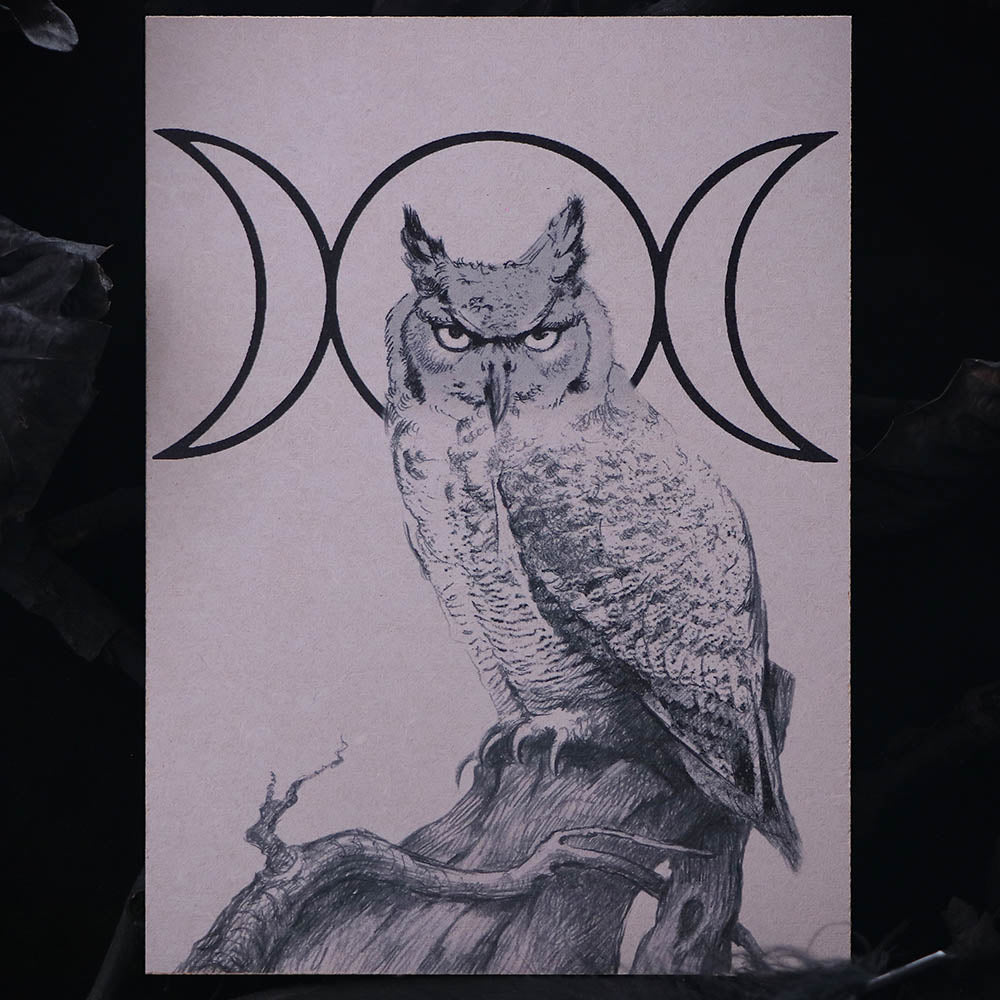
There is a language older than words, spoken in the hush of twilight and the velvet dark of moonlit forests. It is the language of the owl—those enigmatic sentinels perched between earth and sky, their golden eyes reflecting secrets as old as time itself. For millennia, humans have woven owls into the fabric of myth, religion, and folklore, endowing them with powers that transcend mere biology. They are not merely birds. They are omens. They are guardians. They are the keepers of thresholds, the whisperers of fate, the silent judges of the unseen. To gaze into the eyes of an owl is to peer into a mirror that reflects not your face, but the shadowed corridors of your own soul. This is the story of owls in mythology—a tale of wisdom that bleeds into death, mystery that lingers like incense in a temple, and a presence that demands you reconsider everything you thought you knew about light and darkness.
The Owl as Oracle: Wisdom That Cuts Like a Knife
In the sun-baked courtyards of ancient Athens, the owl was not just a bird—it was Athena’s favored companion, a living emblem of strategic intellect and divine foresight. Perched upon her shoulder or etched into the silver drachma, the little owl (Athene noctua) became synonymous with wisdom so sharp it could dissect the future. But this wisdom was not gentle. It was piercing. It was unflinching. To invoke Athena’s owl was to invite clarity that often came at a cost—truths too raw to ignore, realities too stark to deny. The Greeks understood that wisdom is not always comforting. It is a blade that cuts through illusion, leaving only what remains.
Yet this association with wisdom was not universal. In Celtic lore, the owl was a creature of the Otherworld, a guide for souls navigating the liminal space between life and death. The druids saw in its silent flight the rhythm of cosmic law—an intelligence that operated beyond human comprehension. Here, wisdom was not about knowledge in books, but about understanding the language of the unseen. It was the kind of insight that comes when the mind falls silent, and the heart begins to listen.

Death’s Silent Messenger: The Owl as Psychopomp
To hear an owl hoot in the dead of night is to feel a shiver crawl up your spine. It is not a sound of alarm—it is a whisper from the edge. In many cultures, the owl is a psychopomp, a guide for the departed, ferrying souls across the river Styx or through the mists of Yomi. The Romans feared the strigiformis, believing it could drink the blood of the dying or carry their spirits away. In Japanese folklore, the Baku—a chimera with an owl’s head—devours nightmares, but also, some whispered, the last breath of the dying. The owl does not judge. It does not weep. It simply carries what must be carried.
This role as a liminal being—neither fully alive nor dead—grants the owl a paradoxical duality. It is both feared and revered, a creature of dread and devotion. In Slavic tradition, the owl was the familiar of Baba Yaga, the bone-legged witch who dwells in the forest’s heart. To encounter her owl was to stand at the threshold of transformation, where life and death are not opposites, but threads in the same tapestry. The owl does not announce death. It merely witnesses it—and in that witnessing, it reminds us that endings are not final, but passages into something else.
The Shadowed Sage: Mystery That Defies Definition
Mystery is not absence of meaning—it is the presence of too much meaning, a labyrinth where every turn reveals another door, another question. The owl embodies this perfectly. It is the silent observer in the corner of the room, the unseen force that moves the plot forward while remaining unnoticed. In Norse mythology, the owl was linked to Odin, the Allfather, who sacrificed an eye for wisdom. Here, the owl is not just a symbol—it is a participant in the act of knowing. To seek wisdom is to lose something in the process. The owl knows this. It has always known.
In Hindu tradition, the owl is the vahana (vehicle) of Lakshmi, goddess of wealth and prosperity—but also of misfortune and delusion. To ride with Lakshmi’s owl is to be blessed with abundance, but also cursed with the inability to see through illusion. The owl does not lie. It simply reveals the truth in ways that are inconvenient, uncomfortable, or even dangerous. It is the mirror that shows you not who you wish to be, but who you are when no one is watching.
From Omen to Oracle: The Owl in Modern Mythmaking
The owl’s mythic resonance has not faded with the rise of science. If anything, it has intensified. In the age of algorithms and artificial intelligence, the owl has become a symbol of intuitive knowing—a counterbalance to cold, calculated logic. It represents the kind of intelligence that cannot be quantified, the gut feeling that defies explanation. Startups and spiritual movements alike have adopted the owl as their mascot, branding it as the emblem of deep insight, of seeing what others miss.
Yet this modern appropriation risks diluting the owl’s true power. The owl is not a cute logo. It is not a trendy tattoo. It is a creature of the threshold, a being that exists where certainty dissolves into wonder. To reduce it to a symbol of “wisdom” is to neuter its essence. The owl is not wise in the way a professor is wise. It is wise in the way a storm is wise—unpredictable, relentless, and utterly indifferent to human comfort.
The Owl’s Gaze: A Challenge to Perception
To truly understand the owl, you must meet its gaze. Not in a photograph. Not in a dream. But in the wild, under a sky thick with stars, when the owl turns its head slowly toward you and holds your stare. In that moment, you are not the observer. You are the observed. The owl does not flinch. It does not look away. It sees you as you are—not as you present yourself, not as you wish to be seen, but as you exist in the raw, unfiltered truth of the moment.
This is the owl’s final gift. It does not offer answers. It offers presence. It does not promise comfort. It promises clarity. And in a world that thrives on distraction, on noise, on the illusion of control, the owl’s silence is revolutionary. It asks you to slow down. To listen. To feel the pulse of the unseen world beating beneath the surface of the visible.
So the next time you hear the cry of an owl in the night, do not turn away. Do not dismiss it as mere superstition. Pause. Breathe. Let the sound wash over you like a tide pulling you toward a shore you’ve never seen before. The owl is not calling to frighten you. It is calling to awaken you—to remind you that wisdom is not found in books or screens or social media feeds, but in the quiet spaces between thoughts, in the dark corners of the soul where mystery still breathes.
And perhaps, just perhaps, the owl is waiting for you to finally look back.