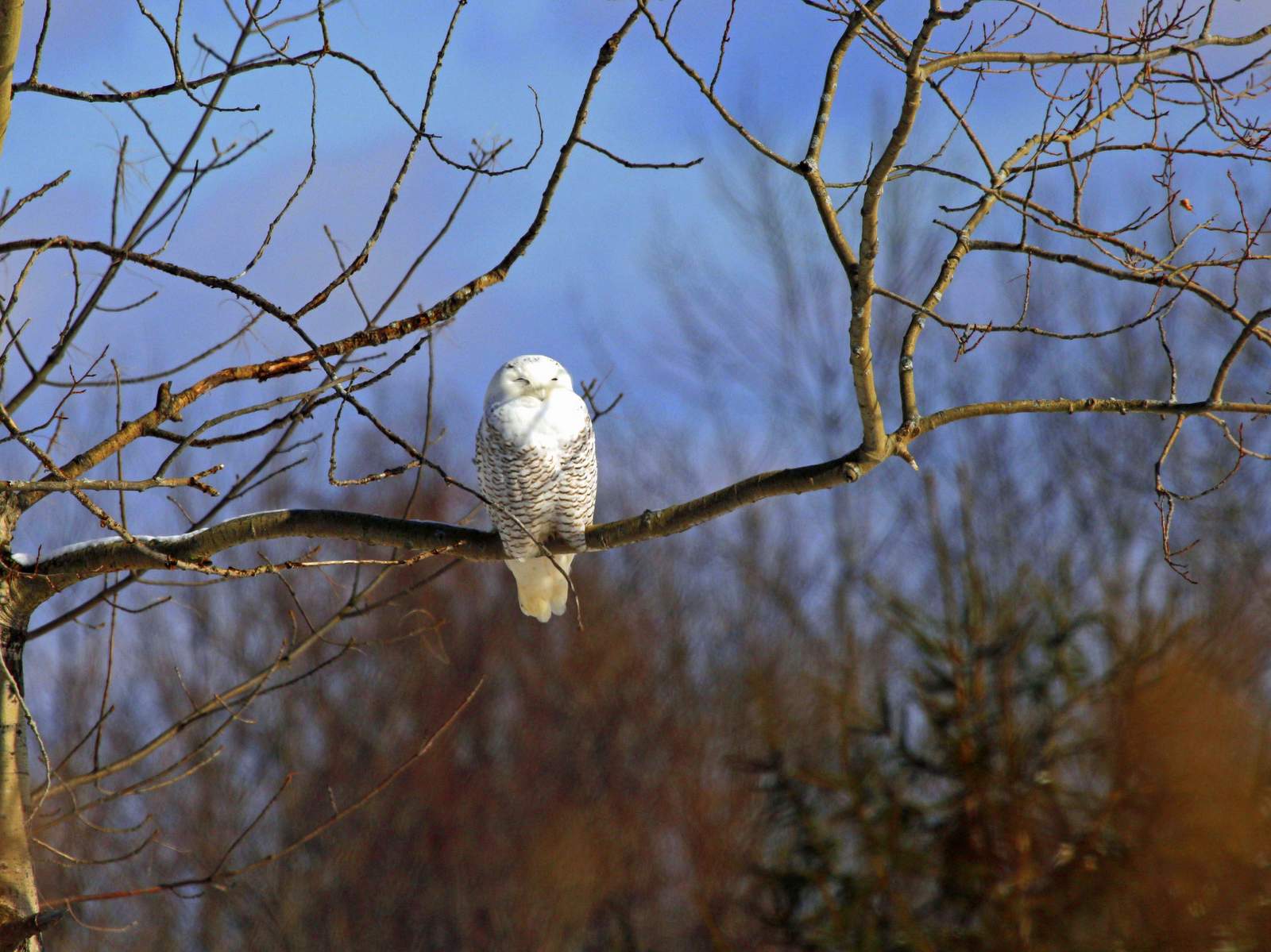
In the grand ballet of the wild, few performers command the stage with the same mesmerizing grace as the snowy owl. Once a creature of the distant, frozen tundra, this ethereal bird has begun to pirouette into the backyards and fields of more temperate climes, leaving scientists and laypeople alike agape. The phenomenon is not merely a shift in geography—it is a narrative of adaptation, resilience, and the inexorable pull of nature’s whims. As the Arctic’s icy grip loosens under the weight of a warming world, the snowy owl’s migration patterns are rewriting the rules of engagement with the planet. This is the story of an owl that has traded the endless white horizons of its ancestral home for the patchwork quilts of human-dominated landscapes, a tale as haunting as it is hopeful.
The Arctic’s Vanishing Canvas: A World in Flux
The snowy owl’s story begins where the Earth’s breath is still a whisper of ice and wind—the Arctic tundra. Here, the landscape is a monochrome masterpiece, a canvas of snow and sky where the owl reigns as an apex phantom. But this canvas is fading. The Arctic is warming at a rate twice as fast as the global average, a phenomenon known as Arctic amplification. The permafrost thaws, the sea ice fractures, and the once-reliable rhythms of the seasons grow erratic. For the snowy owl, a creature finely tuned to the Arctic’s extremes, these changes are not just environmental—they are existential. The lemmings, its primary prey, retreat into the earth as the tundra softens, forcing the owl to seek sustenance elsewhere. The owl’s migration is no longer a seasonal ritual; it is a desperate search for a world that still makes sense.
Imagine the owl as a nomad, its wings carrying it southward not by choice, but by necessity. The Arctic is no longer a reliable provider, and so the owl becomes a wanderer, a traveler in a world that no longer holds the same certainties. This is not migration in the traditional sense—it is exile. The owl leaves behind the stark, silent beauty of its homeland for landscapes it was never meant to know: the sprawling suburbs, the frozen farmlands, the edges of highways where the wind carries the scent of asphalt and possibility. It is a migration of survival, a testament to the owl’s uncanny ability to endure where others would falter.
The Owl’s Unlikely Odyssey: A Journey of Adaptation
To witness a snowy owl perched on a telephone pole or a fence post is to witness a creature out of time, a relic of the ice age plopped into the modern world. Yet, the owl does not merely survive in these foreign lands—it thrives. There is a quiet audacity to its presence, a defiance of the boundaries we assume nature will respect. The owl’s white plumage, once a camouflage against the Arctic’s endless snow, now stands out starkly against the muted browns and grays of winter fields. It is a ghostly sentinel, watching the world with eyes like molten gold, unblinking and unyielding.
The owl’s adaptability is nothing short of miraculous. In its new habitats, it has learned to hunt with the precision of a seasoned predator, targeting rabbits, waterfowl, and even other birds. It has become a connoisseur of the unexpected, turning the detritus of human activity into hunting grounds. Parking lots become its hunting grounds, where mice and voles scurry between the cracks of civilization. Golf courses, with their manicured fairways and scattered rodents, are its new hunting preserves. The owl is not just surviving—it is rewriting the rules of engagement, proving that nature’s ingenuity knows no bounds.
Yet, this adaptation comes with a cost. The owl’s presence in these unfamiliar lands is a reminder of the fragility of ecosystems. Its arrival often sparks a flurry of activity among local bird populations, which perceive the owl as a threat. Songbirds, in particular, become agitated, their once-harmonious chorus now a cacophony of alarm calls. The owl, in turn, becomes a symbol of disruption, a harbinger of change that is as unsettling as it is fascinating. It is a paradox: the owl is both a marvel of adaptation and a poignant reminder of the upheaval wrought by a changing climate.
The Human Connection: A Bond Forged in Wonder
For those lucky enough to encounter a snowy owl in the wild, the experience is transcendent. There is a primal thrill to seeing such a creature up close, to feeling the weight of its gaze and the power of its wings. The owl is not just a bird—it is a symbol of the wild, a living testament to the beauty and mystery of the natural world. In an era where the wild is increasingly tamed by human hands, the snowy owl’s arrival is a rare and precious gift, a fleeting moment of connection between two worlds.
Social media has amplified this connection, turning the owl’s appearances into viral sensations. Videos of owls perched on playground equipment or gliding over suburban streets are shared across the globe, sparking awe and wonder in viewers who might never have encountered such a creature otherwise. The owl becomes a celebrity, a star of the digital age, its image a reminder of the wild’s enduring allure. Yet, this fame is a double-edged sword. The owl’s presence in human-dominated landscapes often leads to disturbances, as well-meaning but misguided individuals approach too closely, disrupting its hunting or resting. The owl, in its quiet dignity, becomes a victim of its own celebrity.
There is a deeper, more philosophical connection to be found in the owl’s presence. The snowy owl is a messenger, a harbinger of the changes wrought by a warming world. Its arrival in our backyards is a call to action, a reminder that the choices we make today will shape the world of tomorrow. It challenges us to see the wild not as a distant, abstract concept, but as a living, breathing part of our own landscapes. In this way, the owl becomes a bridge between two worlds, a symbol of the interconnectedness of all life.
The Future: A World Without Boundaries
The snowy owl’s unprecedented spread is more than a curiosity—it is a glimpse into the future. As the Arctic continues to warm and the boundaries between ecosystems blur, we can expect to see more of these birds venturing into new territories. This is not a cause for celebration, but a call to vigilance. The owl’s migration is a symptom of a larger crisis, a sign that the natural world is struggling to adapt to the pace of human-induced change. Yet, it is also a testament to the resilience of life, a reminder that nature will find a way, even in the face of adversity.
The challenge for us, as stewards of the planet, is to ensure that the owl’s journey does not become a one-way ticket to oblivion. We must protect the Arctic’s fragile ecosystems, reduce our carbon footprint, and create spaces where wildlife can thrive alongside human development. The snowy owl’s presence in our backyards is a privilege, not a right. It is a gift that demands our respect and our action.
In the end, the snowy owl’s story is our story—a tale of adaptation, resilience, and the enduring power of nature. It is a reminder that the wild is not a distant, untouchable realm, but a living, breathing part of our world. As the owl continues its unlikely odyssey, we are left to wonder: what other marvels of the natural world are waiting to be discovered, and what will we do to ensure their survival?