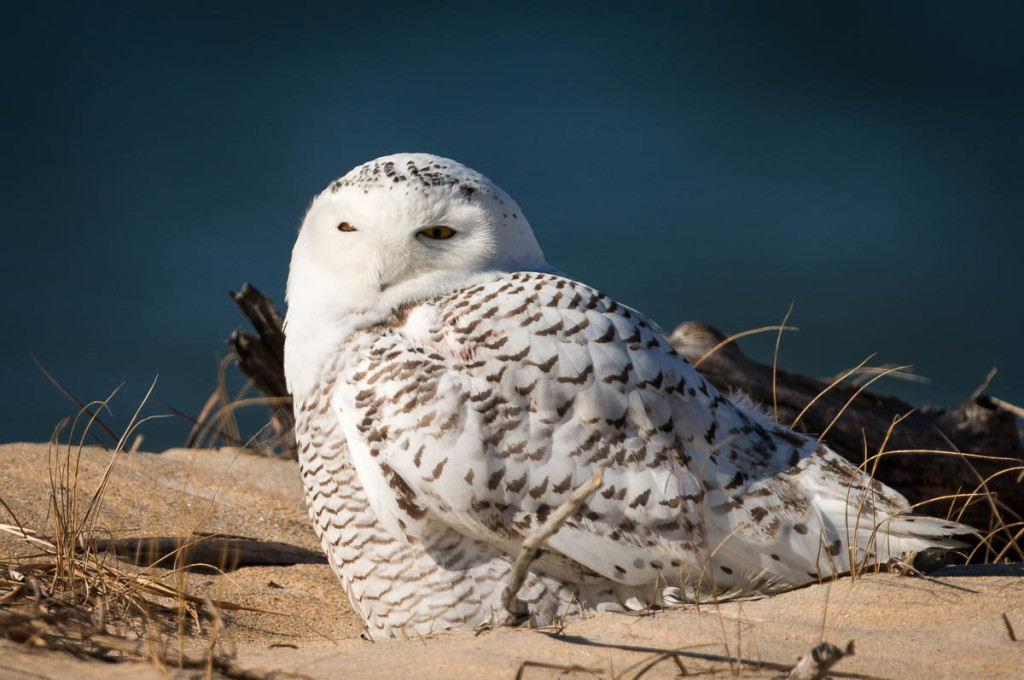
The Arctic wind howled across the tundra, carrying whispers of a phenomenon so rare it defies the rhythms of nature itself. In the annals of ornithological marvels, few events command the awe of a snowy owl irruption—a celestial invasion where these ghostly sentinels descend from their frozen realms in numbers that stagger the imagination. The year 2026 is poised to etch its name into history as the stage for what experts are calling the Great Snowy Owl Irruption, a once-in-a-century spectacle that will transform landscapes, captivate birders, and leave an indelible mark on the collective consciousness of wildlife enthusiasts worldwide.
The Harbingers of Winter: Understanding the Irruption
To comprehend the magnitude of this event, one must first grasp the enigmatic nature of irruptions. Unlike migrations—predictable, cyclical journeys—irruptions are erratic, driven by forces far more primal. Snowy owls, those alabaster titans of the Arctic, do not merely migrate; they erupt, propelled by the cruel calculus of survival. When lemming populations crash in their northern strongholds, these owls, deprived of their primary prey, embark on journeys that can span thousands of miles. The year 2026 is expected to witness a convergence of factors—a perfect storm of scarcity and desperation—that will send these birds streaming southward in numbers not seen since the last great irruption of the early 21st century.
The term “irruption” itself is a linguistic marvel, evoking the sudden, violent entry of a force into a space where it does not belong. It is as if the Arctic has exhaled, releasing its frozen breath upon the temperate world. For those fortunate enough to witness it, the sight is nothing short of transcendent: a fleet of silent, snow-white predators gliding over fields and coastlines, their golden eyes scanning the earth for prey, their presence a fleeting reminder of the wild’s unyielding power.
The Arctic’s Whisper: Why 2026 Will Be Different
Every irruption is unique, shaped by the caprices of climate, prey availability, and the owls’ own mysterious instincts. Yet 2026 stands apart, not merely because of its rarity but because of the confluence of forces aligning to make it extraordinary. Climate change, that relentless architect of ecological upheaval, has played a paradoxical role. While it has disrupted countless species, it has also created conditions that may fuel this irruption. Warmer Arctic winters, paradoxically, can lead to boom-and-bust cycles in lemming populations, setting the stage for mass owl migrations when the bust arrives.
Moreover, the owls themselves are adapting. Some populations have begun to shift their wintering grounds southward, a behavioral shift that suggests a new normal. The 2026 irruption may not be a one-time aberration but a harbinger of a changing world, where the Arctic’s most iconic bird becomes a more frequent visitor to temperate skies. For birders and nature lovers, this is not just an event—it is a glimpse into the future, a fleeting opportunity to witness evolution in motion.
The Southern Invasion: Where to Witness the Spectacle
The Great Snowy Owl Irruption of 2026 will not be confined to the Arctic’s icy embrace. Instead, it will spill across the continent, turning fields, shorelines, and even urban peripheries into stages for this avian drama. The northern United States, particularly the Great Lakes region, the Dakotas, and the Northeast, will be prime viewing areas. Coastal regions, where the owls hunt waterfowl and shorebirds, will also become hotspots. Even the Canadian Prairies and the northern plains of Europe may find themselves graced by these visitors.
For those seeking the most breathtaking encounters, the Great Lakes—especially areas like Michigan’s Upper Peninsula and New York’s Lake Ontario shoreline—are expected to be epicenters of activity. Here, the owls will perch on fence posts, dunes, and ice floes, their presence transforming ordinary landscapes into something almost mythical. Imagine a snowy field, its expanse broken only by the stark silhouette of an owl, its feathers catching the winter sun like freshly fallen snow. It is a scene that stirs the soul, a reminder of nature’s ability to surprise even in an age of human dominance.
The Owl as Omens: Cultural and Symbolic Significance
Long before science sought to unravel their mysteries, humans have gazed upon snowy owls with a mix of reverence and trepidation. In Inuit mythology, these birds are messengers between the living and the spirit world, their calls echoing the voices of ancestors. Norse sagas speak of them as companions to the gods, their flight a bridge between the earthly and the divine. The 2026 irruption, then, is not merely an ecological event—it is a cultural phenomenon, a moment when ancient myths and modern science collide.
In the modern world, the snowy owl has become a symbol of wilderness in retreat, a creature clinging to the edges of a planet increasingly shaped by human hands. To witness an irruption is to stand at the threshold of a world both wondrous and fragile. It is a call to action, a reminder that the Arctic’s fate is intertwined with our own. For those who see them, the owls are not just birds; they are emissaries from a vanishing frontier, their presence a fleeting gift from a world we are in danger of losing.
The Photographer’s Dream: Capturing the Iridescent Moment
For photographers, the Great Snowy Owl Irruption of 2026 will be a golden opportunity to capture images that transcend the ordinary. The owls’ pristine white plumage, set against the muted tones of winter, creates a visual contrast that is both striking and serene. Their piercing yellow eyes, windows to a soul untouched by human encroachment, demand to be immortalized. Yet, photographing these birds is not merely about technical skill—it is about patience, intuition, and a deep respect for the subjects.
The challenge lies in the owls’ elusiveness. They are not songbirds perched on branches, easily coaxed into view. Instead, they are wanderers, appearing and disappearing like ghosts. The photographer must become a silent observer, attuned to the rhythms of the landscape. A sudden gust of wind, the distant cry of a gull, the flicker of movement in the corner of the eye—these are the cues that may lead to the perfect shot. And when the moment arrives, when the owl turns its gaze directly into the lens, the result is not just a photograph but a story, a fragment of the irruption’s grand narrative.
The Ethical Observer: Respecting the Irruption’s Sanctity
With great spectacle comes great responsibility. The Great Snowy Owl Irruption of 2026 will draw crowds, and where there are crowds, there is the potential for disruption. These birds are not zoo exhibits; they are wild, unpredictable, and under immense stress. Approaching too closely, disturbing their hunting grounds, or using playback calls to lure them can have devastating consequences. The ethical observer must remember that the goal is not just to see the owls but to witness them in a way that does not alter their behavior or endanger their survival.
This is where the true art of wildlife observation lies—not in the conquest of the moment but in the surrender to it. The best encounters are those where the observer becomes a silent participant in the landscape, where the owls remain undisturbed, their presence felt rather than forced. It is a humbling experience, one that reminds us that the wild does not exist for our entertainment but as a testament to the resilience of life in its purest form.
The Legacy of the Irruption: A Call to Conservation
As the snowy owls eventually return to their Arctic homelands, the echoes of the 2026 irruption will linger. For conservationists, this event is a stark reminder of the fragility of ecosystems and the urgent need to protect the Arctic from the ravages of climate change. The owls’ journey south is not a sign of abundance but a symptom of scarcity—a cry for help from a world at the brink.
Yet, there is hope in the irruption’s wake. It is a moment that can inspire action, a chance to rally support for policies that safeguard the Arctic, to reduce carbon emissions, and to preserve the habitats that these magnificent birds depend on. The Great Snowy Owl Irruption of 2026 is more than a spectacle; it is a wake-up call, a fleeting glimpse of a world that still has the power to astonish us—if only we are willing to listen.