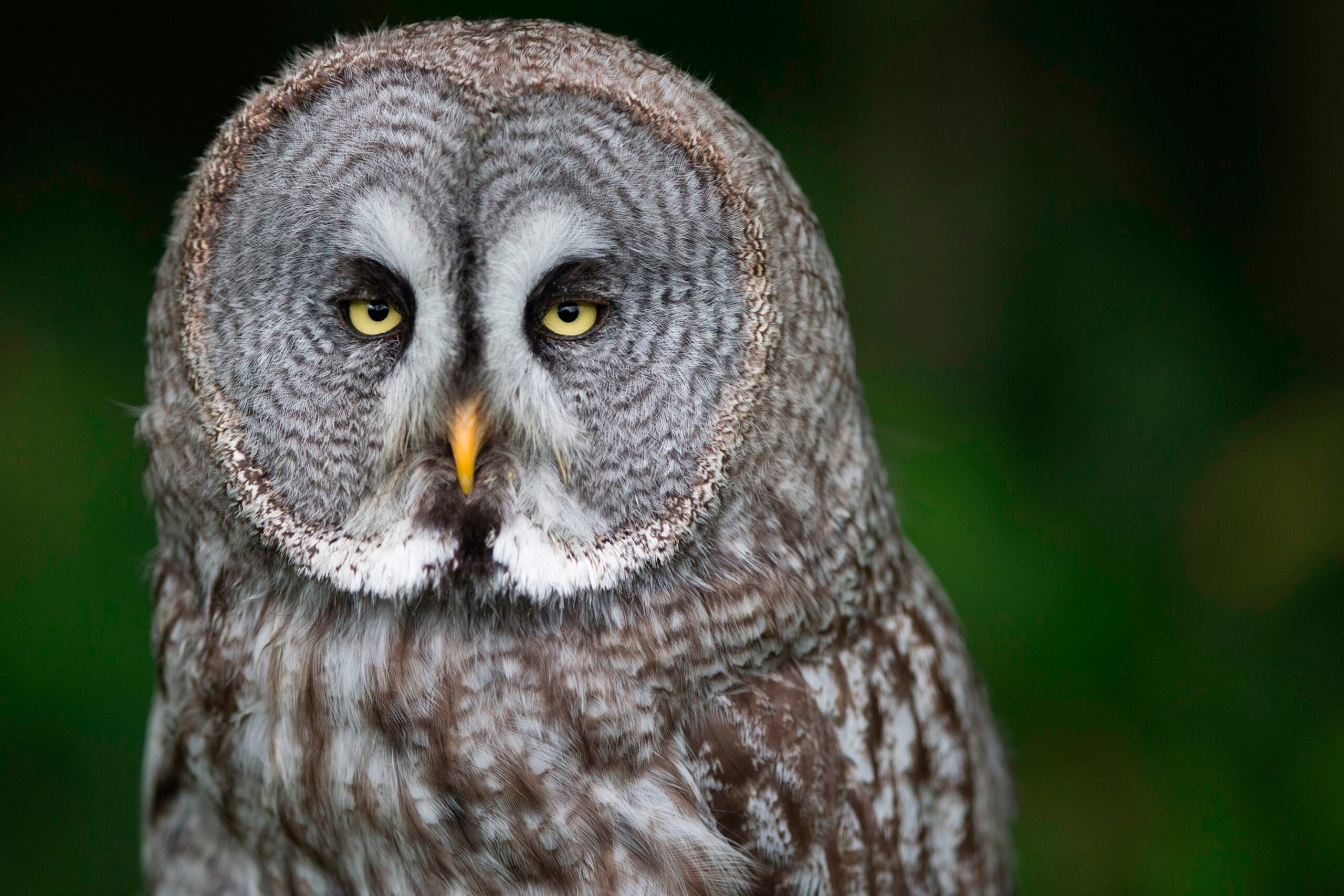
The West’s ancient forests, once teeming with life, now whisper a haunting question: What happens when the sky turns orange and the earth cracks open? For the great gray owl, a silent sentinel of the wilderness, the answer is as stark as the charred trunks that now dot its domain. Droughts and wildfires—once natural rhythms of the land—have become relentless sculptors, reshaping habitats with a ferocity that leaves even the most adaptable creatures scrambling. These aren’t mere disturbances; they’re ecological upheavals, rewriting the rules of survival for species that have thrived here for millennia. And for the owl, the stakes couldn’t be higher.
The Great Gray’s Silent Struggle: A Species Caught in the Crosshairs
Perched atop a skeletal pine, its piercing yellow eyes scanning the smoldering horizon, the great gray owl embodies both resilience and vulnerability. Once a master of the old-growth forests of the Sierra Nevada and the Pacific Northwest, this bird’s domain is vanishing—not with a whimper, but with the roar of flames. Droughts, exacerbated by climate change, have parched the land, turning towering trees into kindling and shrinking the wetlands that once teemed with prey. The owl, a creature of patience and precision, now faces a cruel irony: its hunting grounds are disappearing just as its prey grows scarce. Rodents, its primary sustenance, retreat deeper into the earth or perish in the heat, leaving the owl to navigate a landscape where food is as elusive as water in a desert. The question lingers: Can a bird built for stillness adapt to a world in constant motion?
From Canopy to Charcoal: The Alchemy of Fire in a Warming World
Wildfires, once a seasonal rite of renewal, have morphed into infernos that defy seasonality. The West’s forests, choked by decades of fire suppression and overgrown underbrush, now burn hotter and faster than ever before. For the great gray owl, this isn’t just a loss of habitat—it’s a complete reinvention of the terrain. Where once stood a cathedral of ancient firs, now lies a graveyard of blackened skeletons, their branches clawing at the sky like the ribs of some great beast. Yet, fire isn’t always the enemy. In moderation, it clears underbrush, fostering new growth and creating openings for prey to thrive. But in today’s climate, where droughts stretch like endless summers, even these natural cycles have become unrecognizable. The owl’s challenge? To distinguish between a landscape reborn and one irrevocably lost.
The Domino Effect: How One Species’ Plight Ripples Through the Ecosystem
The great gray owl isn’t an isolated casualty. Its decline sends shockwaves through the web of life, toppling other species in its wake. Without its predatory prowess, rodent populations balloon, gnawing at the roots of saplings and accelerating soil erosion. Birds that once nested in the owl’s abandoned cavities find themselves homeless, forced to compete for dwindling resources. Even the soil itself suffers, its moisture sapped by relentless sun and wind, leaving it as cracked and lifeless as the earth beneath a desert sun. The owl’s struggle is a microcosm of a larger crisis: when one keystone species falters, the entire ecosystem teeters. The question isn’t just about survival—it’s about whether the West’s forests can remain forests at all.
Adaptation or Extinction? The Owl’s Gambit in a Changing World
Nature, however, is no passive victim. The great gray owl, like all survivors, is testing the limits of its adaptability. Some individuals have been spotted venturing into lower elevations, where the air is cooler and the prey more abundant. Others have taken to nesting in man-made structures, a desperate pivot toward human-altered landscapes. Yet these adaptations come with their own perils. Urban sprawl encroaches on the edges of their range, while invasive species—like the barred owl, a more aggressive cousin—muscle in on their territory. The owl’s future hinges on a delicate balance: can it outpace the speed of environmental change, or will it become another cautionary tale in the annals of climate-driven extinction? The answer may lie in the unlikeliest of places—our own backyards.
The Human Factor: Can We Be Stewards, Not Vandals, of the Land?
The West’s wildfires and droughts aren’t just acts of nature; they’re a reflection of human influence. Decades of fire suppression, carbon emissions, and land mismanagement have tipped the scales against the owl and its kin. But where we’ve caused damage, we can also sow redemption. Controlled burns, reforestation efforts, and wildlife corridors could restore balance, giving the great gray owl a fighting chance. Even small acts—like preserving old-growth trees or reducing water waste—ripple outward, creating pockets of resilience in a scorched landscape. The challenge isn’t just ecological; it’s moral. Will we rise to the occasion, or will we watch as another icon of the wild fades into memory? The owl’s fate isn’t sealed—yet. But time, as they say, is running out.
A Final Plea from the Ashes
Standing in the aftermath of a wildfire, the air thick with the scent of burnt pine and damp earth, one can’t help but feel the weight of the land’s silent suffering. The great gray owl, with its ghostly plumage and unblinking gaze, is more than a survivor—it’s a symbol of what’s at stake. Its story is a mirror, reflecting our own choices back at us. The West’s forests are not just habitats; they’re cathedrals of life, and every charred trunk, every vanished wetland, is a chisel carving away at their soul. The question we must ask ourselves isn’t just about owls. It’s about whether we still believe in the wild enough to fight for it. The flames may rage, but the embers of hope still glow. Will we fan them into a flame—or let them die?