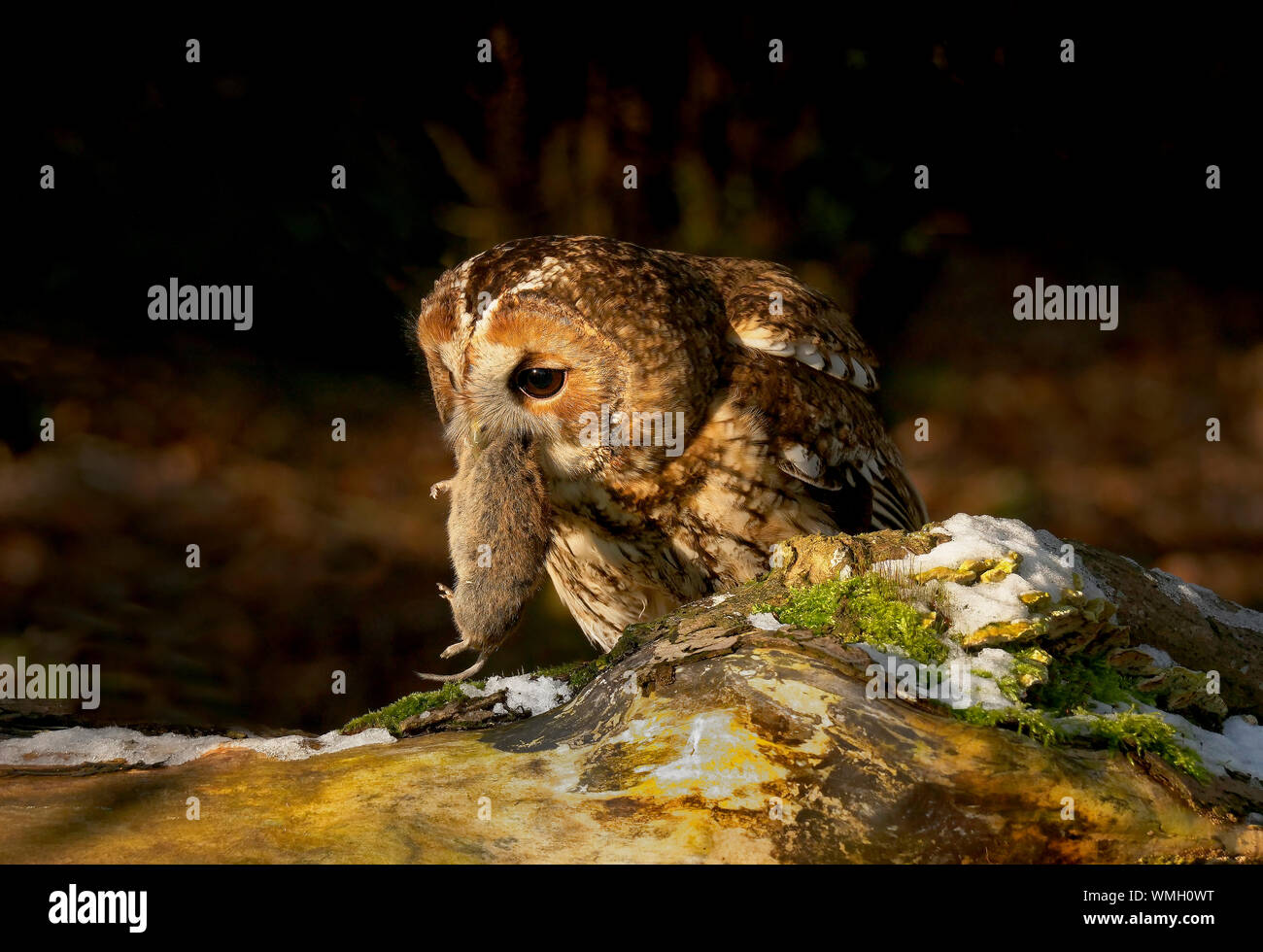
The tawny owl, Strix aluco, is Europe’s most ubiquitous nocturnal raptor—a silent sentinel whose presence weaves through the fabric of woodland ecosystems like a thread of moonlight. But what if these feathered philosophers, with their piercing amber eyes and cryptic plumage, are not just passive observers of the forest but its unsung architects? What if their very existence poses a riddle to the delicate balance of biodiversity, one that challenges our understanding of predator-prey dynamics, habitat engineering, and even climate resilience? Let’s embark on a journey through the shadowed canopies of Europe, where the tawny owl’s impact is as profound as it is understated.
The Tawny Owl as an Ecosystem Puppeteer: How Silent Wings Shape Forest Life
Few creatures embody the paradox of fragility and ferocity as the tawny owl does. By day, it is a ghost, a blur of russet and cream nestled against the bark of ancient oaks. By night, it becomes a harbinger of life and death, its talons deftly dispatching voles, mice, and even other birds with surgical precision. But its influence extends far beyond the dinner plate. The tawny owl is an ecosystem engineer in the truest sense, its predation patterns subtly reshaping the behavior and distribution of its prey. When voles grow scarce in one patch of woodland, the owl’s absence—or presence—can trigger a cascade of adaptations among small mammals, altering seed dispersal, burrowing habits, and even the composition of understory vegetation.
Consider the humble bank vole, Myodes glareolus. In areas where tawny owls are abundant, these rodents exhibit heightened vigilance, reducing their foraging time and shifting their activity to safer, less resource-rich microhabitats. This behavioral ripple effect doesn’t just starve the owl; it starves the plants that rely on vole-mediated seed dispersal. The result? A woodland where certain tree species—those whose seeds voles once spread—begin to decline, while others, favored by less disturbed rodents, flourish. The tawny owl, in its silent hunting, becomes an unwitting arbiter of forest succession.
The Nocturnal Food Web: A Delicate Dance of Predator and Prey
To understand the tawny owl’s role, we must first acknowledge the night’s intricate ballet. Europe’s woodlands are a theater of shadows, where each species plays a part in a nocturnal symphony. The tawny owl sits at the apex of this food web, but its dominion is not absolute. It shares the night with kestrels, long-eared owls, and even foxes, each vying for the same prey. This competition introduces a fascinating dynamic: apparent competition, where the presence of one predator indirectly affects another by depleting shared resources. If tawny owls decimate local vole populations, kestrels may struggle to find sustenance, forcing them to expand their hunting grounds or switch to alternative prey like insects or small birds.
Yet, the tawny owl’s adaptability is its greatest strength. Unlike many raptors, it thrives in fragmented landscapes, from dense ancient forests to suburban parks. This versatility means it can act as a biological bridge, connecting otherwise isolated habitats through its movements. A tawny owl nesting in a city park may hunt in a nearby woodland, inadvertently transporting nutrients and genetic material between ecosystems. In this way, it becomes a living conduit for biodiversity, ensuring that even the most urbanized green spaces retain a thread of wildness.
Climate Whispers: How Tawny Owls Respond to a Warming World
The tawny owl’s story is also one of climate change—a tale of shifting seasons and unpredictable winters. As temperatures rise, the delicate synchrony between owl breeding cycles and prey availability begins to unravel. In some regions, earlier springs mean voles breed sooner, but tawny owls, tied to traditional nesting cues, may miss the peak of abundance. The result? Hungry chicks, stressed parents, and a potential decline in owl populations. Yet, not all is doom. Some tawny owls are adapting, nesting earlier or switching to alternative prey like beetles or earthworms when small mammals are scarce. This plasticity suggests that, like all resilient species, the tawny owl may yet outmaneuver the chaos of a warming planet.
But adaptation comes at a cost. The tawny owl’s reliance on stable, mature woodlands makes it vulnerable to habitat loss—a double-edged sword in an era of deforestation and urban sprawl. Young forests, while vital for many species, lack the structural complexity that tawny owls require: cavities for nesting, dense undergrowth for cover, and a rich understory for prey. The challenge, then, is not just to protect existing woodlands but to restore them in a way that accommodates the owl’s needs. Can we design forests that are both commercially viable and ecologically functional? Can we plant trees that will one day cradle the nests of future generations of tawny owls?
The Cultural Tapestry: From Folklore to Conservation
Long before science sought to unravel its mysteries, the tawny owl was woven into the cultural fabric of Europe. In Celtic lore, it was a messenger between the living and the dead, its hoot a bridge to the Otherworld. Medieval Europe, however, cast it as an omen of doom, a harbinger of death whose call foretold misfortune. Today, it remains a symbol—sometimes revered, sometimes feared—but always enigmatic. This cultural duality presents a unique challenge for conservationists. How do we protect a species that is both revered and reviled? How do we shift perceptions from superstition to stewardship?
The answer may lie in education. By fostering a deeper understanding of the tawny owl’s ecological role, we can transform it from a mere creature of the night into a symbol of woodland health. Citizen science projects, like nest box monitoring schemes, invite communities to engage directly with these birds, fostering a sense of ownership and pride. When people see a tawny owl fledgling take its first flight from a box they helped install, the abstract becomes tangible—and conservation becomes personal.
The Unseen Threats: Pollution, Pesticides, and the Silent Decline
Beneath the rustle of leaves and the hoot of an owl, a quieter crisis unfolds. Agricultural pesticides, particularly neonicotinoids, have been linked to declines in insect populations, which in turn affect the birds and small mammals that rely on them. Meanwhile, lead poisoning from spent ammunition in hunting grounds poses a lethal threat to tawny owls, which scavenge carcasses. Even light pollution disrupts their hunting, as artificial illumination alters the behavior of their prey, making them easier targets for owls—or harder to catch.
The challenge here is systemic. It requires not just protecting woodlands but reforming agricultural practices, regulating hunting ammunition, and mitigating light pollution. It demands that we see the tawny owl not as an isolated species but as a barometer of environmental health. When tawny owl populations decline, it is not just their numbers that are at stake—it is the integrity of the entire ecosystem.
A Call to Action: How Can We Ensure the Tawny Owl’s Future?
The tawny owl’s story is a reminder that biodiversity is not a static tableau but a dynamic, ever-shifting web. To safeguard its future, we must adopt a holistic approach: protecting old-growth forests, restoring degraded habitats, and reducing the chemical and physical threats that imperil it. But we must also challenge ourselves to think differently. What if the key to conservation lies not in isolation but in integration? What if the tawny owl’s survival depends on our ability to harmonize human needs with ecological ones?
Perhaps the most pressing question is this: Can we learn to listen to the night? Not just the hoots of owls, but the whispers of the forest itself—the rustle of leaves, the scurry of small mammals, the sigh of the wind through the branches. The tawny owl does not just inhabit the woodland; it defines it. And if we are to preserve the wild heart of Europe, we must first learn to hear its voice.