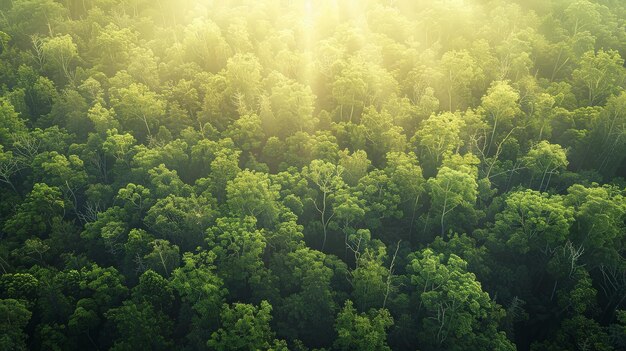
The forest exhales. Beneath the emerald canopy, carbon dioxide drifts upward like a slow, invisible tide, drawn from the soil by the roots of ancient trees. This is the rhythm of the carbon cycle—an ancient dance of absorption and release, where every breath of the woodland is a thread in the tapestry of life. Yet, hidden in the dusk, silent and watchful, owls perform a role far more vital than mere hunters of the night. They are unsung architects of this cycle, their presence shaping the very air we breathe. To understand the carbon cycle is to listen to the forest’s heartbeat—and owls are its most enigmatic pulse.
The Silent Metronome: Owls and Trophic Cascades
In the intricate web of forest life, owls occupy a rarefied niche as apex predators. Their hunting prowess regulates populations of rodents, insects, and small mammals—creatures that, if left unchecked, would proliferate with voracious efficiency. This control is not merely about balance; it is about trophic cascades, a phenomenon where the influence of a top predator ripples through the ecosystem, altering plant growth, soil composition, and even carbon sequestration. When owls patrol the underbrush, they suppress herbivore populations that might otherwise devour saplings and seedlings. These young trees, left to flourish, become the forest’s future carbon vaults, their trunks thickening with stored carbon over decades. Thus, an owl’s presence is a silent command: Grow. Store. Breathe.
Consider the barred owl, a sentinel of North American woodlands. Its haunting call echoes through dense canopies, where it preys on voles and mice—rodents notorious for gnawing tree roots and bark. By curbing their numbers, the barred owl indirectly fosters the regeneration of hardwood species like maple and oak, trees that sequester carbon at rates far exceeding those of conifers. This is not altruism; it is the cold calculus of predation, where life feeds on life to sustain the greater whole. In this way, owls are the forest’s carbon accountants, their hunting grounds a ledger of ecological credit and debt.
The Nocturnal Alchemists: Owls and Nutrient Recycling
As the sun dips below the horizon, owls emerge not just as hunters, but as alchemists of decay. Their pellets—regurgitated masses of fur, bones, and chitin—are more than biological curiosities. They are packets of concentrated nutrients, dropped onto the forest floor like time-release capsules. These pellets, rich in phosphorus and nitrogen, accelerate the decomposition of organic matter, enriching the soil in a process known as nutrient mineralization. The soil, now infused with these vital elements, becomes a fertile bed for mycorrhizal fungi, which form symbiotic relationships with tree roots. These fungi, in turn, enhance the trees’ ability to absorb carbon dioxide and convert it into biomass.
The barn owl, with its ghostly white plumage, is a master of this nocturnal alchemy. Its pellets, scattered across barns and hollow trees, decompose rapidly, releasing nutrients that might otherwise remain locked in the bodies of its prey. This recycling is not passive; it is an active rejuvenation of the forest’s metabolic engine. Without owls, the forest floor would stagnate, choked by undigested remains and starved of the raw materials needed for new growth. Owls, therefore, are the forest’s composters, their digestive systems the crucible where life’s detritus is transmuted into the stuff of future forests.
The Shadow of the Canopy: Owls and Forest Structure
A forest is not a static entity; it is a living mosaic, its structure shaped by the interplay of light, water, and life. Owls, as apex predators, influence this structure in ways both subtle and profound. Their hunting territories often span vast areas, and their presence deters smaller predators like foxes and raccoons, which might otherwise prey on ground-nesting birds or disturb the understory. This landscape of fear—a term ecologists use to describe how prey behavior changes in response to predator presence—leads to a more diverse and resilient forest floor. Saplings thrive where herbivores dare not graze, and shrubs flourish in the absence of trampling feet.
The great horned owl, a titan of the night, exemplifies this dynamic. Its deep, resonant hoots echo through mature forests, where it hunts from lofty perches. By controlling populations of raccoons and opossums, it allows ground-nesting birds like thrushes and warblers to nest undisturbed. These birds, in turn, disperse seeds and pollinate flowers, further shaping the forest’s composition. The result is a forest that is not just a collection of trees, but a layered, breathing entity—one where the canopy, understory, and forest floor exist in delicate equilibrium. Owls, in this context, are the architects of complexity, their presence ensuring that the forest remains a mosaic of niches rather than a monoculture of the same.
The Carbon Ledger: Quantifying Owls’ Impact
To quantify the role of owls in the carbon cycle is to peer into the future of our planet. Studies suggest that healthy predator populations can increase carbon sequestration by up to 15% in certain ecosystems. This is not a trivial figure. Forests are the Earth’s lungs, and their ability to store carbon is a bulwark against climate change. Owls, by maintaining the health and diversity of these forests, are inadvertently contributing to global carbon budgets. Their impact is indirect but undeniable—a ripple that becomes a wave.
Consider the boreal forests of Canada, where snowy owls and great gray owls hunt lemmings and voles. These ecosystems are critical carbon sinks, storing vast amounts of carbon in their peat-rich soils. When owl populations decline—due to habitat loss or climate change—the rodent populations explode, leading to overgrazing and soil degradation. The result is a forest that exhales more carbon than it inhales, a net loss in the fight against global warming. Owls, therefore, are not just guardians of the forest’s biodiversity; they are sentinels of its carbon balance.
The Future in the Dark: Owls in a Changing World
The night belongs to the owls, but the night is changing. Deforestation, urban sprawl, and climate change are eroding the habitats that have sustained these nocturnal hunters for millennia. As forests shrink, owl populations fragment, their territories shrinking like ice caps in summer. The loss of a single owl species can unravel an entire trophic cascade, leaving the forest vulnerable to collapse. This is not hyperbole; it is the reality of ecological interdependence.
Yet, there is hope. Conservation efforts, from nest box programs to protected corridors, are giving owls a fighting chance. In Europe, the Eurasian eagle-owl is making a comeback in regions where it was once hunted to near-extinction. In North America, the eastern screech-owl is adapting to suburban landscapes, finding new hunting grounds in backyards and parks. These successes are a testament to the resilience of nature—and to the power of human intervention. By protecting owls, we are not just saving a species; we are safeguarding the carbon cycle, the forest’s breath, and the future of our planet.
The owl’s role in the carbon cycle is a reminder that every creature, no matter how silent or unseen, is a thread in the grand tapestry of life. To protect the forest is to protect the owls; to protect the owls is to protect the air we breathe. The night is dark, but it is not empty. It is alive with the whisper of wings, the rustle of prey, and the silent work of guardians who ensure that the forest continues to exhale—and that we, in turn, continue to inhale.