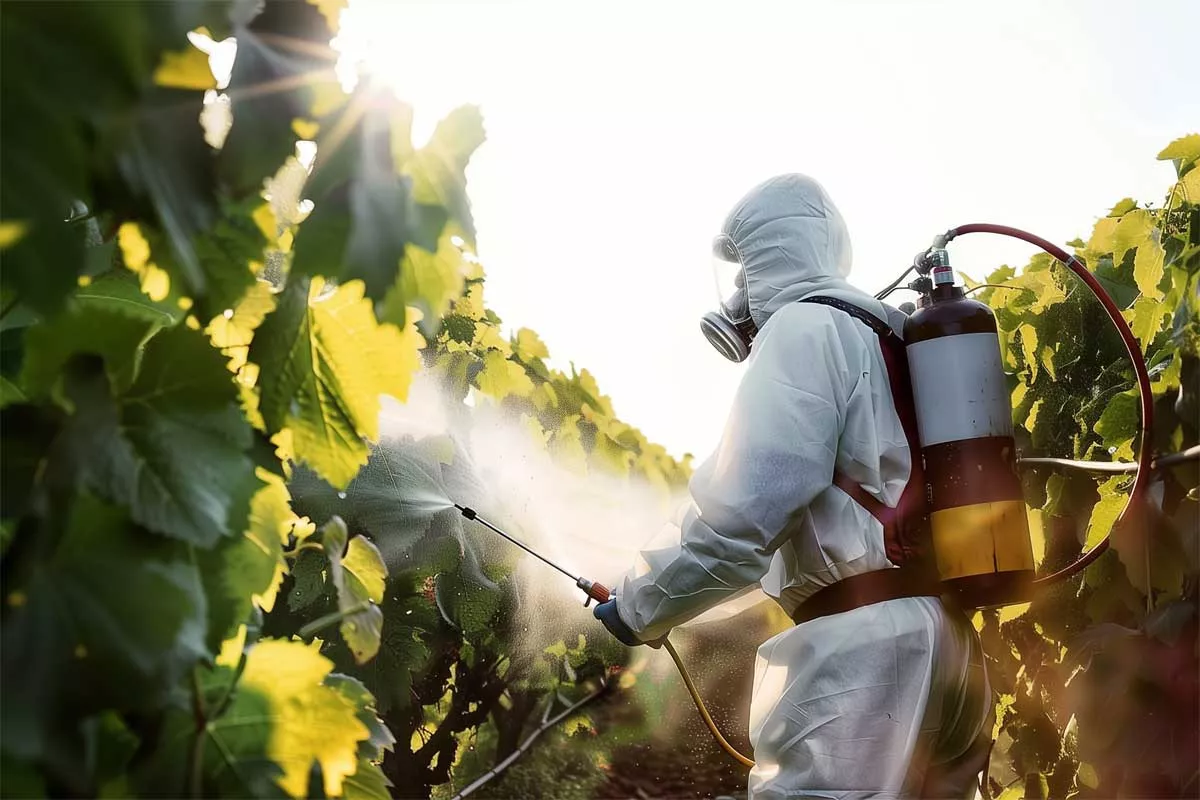
What if the silent, feathered sentinels of our forests—those with eyes like molten gold and plumage like dappled twilight—were vanishing not because of habitat loss alone, but because of an invisible war waged in the soil beneath their talons? The Northern Spotted Owl, a creature of mythic quietude and ecological significance, does not merely hunt; it thrives within a delicate web of life, where every rustle of a vole or scurry of a woodrat is part of a symphony. But what happens when the very prey that sustains this nocturnal maestro is quietly erased by the very chemicals designed to protect crops? This is not a tale of distant jungles or industrial wastelands—it is unfolding in the ancient redwood groves and mist-laden canyons of the Pacific Northwest, where the fate of an owl hangs on the health of its dinner plate.
The Spotted Owl: A Feathered Keystone in the Forest’s Architecture
The Northern Spotted Owl (*Strix occidentalis caurina*) is more than a charismatic icon—it is a biological linchpin. Its presence signals a forest in balance: old-growth conifers draped in moss, dense understories teeming with life, and a chorus of prey species from dusky-footed woodrats to red-backed voles. These owls are not merely predators; they are architects of ecological harmony, their nesting habits shaping the very structure of their habitat. Yet, their domain is shrinking not just from logging, but from the insidious erosion of their prey base—a phenomenon often overshadowed by the louder crisis of deforestation.
Imagine a forest where the night air hums with the whispers of wings, where every meal is a calculated ambush. For the Spotted Owl, survival hinges on a single equation: energy in, energy out. A single adult owl requires roughly 1,800 calories per day—equivalent to consuming three to five small mammals. Multiply that by a breeding pair and their fledglings, and the demand becomes staggering. Now, picture a landscape where those prey populations are dwindling, not from overhunting, but from a slow, chemical poisoning that begins in the soil and ends in the owl’s talons.

Pesticides: The Invisible Erasure of the Forest Floor
Pesticides are not just sprays on a farmer’s field—they are systemic disruptors, seeping into the groundwater, clinging to foliage, and hitching rides on the backs of insects. Among the most notorious are neonicotinoids, a class of neurotoxic chemicals designed to dismantle the nervous systems of pests. But these molecules do not discriminate. They bind to the receptors of non-target species, from bees to beetles to the humble vole. When a woodrat nibbles on a treated seed or a shrew laps up contaminated dew, the poison doesn’t just kill—it lingers, bioaccumulating in the tissues of predators one step up the food chain.
Consider the case of imidacloprid, a neonicotinoid so pervasive that it has been detected in the tissues of Northern Spotted Owls themselves. Studies reveal that owls exposed to sublethal doses exhibit tremors, impaired hunting, and reduced reproductive success. Their prey, once abundant, now move sluggishly through a landscape that has become a minefield. The forest floor, once a buffet of life, is now a deathtrap disguised as abundance. And the owls? They are starving in a land of plenty.
The Domino Effect: How Pesticides Topple the Spotted Owl’s Food Web
The Spotted Owl’s diet is a tapestry of small mammals, but its survival depends on the health of the entire web. When pesticides decimate insect populations, the ripple effects are catastrophic. Woodrats, which rely on insects for protein, face malnutrition. Voles, already stressed by habitat fragmentation, now contend with toxic burdens passed up the chain. Even the owls’ secondary prey—birds like the Northern Saw-whet Owl—suffer as their own food sources vanish. It’s a cascade of collapse, where each fallen link weakens the next.
But here’s the cruel irony: many of these pesticides are applied not in the owl’s habitat, but in agricultural zones hundreds of miles away. Wind carries the toxins, rain washes them into rivers, and the forest, ever the sponge, absorbs what it can. The Spotted Owl, a creature of ancient forests, becomes an unwitting victim of a war waged on fields of corn and soy. Its prey, once a reliable buffet, is now a poisoned platter—and the owl, the ultimate predator, is left to starve.
Can the Spotted Owl Adapt—or Is Its Fate Sealed?
Some might argue that wildlife adapts. After all, species evolve, habitats shift, and life finds a way. But the Spotted Owl is no generalist. It is a relic of a bygone era, a creature of deep, undisturbed forests where the air is thick with the scent of damp earth and the only light is the moon’s silver gaze. It cannot simply upend its diet to feast on pesticide-resistant cockroaches or genetically modified mice. Its biology is finely tuned to a world that no longer exists—and the chemicals we’ve unleashed are the final nail in its coffin.
Yet, there is hope in the form of policy and awareness. In regions where pesticide use has been curtailed near critical owl habitats, prey populations have rebounded. The challenge, however, is monumental. It requires farmers to adopt integrated pest management, regulators to enforce buffer zones, and communities to recognize that the owl’s survival is not a luxury—it is a barometer of the forest’s health. The question is not whether we can save the Spotted Owl, but whether we are willing to confront the invisible enemies in our midst.
The Unseen Cost of Convenience: What Your Grocery Cart Hides
Next time you bite into a strawberry in January or sprinkle a chemical-laced lawn fertilizer, consider this: the cost is not just in dollars, but in the silent disappearance of creatures like the Spotted Owl. Every purchase is a vote—a vote for the world we want to inhabit. Do we choose the convenience of a chemically dependent agriculture, or do we demand systems that sustain life in all its forms? The Spotted Owl’s fate is not just a story of ecology; it is a mirror held up to our own choices.
The forest does not speak in words, but in the absence of wings. The question is no longer whether we will hear its silence—it is whether we will act before it is too late.