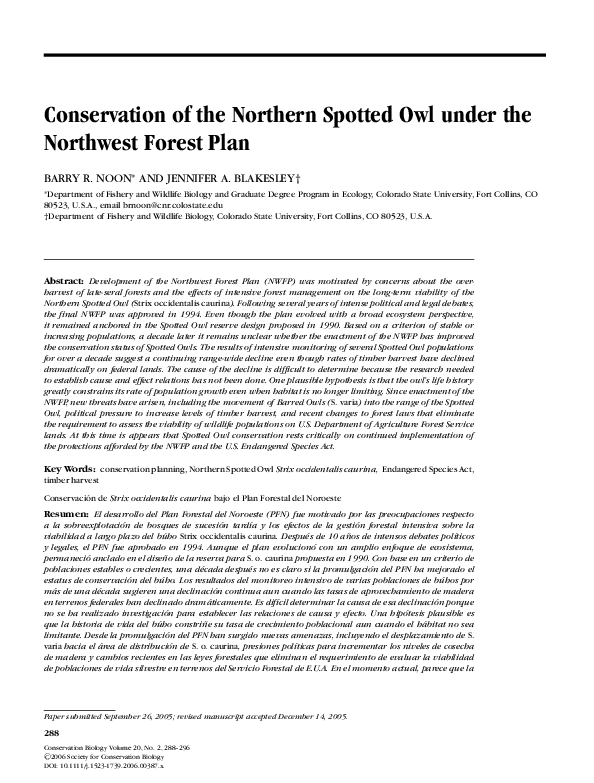
The Northern Spotted Owl, a creature of ancient forests and whispered secrets, has become an emblem of conservation battles waged in the shadowed cathedrals of the Pacific Northwest. Its haunting call echoes through centuries-old Douglas firs and redwood groves, a melody that once harmonized with the unbroken expanse of old-growth wilderness. But this symphony is now fractured, its notes disrupted by the relentless march of industry and policy. The Northwest Forest Plan, a sprawling tapestry of regulations born in the 1990s, was meant to stitch together the frayed edges of this ecological tapestry. Yet, like a quilt stitched with uneven threads, its impact on the Spotted Owl remains a subject of fierce debate—a dance between preservation and pragmatism, where the owl’s survival hangs in the balance.
The Forgotten Canopy: How the Plan Reshaped an Ecosystem
Imagine a cathedral, its vaulted ceilings stretching toward the heavens, each beam a towering conifer, its roots delving into the earth like the fingers of a sage. This was the domain of the Northern Spotted Owl, a species that evolved in the embrace of these ancient forests. The Northwest Forest Plan, enacted in 1994, sought to reconcile the insatiable appetite of timber industries with the urgent need to protect biodiversity. Yet, in its attempt to carve out a middle path, the plan inadvertently fractured the very habitat it aimed to preserve.
The Spotted Owl’s existence is inextricably linked to the structural complexity of old-growth forests. These forests are not merely collections of trees; they are living networks, where the canopy’s stratification creates microclimates as diverse as the species they shelter. The plan’s designation of “matrix lands”—areas where logging could continue—chipped away at the edges of these ancient groves, leaving the owl’s domain pockmarked with clearcuts and fragmented corridors. The owl, a creature of the deep woods, found itself marooned in a landscape that had lost its cohesion, its once-vast territory reduced to isolated islands of refuge.
Worse still, the plan’s reliance on “adaptive management” allowed for adjustments based on new data, but this flexibility often favored economic interests over ecological integrity. The owl’s decline was not a sudden collapse but a slow unraveling, a death by a thousand cuts, each policy tweak and logging exemption chipping away at the foundation of its survival.
The Barred Owl: An Uninvited Guest with a Ravenous Appetite
Nature abhors a vacuum, and in the wake of the Spotted Owl’s decline, another owl arrived—a larger, more aggressive cousin from the east, the Barred Owl. This interloper, once confined to the deciduous forests of the Midwest, has become an invasive force in the Pacific Northwest, its presence a stark reminder of the unintended consequences of human intervention. The Barred Owl’s expansion is not merely a biological curiosity; it is a symptom of a deeper ecological imbalance, one exacerbated by the very policies meant to protect the Spotted Owl.
The Northwest Forest Plan, in its efforts to preserve the Spotted Owl’s habitat, inadvertently created conditions that favored the Barred Owl. Clear-cutting and forest fragmentation disrupted the Spotted Owl’s territorial dominance, while the Barred Owl, with its adaptability and voracious appetite, thrived in the altered landscape. The two species now compete for the same dwindling resources, and the Barred Owl’s dominance is undeniable. Where the Spotted Owl once reigned, the Barred Owl now rules, its hoots a mocking chorus to the fading echoes of its endangered cousin.
This ecological upheaval is a cautionary tale, a reminder that conservation is not a static endeavor but a dynamic interplay of forces. The Spotted Owl’s struggle is not just against the chainsaw but against the unintended consequences of human intervention, a battle waged on multiple fronts.
The Silent Assassins: Climate Change and Cascading Threats
Beneath the canopy’s emerald veil, a more insidious threat lurks—climate change. The Northwest Forest Plan was drafted in an era when the full brunt of global warming was still a distant specter. Today, it is an undeniable reality, reshaping the forests in ways both subtle and catastrophic. Droughts parch the soil, wildfires scorch the earth, and shifting temperatures alter the delicate balance of the ecosystem. The Spotted Owl, a creature of cool, moist forests, finds itself increasingly out of sync with its environment.
The plan’s protections, while well-intentioned, were not designed to account for the creeping horrors of climate change. The owl’s habitat is not just being fragmented; it is being transformed. The ancient groves that once sheltered it are now vulnerable to pests like the bark beetle, their defenses weakened by rising temperatures. The Spotted Owl’s survival depends on a web of interconnected factors, and climate change is pulling at the threads, unraveling the fabric of its existence.
Yet, even in the face of these challenges, there is hope. The plan’s adaptive management framework, though flawed, offers a glimmer of flexibility. By incorporating climate projections and ecosystem resilience into its policies, conservationists can begin to address the silent assassins that threaten the Spotted Owl’s future. The challenge lies in balancing immediate needs with long-term survival, a task that demands both urgency and foresight.
The Human Element: Policy, Politics, and the Owl’s Plight
Behind the Spotted Owl’s struggle lies a human drama, a tale of policy and politics, of competing interests and clashing ideologies. The Northwest Forest Plan was born in the crucible of the 1990s, a decade marked by environmental activism and economic upheaval. The owl became a symbol, a rallying cry for those who sought to protect the ancient forests, and a target for those who saw them as mere resources to be exploited. The plan itself was a compromise, a fragile truce between conservationists and loggers, a document that sought to please everyone and ended up satisfying no one.
Politics, as ever, played a pivotal role. The plan’s implementation was shaped by lobbying, legal battles, and shifting priorities, each decision leaving its mark on the owl’s habitat. The Spotted Owl’s fate became a pawn in a larger game, its survival dependent on the whims of policymakers and the power of corporate interests. The owl, a creature of the wild, found itself entangled in the machinations of human society, its fate dictated by forces far beyond its understanding.
Yet, even in this complex web of human endeavor, there is room for redemption. The Spotted Owl’s story is a call to action, a reminder that conservation is not just about protecting species but about redefining our relationship with the natural world. The plan’s shortcomings offer lessons, opportunities to craft policies that are not just reactive but proactive, that anticipate the challenges of the future rather than merely responding to the crises of the past.
The Owl’s Lament: A Future in the Balance
As the sun sets over the Pacific Northwest, casting long shadows across the forest floor, the Spotted Owl’s call echoes through the trees. It is a sound that carries the weight of centuries, a lament for a world that is slipping away. The Northwest Forest Plan was meant to be a shield, a bulwark against the forces that threatened to erase the owl from the landscape. Yet, like all human endeavors, it is imperfect, a flawed attempt to balance the needs of nature with the demands of progress.
The owl’s future hangs in the balance, its survival dependent on our willingness to learn from the past and adapt for the future. The plan must evolve, incorporating the lessons of the Barred Owl’s invasion, the creeping threat of climate change, and the ever-present specter of human intervention. It must become more than a document; it must become a living, breathing entity, one that responds to the needs of the forest and its inhabitants.
For the Spotted Owl, the stakes could not be higher. It is not just a species at risk but a symbol of the wild, a reminder of the beauty and complexity of the natural world. Its survival is a test of our own humanity, a challenge to prove that we are capable of more than exploitation and destruction. The owl’s call is a plea, a whisper in the dark, asking us to listen, to act, and to remember that we are not the owners of this planet but its stewards.
The Northwest Forest Plan is not the end of the story but a chapter in a much larger narrative. The Spotted Owl’s struggle is our struggle, a reflection of our own relationship with the Earth. Will we rise to the challenge, or will we let the owl’s lament fade into silence? The choice is ours.