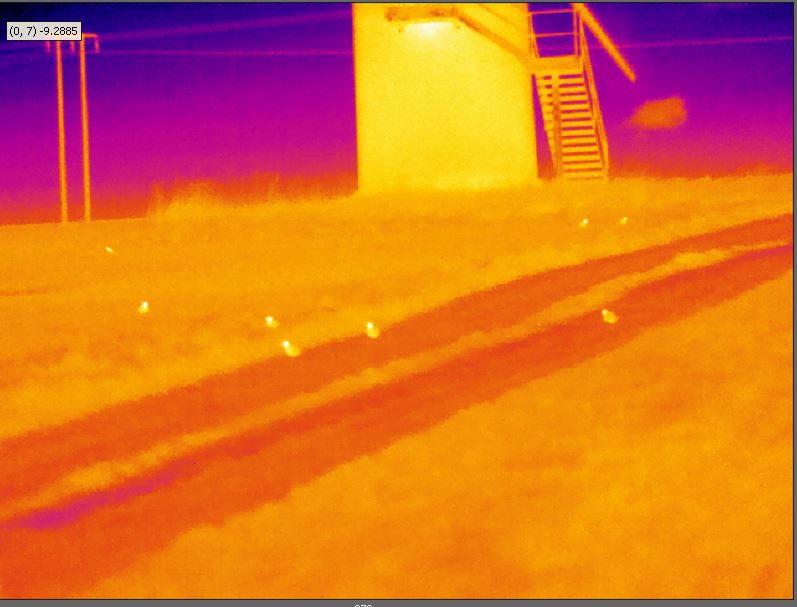
In the hushed cloak of night, where shadows stretch and secrets linger, the world of owls unfolds—a realm of silent wings and piercing gaze. For centuries, these nocturnal sentinels have evaded human understanding, their behaviors shrouded in mystery. But with the advent of thermal imaging, a revolutionary tool has pierced the darkness, revealing the hidden choreography of owl life. No longer confined to the whispers of folklore or the fleeting glimpses of field researchers, these enigmatic birds now stand illuminated under the gaze of science. The impact of thermal imaging on studying nocturnal owl behavior is nothing short of transformative, offering a window into their nocturnal symphony that was once deemed impossible to access.
The Unseen World of Nocturnal Owls
Owls are the architects of the night, their existence a testament to nature’s ingenuity in adapting to the absence of light. Unlike their diurnal counterparts, nocturnal owls have evolved a suite of adaptations—silent flight, acute hearing, and eyes that pierce the gloom—to thrive in the dark. Yet, their behavior remains one of the most elusive aspects of their ecology. Traditional observation methods, reliant on moonlight or artificial light, often disrupt their natural rhythms, casting doubt on the authenticity of recorded behaviors. Thermal imaging, however, transcends this limitation. By detecting the heat signatures of these birds, researchers can observe their movements without intrusion, capturing the raw, unfiltered essence of owl life.
The allure of owls is not merely scientific; it is deeply cultural. From ancient Greek myths to modern-day symbolism, these birds are woven into the fabric of human imagination as harbingers of wisdom, mystery, and even foreboding. Yet, beneath the poetic veneer lies a complex biological reality. Thermal imaging strips away the mystique, revealing owls not as mythic creatures but as finely tuned predators, their behaviors a dance of survival honed over millennia. The technology does not diminish their magic—it amplifies it, allowing us to witness the intricate ballet of hunting, courtship, and territorial defense that unfolds in the quiet hours.
Thermal Imaging: A Beacon in the Dark
Thermal imaging, or infrared thermography, operates on a simple yet profound principle: all living organisms emit heat, and this heat can be visualized as a spectrum of colors on a thermal camera. For owls, whose bodies are insulated by dense feathers, their heat signatures are distinct against the cooler backdrop of the night. This technology has revolutionized nocturnal studies, providing researchers with a tool that is both non-invasive and remarkably precise. Unlike traditional night-vision equipment, which relies on reflected light and can be hindered by environmental conditions, thermal imaging thrives in complete darkness, rain, or fog—conditions that would otherwise obscure an owl’s presence.
The implications of this are staggering. Suddenly, the nocturnal habits of owls are no longer a matter of speculation but of observable fact. Researchers can track the flight paths of barn owls as they quarter over fields, their heat signatures painting a vivid picture of their hunting strategies. They can document the territorial displays of great horned owls, their body heat flaring as they assert dominance in the dead of night. Even the subtle interactions between parent and offspring, once hidden in the shadows, are now laid bare for scientific scrutiny. Thermal imaging does not just illuminate the physical presence of owls—it illuminates their very existence as dynamic, sentient beings navigating a world we are only beginning to understand.
Decoding the Nocturnal Symphony: Hunting and Foraging
The hunt is the heartbeat of an owl’s existence, a high-stakes performance where precision and patience collide. Thermal imaging has peeled back the layers of this nocturnal drama, revealing the nuanced strategies owls employ to secure their prey. Take the barn owl, for example, whose silent flight is legendary. With thermal imaging, researchers have observed how these birds use their keen hearing to pinpoint the rustling of a mouse in the undergrowth, their heat signatures flickering as they adjust their trajectory with unerring accuracy. The technology has also debunked long-held myths—owls do not rely solely on sight to hunt. Instead, they integrate thermal and auditory cues, a multisensory approach that underscores their evolutionary brilliance.
For species like the snowy owl, which inhabits the stark, open landscapes of the Arctic, thermal imaging has been a game-changer. These birds, adapted to a world of ice and snow, face unique challenges in detecting prey against a monochromatic backdrop. Thermal imaging has shown how they exploit the heat signatures of small mammals burrowing beneath the snow, their bodies tensing as they dive with lethal precision. The technology has also highlighted the role of thermoregulation in owl behavior. A hunting owl’s body heat fluctuates as it expends energy, and these fluctuations can reveal its success—or failure—in capturing prey. Such insights are not merely academic; they offer a glimpse into the survival strategies that have allowed owls to persist in an ever-changing world.
The Social Lives of Owls: Courtship, Territory, and Communication
Owls are often perceived as solitary creatures, their reputations forged in the quietude of the night. Yet, thermal imaging has unveiled a rich tapestry of social interactions that challenge this stereotype. Courtship rituals, once shrouded in mystery, are now visible in vivid detail. The great horned owl, for instance, engages in elaborate displays of aerial acrobatics, its heat signature flaring as it dives and climbs in a choreographed dance to attract a mate. Thermal imaging has also captured the tender moments between parent and chick, the latter’s smaller heat signature nestled against the warmth of its guardian, a testament to the bonds that underpin owl societies.
Territoriality, too, is a spectacle of heat and movement. Male owls, particularly those of species like the tawny owl, engage in vocal duels that echo through the night. Thermal imaging has shown how these vocalizations are often accompanied by physical posturing, the owl’s body heat intensifying as it asserts its claim to a territory. Even the subtle shifts in posture—wings slightly raised, feathers ruffled—are visible, offering clues to the complex language of owl communication. These observations are not just fascinating; they are critical to understanding the ecological roles owls play in their ecosystems. By mapping the thermal signatures of owl territories, researchers can predict patterns of resource use and competition, shedding light on the delicate balance that sustains biodiversity.
The Ethical Imperative: Conservation in the Age of Technology
The power of thermal imaging extends beyond the realm of pure science; it carries an ethical imperative. As human activities encroach upon natural habitats, owls face unprecedented threats—habitat loss, climate change, and collisions with man-made structures. Thermal imaging offers a lifeline, enabling researchers to monitor owl populations with minimal disturbance. In regions where owls are endangered, such as the spotted owl in North America, thermal surveys have become a cornerstone of conservation efforts, allowing scientists to track population dynamics and identify critical habitats without invasive procedures.
Moreover, thermal imaging has democratized owl research, making it accessible to citizen scientists and educators. Schools and wildlife organizations now employ thermal cameras to engage communities in owl conservation, fostering a deeper connection between people and these enigmatic birds. The technology has also sparked a wave of public fascination, with thermal images of owls going viral and inspiring a new generation of naturalists. In an era where biodiversity is under siege, thermal imaging is not just a tool—it is a beacon of hope, a way to bridge the gap between human curiosity and the urgent need to protect the natural world.
The Future of Owl Research: Beyond the Visible Spectrum
As technology advances, so too does our ability to unravel the mysteries of owl behavior. Emerging innovations, such as drone-mounted thermal cameras, promise to revolutionize field research, allowing scientists to track owls across vast landscapes with unprecedented precision. Machine learning algorithms are being developed to analyze thermal data, identifying individual owls by their unique heat signatures and predicting their movements with eerie accuracy. These advancements are not merely incremental; they represent a paradigm shift in how we study and understand nocturnal wildlife.
The future of owl research is a tapestry woven from threads of technology, curiosity, and conservation. Thermal imaging has already illuminated paths that were once shrouded in darkness, but the journey is far from over. As we stand on the precipice of a new era in ecological science, one thing is clear: the owls are watching. And now, for the first time in history, we are watching back—with clarity, with compassion, and with the unyielding determination to ensure that their nocturnal symphony continues to echo through the ages.