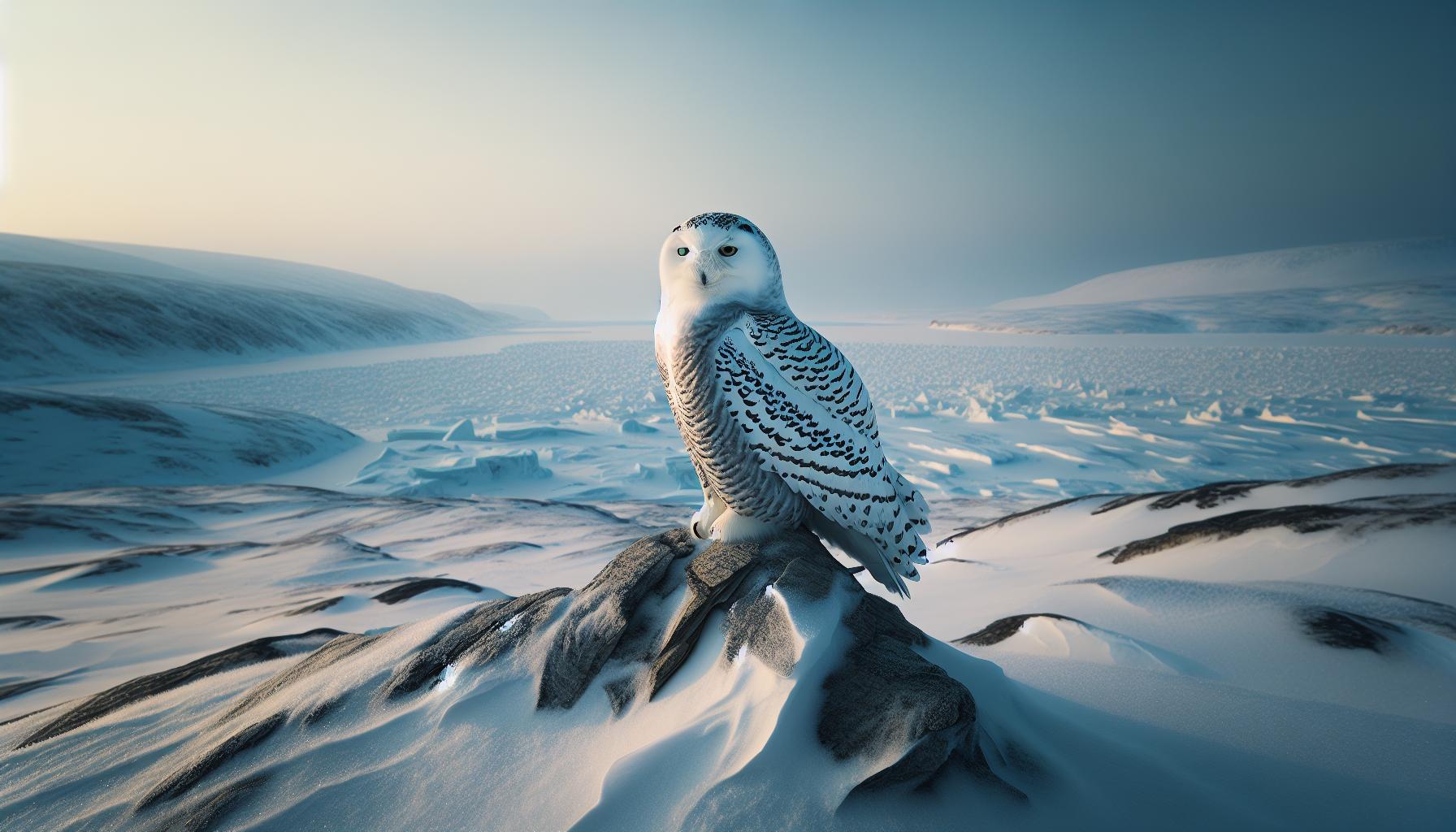
Imagine strapping on a headset and suddenly finding yourself face-to-beak with a snowy owl perched on an Arctic ice floe, its golden eyes gleaming against the endless white expanse. The wind howls, the snow crunches underfoot, and the vastness of the tundra stretches before you—all without leaving your living room. Virtual reality (VR) isn’t just a technological marvel; it’s a gateway to empathy, a tool to dissolve the boundaries between human curiosity and the natural world. But how do we harness this immersive power to educate people about snowy owl habitats in a way that’s both captivating and meaningful? Let’s dive into the untamed frontier of VR education, where pixels meet permafrost and pixels become pathways to conservation.
The Allure of Immersion: Why VR Transcends Traditional Learning
Picture this: a classroom where textbooks are obsolete, where the Arctic tundra isn’t a distant concept but a living, breathing landscape you can traverse with a flick of your wrist. Traditional education often struggles to convey the sheer scale and intricacy of ecosystems like those of the snowy owl. Maps and documentaries provide fragments of understanding, but VR stitches those fragments into a tapestry of experience. Studies show that immersive learning boosts retention by up to 75% compared to passive methods. When students don a VR headset, they don’t just learn about snowy owl habitats—they *live* them. The Arctic’s biting winds, the crunch of snow under taloned feet, the eerie silence of a winter night—these aren’t just words on a page; they’re sensations that embed knowledge deep within the mind. But here’s the rub: not everyone has access to VR technology. How do we bridge this digital divide while ensuring the magic of immersion doesn’t become a privilege reserved for the few?
Designing the Arctic: Crafting a Habitat That Feels Real
Creating a VR experience that authentically transports users to a snowy owl’s world is no small feat. It demands a symphony of artistry and science. Developers must collaborate with ornithologists to ensure the owls’ behaviors—from their hunting dives to their territorial calls—are rendered with scientific precision. The tundra itself must be a character, not just a backdrop. Every snowdrift, every gust of wind, every distant howl of a wolf pack must feel alive. But here’s where the challenge lies: balancing realism with engagement. Too much detail risks overwhelming users; too little risks leaving them cold (pun intended). The key is to curate the experience, guiding users through key moments—like witnessing an owl’s courtship flight or tracking its migration across continents—without bogging them down in extraneous data. How do we distill the essence of a snowy owl’s habitat into a narrative that’s both educational and exhilarating?

The Power of Perspective: Walking in the Owl’s Talons
What if you could see the world through the eyes of a snowy owl? VR makes this possible. By adopting a first-person perspective, users can experience the world from the owl’s vantage point—scanning the horizon for prey, navigating blizzards, and even enduring the relentless Arctic sun of summer. This shift in perspective isn’t just a gimmick; it’s a radical act of empathy. When people see the world through the owl’s eyes, they begin to understand the challenges it faces: shrinking habitats, climate change, and human encroachment. But empathy alone isn’t enough. How do we translate this emotional connection into action? The answer lies in interactivity. VR experiences should invite users to make choices—like protecting a nesting site or reducing carbon footprints—and show them the consequences of those choices in real time. Can a virtual world inspire real-world change?
Gamification: Turning Learning into an Adventure
Let’s be honest: not everyone is drawn to dense ecological reports or dry scientific papers. But what if learning about snowy owl habitats felt like an adventure? Gamification—integrating game-like elements into education—can transform VR into a dynamic, engaging experience. Imagine a scenario where users must guide a snowy owl through its annual migration, avoiding predators, finding food, and adapting to changing weather. Each decision teaches them about the owl’s survival strategies while subtly reinforcing the importance of conservation. Points could be awarded for sustainable choices, and leaderboards might compare users’ environmental impact. But here’s the twist: the game shouldn’t feel like a lecture. It should feel like a quest, where every challenge is an opportunity to learn. How do we ensure that the fun doesn’t overshadow the education—and vice versa?
The Role of Storytelling: Weaving Narrative into the Virtual Landscape
At its heart, VR is a storytelling medium. To educate about snowy owl habitats, we need narratives that resonate. Consider a story where users follow the life of a single owl, from hatchling to adulthood, encountering obstacles like habitat loss and climate shifts along the way. This narrative arc makes the educational content feel personal and urgent. But storytelling in VR is tricky. It must be immersive without being overwhelming, informative without being preachy. The best VR experiences feel like a conversation, not a lecture. They pose questions: *What would you do if your home was melting beneath your feet?* *How would you survive an Arctic winter?* By framing the experience as a journey rather than a lesson, we invite users to engage deeply with the material. But how do we ensure the story doesn’t feel contrived or overly simplistic?
Accessibility and Inclusivity: Ensuring VR Education Reaches Everyone
VR has the power to democratize education, but only if it’s accessible to all. Not everyone can afford a high-end VR headset, and not everyone has the physical ability to use one. Developers must consider a range of devices, from smartphone-based VR to more affordable headsets, to ensure inclusivity. Additionally, experiences should be designed with diverse users in mind—considering factors like color contrast for those with visual impairments or simple navigation for those less tech-savvy. But accessibility isn’t just about hardware; it’s about content. How do we create VR experiences that resonate across cultures, languages, and backgrounds? The goal isn’t just to educate but to inspire a global community of conservationists. Can VR be a tool for both personal growth and collective action?
The Future of VR in Conservation: Beyond the Headset
VR is more than a fleeting trend; it’s a glimpse into the future of education and activism. As technology advances, so too will the possibilities. Imagine VR experiences that incorporate real-time data, showing users how climate change is altering snowy owl habitats *as it happens*. Or collaborative VR platforms where users from around the world can explore the Arctic together, sharing insights and strategies for conservation. But the true potential of VR lies in its ability to bridge gaps—between humans and nature, between knowledge and action, between individuals and communities. The question isn’t whether VR can change the way we learn about snowy owl habitats; it’s whether we’re ready to embrace its power. Will we step into the virtual tundra and emerge with a renewed sense of responsibility for the natural world?