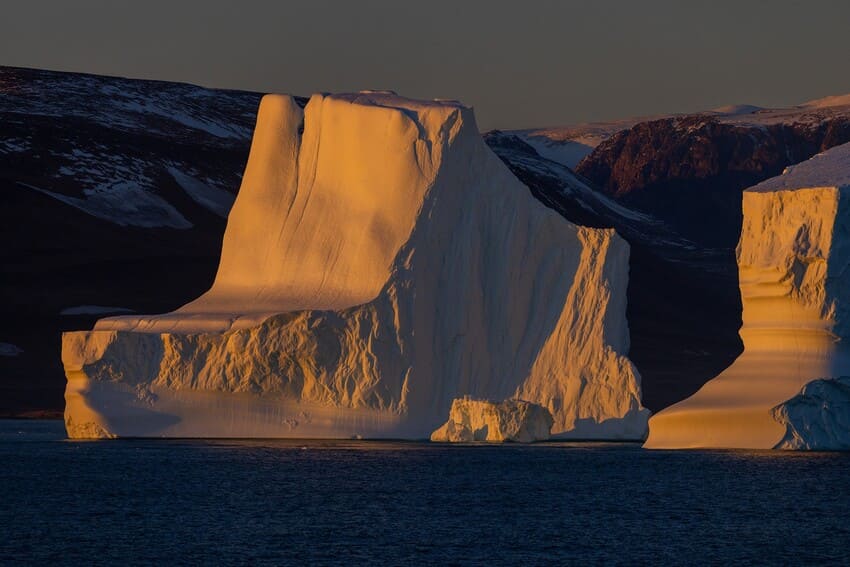
The Arctic tundra is a realm of stark contrasts—where the mercury plummets and the wind carves ice into ephemeral sculptures. Yet, amidst this frozen expanse, the snowy owl reigns as a spectral sovereign, its white plumage a masterclass in camouflage against the endless white. For researchers braving these punishing conditions, studying these enigmatic birds has long been a Herculean task. But now, a technological marvel is rewriting the rules of engagement: thermal imaging. Like a silent sentinel, it pierces the veil of darkness and cold, revealing the hidden lives of snowy owls in ways that were once unimaginable.
The Arctic’s Silent Watchers: Why Snowy Owls Defy the Cold
Snowy owls are not merely survivors of the Arctic—they are its architects. Their thick, insulating feathers trap heat like a fortress, while their keen eyesight and acute hearing turn the vast, featureless landscape into a hunting ground. Yet, their resilience is not just biological; it is behavioral. These birds are nomads, drifting across the tundra in search of lemmings, their primary prey, and adapting to the mercurial moods of the Arctic climate. But studying them in such an unforgiving environment is akin to chasing shadows—until thermal imaging entered the fray.
The challenge of observing snowy owls lies in their elusiveness. They blend seamlessly into the snow, their movements swift and silent. Traditional methods—like tracking footprints or setting up motion-sensitive cameras—often yield fragmented data. Thermal imaging, however, offers a different lens. It detects the heat signatures of these birds, transforming the white void into a canvas of glowing orbs and fleeting heat trails. Suddenly, the owl’s presence is no longer a whisper but a shout in the dark.
Thermal Imaging: The Invisible Becomes Visible
At its core, thermal imaging is a dance between physics and perception. Every living creature emits infrared radiation, a form of energy invisible to the naked eye but detectable by specialized cameras. For snowy owls, this radiation is a lifeline—a way to navigate the darkness of the Arctic winter and the blinding glare of the midnight sun. Researchers leverage this phenomenon by deploying thermal cameras that capture these heat signatures, rendering them in vivid, contrasting hues.
The beauty of thermal imaging lies in its ability to cut through the noise. Unlike traditional photography, which relies on light, thermal cameras see the world in terms of temperature differentials. A snowy owl perched on a snowbank, its body a furnace against the frozen ground, becomes a beacon in the thermal spectrum. Even when camouflaged by snow, its heat signature betrays its location, allowing researchers to track its movements with unprecedented precision.
Consider the metaphor of a lighthouse in a storm. The owl, like the lighthouse, is a guiding light in the Arctic’s chaos. Thermal imaging acts as the lens through which we perceive this light, turning the owl’s presence from a fleeting glimpse into a tangible, measurable reality. It is not just a tool—it is a revelation.
The Dance of Predator and Prey: Thermal Insights into Hunting Strategies
The Arctic is a theater of survival, and the snowy owl is its star performer. Thermal imaging has peeled back the layers of this drama, exposing the intricate choreography between predator and prey. Lemmings, the owl’s favored meal, are masters of subterfuge, burrowing beneath the snow to escape detection. Yet, their movements generate heat—tiny, fleeting pockets of warmth that thermal cameras can detect. In this way, the owl’s hunting ground becomes a minefield of heat signatures, each one a potential meal.
Researchers have observed that snowy owls employ a technique known as “still-hunting,” where they perch motionless for hours, their eyes scanning the landscape for the slightest disturbance. Thermal imaging has shown that this patience is not passive but an active strategy. The owl’s heat signature remains constant, a steady beacon in the thermal chaos, while the lemmings’ movements create ripples in the heat map. It is a game of patience and precision, where the owl’s thermal signature is both its weapon and its shield.
Moreover, thermal imaging has revealed the owl’s adaptability. In the depths of winter, when lemmings are scarce, snowy owls have been known to switch to alternative prey, such as ptarmigans or even fish. Thermal cameras capture these shifts in behavior, painting a portrait of resilience and ingenuity. The Arctic is not just a stage for survival—it is a classroom where the owl learns, adapts, and thrives.
Breaking the Ice: How Thermal Imaging Transforms Field Research
Field research in the Arctic is a crucible of endurance. Blizzards, subzero temperatures, and the ever-present threat of frostbite make data collection a Herculean task. Traditional methods often require researchers to brave these conditions, setting up cameras or tracking devices by hand. Thermal imaging, however, offers a reprieve. Remote thermal cameras can be deployed across vast stretches of tundra, capturing data without the need for human presence. This not only reduces the risks to researchers but also minimizes the disturbance to the owls’ natural behavior.
The technology’s portability is another game-changer. Modern thermal cameras are compact, lightweight, and capable of operating in extreme cold. Some models even integrate with drones, allowing researchers to survey large areas from a safe distance. This aerial perspective is particularly valuable in the Arctic, where the terrain is often impassable on foot. By harnessing the power of thermal imaging, researchers can now study snowy owls in ways that were once confined to the realm of fantasy.
Yet, the true power of thermal imaging lies in its ability to democratize data. High-resolution thermal footage can be analyzed in real-time or stored for later study, providing a treasure trove of information for scientists and conservationists. It is a tool that transcends the limitations of human perception, offering a window into the hidden lives of Arctic wildlife.
The Future of Arctic Conservation: A Thermal Revolution
The implications of thermal imaging extend far beyond the study of snowy owls. As climate change reshapes the Arctic, understanding the behavior and habitat use of its inhabitants becomes increasingly critical. Thermal imaging offers a lifeline in this battle, providing the data needed to protect vulnerable species from the encroaching threats of a warming world.
For snowy owls, thermal imaging has already begun to reveal the impacts of environmental change. Shifts in prey availability, changes in nesting sites, and alterations in migration patterns are all detectable through thermal signatures. By monitoring these trends, researchers can advocate for targeted conservation efforts, ensuring that these majestic birds continue to grace the Arctic skies for generations to come.
The technology also holds promise for other Arctic species, from polar bears to Arctic foxes. Each creature, with its unique heat signature, becomes a story waiting to be told. Thermal imaging is not just a tool—it is a revolution, one that is rewriting the narrative of Arctic wildlife and the scientists who study them.
Conclusion: The Owl’s Gaze in a Warming World
The snowy owl is more than a bird—it is a symbol of resilience, adaptability, and the unyielding spirit of the Arctic. Thermal imaging has given us the means to peer into its world, to understand its struggles and triumphs in ways that were once impossible. It is a testament to human ingenuity, a bridge between the visible and the invisible, the known and the unknown.
As we stand on the precipice of a changing world, thermal imaging offers a beacon of hope. It is a reminder that even in the harshest of environments, life persists—and that with the right tools, we can uncover its secrets. The snowy owl, with its piercing gaze and silent wings, continues to watch over the Arctic. Now, thanks to thermal imaging, we can watch with it.