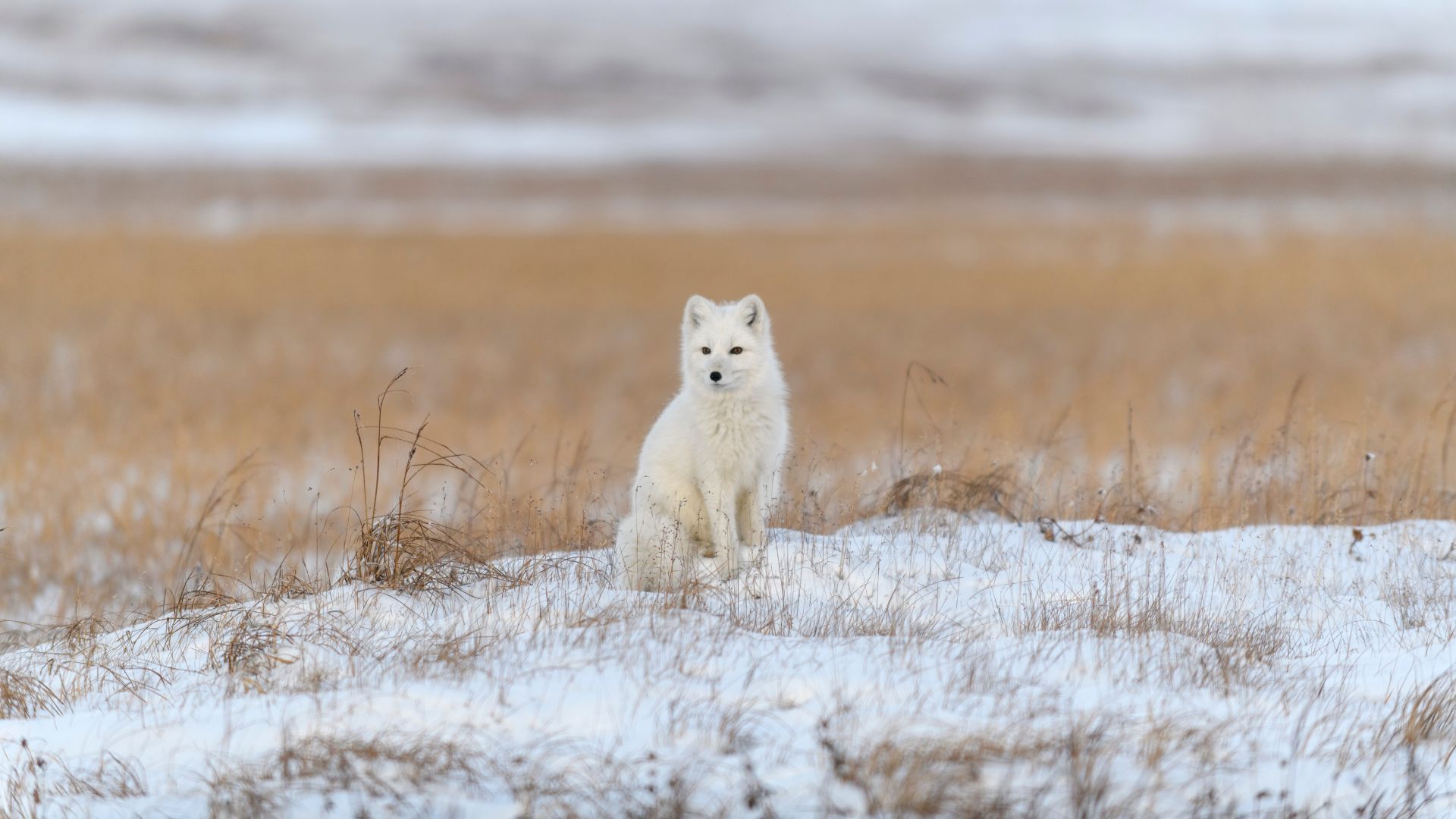
The Arctic is not merely a frozen wasteland—it is a cathedral of ice and silence, where the wind whispers secrets to the snow and the auroras dance like celestial sentinels. Yet this ancient realm, sculpted by millennia of glacial patience, is now trembling under the weight of human ambition. At its heart, the snowy owl, that ghostly monarch of the tundra, stands as both witness and victim to the unraveling of its frozen kingdom. With feathers like moonlight and eyes that pierce the endless polar night, this bird is not just a creature of the Arctic—it is its poetic essence, a living metaphor for resilience in the face of annihilation. As the ice retreats and the seasons blur into one another, the snowy owl’s fate becomes a haunting parable: one that asks whether humanity will awaken before the last snowflake melts into memory.
The Arctic as a Dying Symphony: A Prelude to Loss
The Arctic is not dying quietly. It is screaming through the fractures in its ice, through the thinning permafrost that groans under the burden of warming. Once a symphony of seasonal rhythms—endless winter, fleeting spring, and a brief, vibrant summer—the Arctic now stutters through a dissonant cacophony of erratic thaws and premature freezes. The snowy owl, a creature of precision and patience, thrives in this world of stark contrasts. Its white plumage is not merely camouflage; it is a silent pact with the snow, a covenant of invisibility in a land where visibility means life or death. But when the snow melts too soon, when the tundra blooms in the wrong season, the owl’s camouflage becomes a liability—a ghost out of sync with a world that no longer remembers winter’s cadence.
Consider the irony: the snowy owl is built for endurance, its body a marvel of evolutionary engineering. Thick feathers insulate against temperatures that would freeze lesser beings solid. Its talons, curved like ancient runes, are designed to snatch lemmings from beneath the snow’s surface—a skill rendered useless when the ground thaws prematurely and the rodents burrow deeper, beyond reach. The owl, once a master of the hunt, now finds itself adrift in a landscape that no longer obeys the old rules. The Arctic is no longer a predictable stage for survival; it is a shifting, melting dreamscape where the owl’s ancient instincts are as outdated as a floppy disk in the age of cloud computing.
The Lemming Paradox: A Delicate Balance on the Edge of Collapse
At the core of the snowy owl’s existence lies a paradox as delicate as a spider’s web. The lemming, that unassuming rodent of the tundra, is both the owl’s sustenance and its existential dilemma. In years of lemming abundance, the owl thrives—its broods swell, its presence dominates the landscape. But when lemming populations crash, as they increasingly do under the stress of climate change, the owl faces starvation. This is not mere ecological fluctuation; it is a slow-motion unraveling of a millennia-old pact. The snowy owl, that silent sentinel of the north, is being starved out of existence not by predators, but by the silent, creeping hunger of a planet that has forgotten how to be cold.
Imagine, if you will, the owl perched on a frostbitten hummock, its golden eyes scanning the horizon for a sign of life. The tundra, once a patchwork of snow and ice, is now a mosaic of mud and sparse vegetation—a landscape that no longer sustains the lemmings that once teemed beneath the surface. The owl’s hunting grounds are shrinking, its prey vanishing like morning mist. This is not just a matter of food scarcity; it is a crisis of identity. The snowy owl is not merely a predator—it is a keystone species, a guardian of balance. When it falters, the entire Arctic ecosystem trembles. The lemmings overpopulate, the vegetation withers, and the land itself begins to cough up the ghosts of its former self.
The Vanishing Horizon: When the Snow Becomes a Mirage
To understand the snowy owl’s plight, one must first grasp the fragility of its world. The Arctic is a place of extremes, where the difference between survival and extinction can hinge on a single degree of temperature. The owl’s white plumage, once a perfect adaptation, is now a liability in a world where snow is no longer a constant. As the Arctic warms, the owl’s camouflage fails. It becomes visible to predators. It becomes visible to prey that can now see it coming. The horizon, once a distant line of ice and sky, is now a blur of melting edges, a mirage of what once was.
This is not just a matter of aesthetics—it is a matter of life and death. The snowy owl is a creature of the open spaces, a bird that relies on the vast, unbroken expanse of the tundra to hunt and to hide. But as the ice retreats and the vegetation encroaches, the owl’s world becomes fragmented. It is forced into smaller and smaller territories, its hunting grounds reduced to pockets of ice and snow that cling to existence like dying embers. The owl, once a symbol of the endless Arctic, is now confined to the margins—a ghost haunting the edges of a world that no longer has room for it.
And what of the future? If the Arctic continues to warm at its current pace, the snowy owl may soon find itself confined to the pages of history, a footnote in a world that has chosen warmth over wilderness. The owl’s story is not just a tale of climate change—it is a warning. It is a reminder that the natural world is not a resource to be exploited, but a symphony to be preserved. When the snowy owl falls silent, the Arctic will lose not just a predator, but a poet—a creature whose very existence is a testament to the beauty and fragility of life on the edge of the world.
The Human Shadow: Our Complicity in the Owl’s Decline
We are all, in some way, complicit in the snowy owl’s decline. The Arctic is not warming by accident. It is warming because of our choices—the cars we drive, the energy we consume, the forests we burn. The snowy owl, that silent witness to the Arctic’s agony, is a mirror held up to our own faces. It reflects not just the melting ice, but the choices we have made and continue to make. We are the architects of its suffering, the unseen hands that have pushed the Arctic to the brink.
Yet there is still time. The snowy owl’s story is not yet over. It is a story of resilience, of adaptation, of the indomitable spirit that thrives even in the face of annihilation. If we act now—if we reduce our carbon emissions, protect the Arctic’s remaining ice, and restore the balance of its ecosystems—we may yet give the snowy owl a fighting chance. But time is running out. The Arctic is not just a place of ice and snow; it is a place of silence and secrets, a realm where the wind carries the whispers of a world on the edge of collapse. The snowy owl is not just a bird. It is a messenger. And its message is clear: the Arctic is dying. And with it, we all stand to lose something far greater than a species. We stand to lose the last remnants of a wild, untamed world—a world that once was, and may never be again.
The Owl’s Legacy: A Call to Remember the Wild
The snowy owl is more than a creature of the Arctic. It is a symbol of the wild, a reminder of a world that existed long before humanity’s rise to dominance. It is a creature of patience and precision, of silence and solitude. In a world that moves at the speed of light, the snowy owl is a relic—a living fossil that carries within it the echoes of a time when the Earth was still young and unbroken.
To lose the snowy owl is to lose a part of ourselves. It is to lose the last remnants of a world that was wild and free, a world where the only law was the law of the land. The snowy owl’s story is a call to remember that the natural world is not a backdrop to our lives, but a stage upon which our own existence plays out. When the snowy owl falls silent, the Arctic will lose not just a predator, but a poet—a creature whose very existence is a testament to the beauty and fragility of life on the edge of the world.
We must act now. We must protect the Arctic. We must restore the balance. And we must remember that the snowy owl is not just a bird—it is a messenger. And its message is clear: the Arctic is dying. And with it, we all stand to lose something far greater than a species. We stand to lose the last remnants of a wild, untamed world—a world that once was, and may never be again.