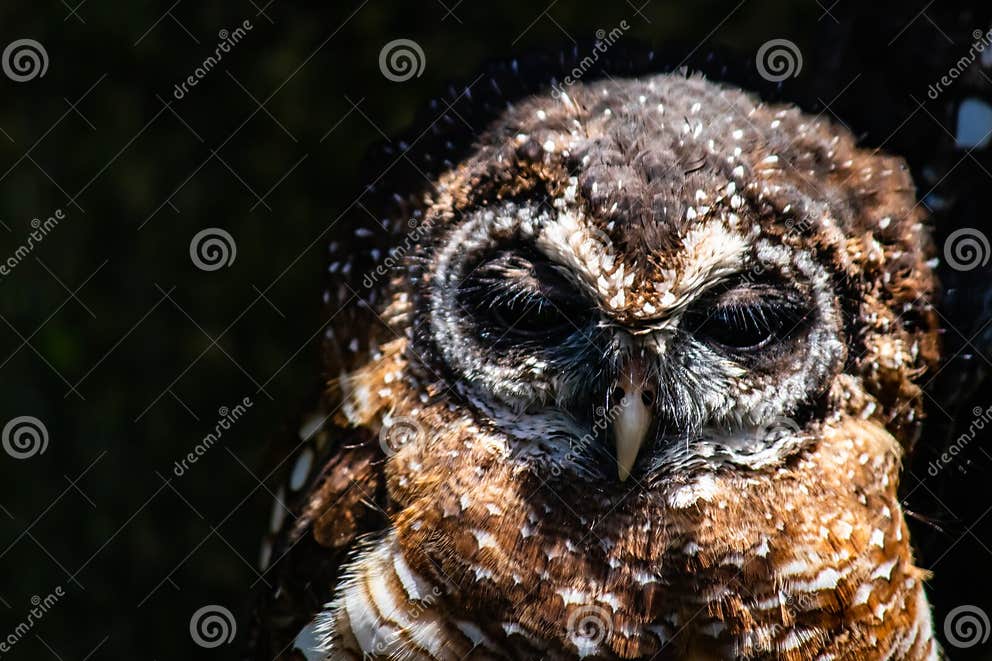
The Northern Spotted Owl, a creature of quiet majesty and ecological significance, has become an unwitting symbol of the battle between industry and wilderness. Its haunting call echoes through the ancient forests of the Pacific Northwest, a region where towering Douglas firs and hemlocks have stood sentinel for centuries. Yet, beneath the emerald canopy, a silent crisis unfolds—one driven not by natural forces, but by the relentless march of logging. This is not merely a tale of trees felled and habitats diminished; it is a story of broken promises, ecological betrayal, and the fragile threads that bind species to their ancestral lands.
The Ancient Forests: A Cathedral of Time and Biodiversity
To understand the impact of logging on the Northern Spotted Owl, we must first step into the cathedral of old-growth forests, where time moves in centuries rather than years. These forests are not mere collections of trees; they are living archives, repositories of carbon, water, and biodiversity. The Northern Spotted Owl, a denizen of this realm, thrives in the dense, multi-layered canopies that provide both shelter and sustenance. Its survival is intricately tied to the presence of large, contiguous tracts of ancient woodland—habitats that logging has systematically dismantled.
The owl’s dependence on old-growth forests is not a matter of preference, but of necessity. Its nesting sites, often found in the hollows of ancient trees or the broken tops of centuries-old giants, are irreplaceable. The loss of these structures is akin to the demolition of a historic library—once gone, the knowledge and resources they hold cannot be replicated. The owl’s diet, too, is a reflection of this ecosystem’s complexity. It preys on flying squirrels, woodrats, and other species that rely on the same old-growth conditions. When the forest is fragmented, these prey populations dwindle, leaving the owl to face an uncertain future.

The Bulldozer’s Advance: Logging as an Agent of Erasure
Logging in the Pacific Northwest is not a recent phenomenon, but its scale and intensity have reached a fever pitch in the modern era. The relentless demand for timber, driven by economic interests, has led to the clear-cutting of vast swaths of forest. Clear-cutting, in particular, is a brutal act of ecological violence. It strips the land bare, leaving behind a landscape that is barren and lifeless—a far cry from the vibrant, interconnected web of life that once thrived there.
The consequences of this practice are manifold. For the Northern Spotted Owl, the loss of habitat is immediate and devastating. Fragmentation of the forest disrupts the owl’s territorial patterns, forcing it into smaller, less suitable areas where competition for resources intensifies. The owl’s low reproductive rate—typically one or two eggs per year—means that even minor disruptions can have long-term effects on population stability. Moreover, the owl’s sensitivity to human disturbance makes it particularly vulnerable to the noise and activity associated with logging operations. In some cases, the mere presence of logging machinery can drive owls from their territories, leaving them to wander into unfamiliar and often hostile landscapes.
But the impact of logging extends beyond the owl itself. The loss of old-growth forests has cascading effects on the entire ecosystem. Species that depend on these forests for food, shelter, or breeding sites face decline, while invasive species and generalist predators—such as barred owls, which thrive in disturbed landscapes—begin to dominate. The result is a homogenization of the forest, a flattening of its ecological richness into something far less vibrant and resilient.
The Barred Owl: A Rival Born of Disruption
In the shadow of the Northern Spotted Owl’s plight, another story unfolds—one of an unexpected rival: the barred owl. Native to eastern North America, this larger and more aggressive species has expanded its range westward, a migration facilitated by the very fragmentation that has imperiled the spotted owl. The barred owl’s arrival is not a coincidence; it is a direct consequence of the ecological upheaval wrought by logging.
The barred owl’s dominance is a stark illustration of how human actions can inadvertently reshape ecosystems. Unlike the spotted owl, which is a specialist adapted to the intricacies of old-growth forests, the barred owl is a generalist. It thrives in a variety of habitats, from dense woodlands to suburban areas, and its diet is far more flexible. This adaptability has given it a competitive edge in the altered landscapes of the Pacific Northwest. Where the spotted owl once reigned supreme, the barred owl now encroaches, often displacing its smaller, more specialized cousin.
The conflict between these two species is not merely a matter of competition; it is a symptom of a larger ecological imbalance. The barred owl’s presence is a reminder that the loss of old-growth forests does not simply reduce biodiversity—it can also introduce new dynamics that further destabilize the ecosystem. Conservation efforts, therefore, must address not only the protection of the spotted owl’s habitat but also the management of barred owl populations, a task that is as contentious as it is necessary.
The Promise of Protection: Conservation Efforts and Their Limits
In response to the Northern Spotted Owl’s decline, conservationists have fought tirelessly to protect its remaining habitats. The most significant of these efforts came in 1990, when the owl was listed as a threatened species under the Endangered Species Act. This designation triggered a series of protections, including the establishment of critical habitat areas and restrictions on logging in old-growth forests. Yet, despite these measures, the owl’s population continues to dwindle, a testament to the challenges of balancing economic interests with ecological preservation.
The limitations of these conservation efforts are manifold. For one, the protections afforded by the Endangered Species Act are often contested, with industry groups and policymakers frequently challenging their scope and enforcement. The result is a patchwork of regulations that are inconsistently applied, leaving gaps that logging operations can exploit. Additionally, the concept of “critical habitat” is itself a compromise—a recognition that not all of the owl’s historical range can be saved, but that certain areas must be preserved to ensure its survival. This approach, while pragmatic, is also a concession to the inevitability of further habitat loss.
Moreover, conservation efforts have struggled to address the broader ecological context in which the spotted owl exists. The barred owl’s encroachment, for example, is not something that can be solved by protecting a few key forest patches. It requires a more holistic approach, one that considers the entire ecosystem and the myriad ways in which human activities have altered it. This is a daunting task, one that demands not only political will but also a fundamental shift in how we perceive and value the natural world.
The Human Dimension: A Crisis of Values and Priorities
At its core, the story of the Northern Spotted Owl is not just an ecological crisis—it is a crisis of values. It forces us to confront the question of what we, as a society, are willing to sacrifice in the name of progress. Logging in the Pacific Northwest is not merely an economic activity; it is a reflection of our priorities, our greed, and our shortsightedness. The ancient forests that once stretched from California to British Columbia are not merely resources to be exploited; they are living entities, repositories of history, culture, and biodiversity that cannot be replaced.
This crisis also highlights the disconnect between human communities and the natural world. For many, the forests of the Pacific Northwest are little more than a source of timber, a backdrop for economic activity. But for the Northern Spotted Owl, these forests are home—a place of ancient rhythms and unspoken bonds. The owl’s struggle is a reminder that our actions have consequences, not just for ourselves, but for the countless species with which we share this planet. It is a call to rethink our relationship with the natural world, to recognize that we are not its masters, but its stewards.
The path forward is not an easy one. It requires a fundamental reimagining of our economic systems, our cultural narratives, and our relationship with the land. It demands that we prioritize long-term ecological health over short-term gains, that we recognize the intrinsic value of old-growth forests and the species that depend on them. The Northern Spotted Owl may be a symbol, but its fate is a mirror held up to our own choices—and the choices we make today will determine whether its haunting call continues to echo through the forests of the Pacific Northwest, or whether it fades into silence.