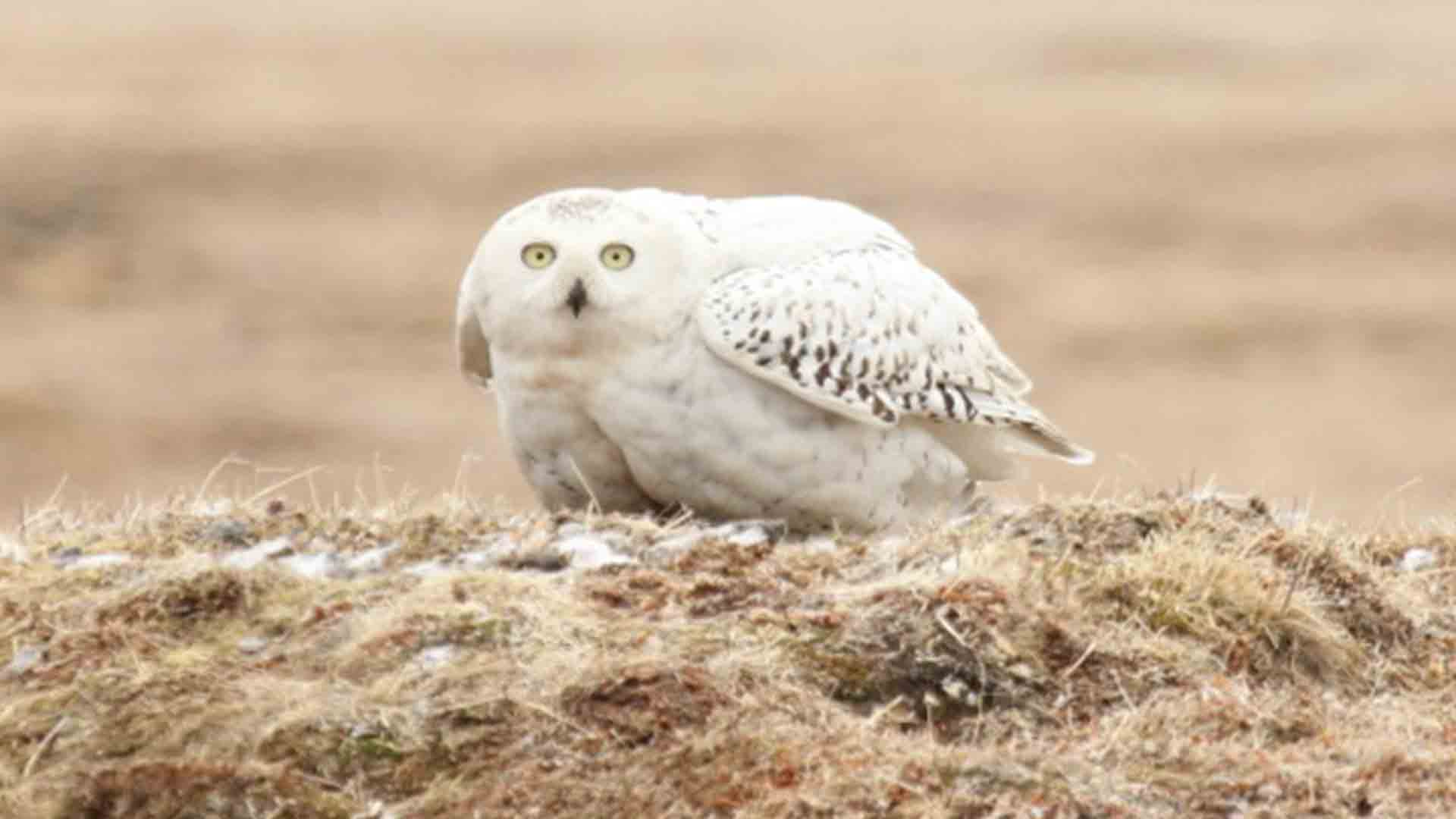
The Arctic tundra is a realm of stark beauty, where the earth remains frozen for most of the year, only grudgingly yielding to the fleeting Arctic summer. Yet, beneath this icy veneer lies a hidden world—one that is vital to the survival of some of the most resilient creatures on the planet. Among them, the snowy owl stands as a sentinel of the frozen expanse, its survival intricately tied to the permafrost beneath its talons. This frozen ground, often dismissed as a lifeless wasteland, is in fact a dynamic and essential component of the Arctic ecosystem, shaping the fate of nesting snowy owls in ways both subtle and profound.
The Permafrost Paradox: A Foundation of Life in the Frozen North
Permafrost is not merely a static layer of ice and soil; it is a living, breathing entity that dictates the rhythm of life in the Arctic. Defined as ground that remains frozen for at least two consecutive years, permafrost can extend hundreds of meters deep, locking away ancient carbon and preserving the bones of a bygone era. Yet, its most critical role lies in its ability to regulate water flow and soil stability. In the nesting grounds of snowy owls, permafrost acts as a natural water table, preventing the meltwater of spring from flooding nests. Without this frozen barrier, the delicate balance of the tundra would collapse, leaving eggs and chicks vulnerable to the elements.
But permafrost is more than a mere dam. It is a thermal regulator, insulating the soil from the extremes of Arctic temperatures. In winter, it shields the ground from the biting cold, while in summer, it slows the thaw, ensuring that the soil remains firm enough to support the weight of a snowy owl’s nest. This thermal inertia is a lifeline for ground-nesting birds, whose nests must withstand the relentless forces of wind, rain, and predation. The permafrost’s ability to maintain this equilibrium is nothing short of miraculous—a silent guardian of life in one of the harshest environments on Earth.
The Thawing Threat: How Climate Change is Reshaping Nesting Grounds
The Arctic is warming at an alarming rate, and with it, the permafrost is beginning to thaw. This is not a gradual process but a cascade of consequences, each more devastating than the last. As the frozen ground softens, it loses its structural integrity, leading to slumping terrain and the formation of thermokarst—depressions and pits that disrupt the flat, open expanses snowy owls rely on for nesting. These changes are not merely aesthetic; they are existential. A nest that was once safely elevated on firm ground may suddenly find itself sinking into a waterlogged morass, drowning eggs and chicks alike.
Moreover, the thawing permafrost releases vast stores of methane and carbon dioxide, further accelerating climate change. This creates a feedback loop: warmer temperatures lead to more thawing, which leads to more greenhouse gas emissions, which leads to even warmer temperatures. For snowy owls, this means a shrinking and increasingly fragmented habitat. The once-reliable nesting grounds of the Arctic are becoming patchwork quilts of unstable terrain, forcing owls to adapt or perish. The question is no longer whether permafrost is critical to snowy owl nesting success—it is how long this fragile foundation will hold.
The Microclimate Magic: How Permafrost Shapes Nesting Microhabitats
Beyond its role as a structural support, permafrost also creates microclimates that are essential for snowy owl nesting success. The frozen ground acts as a heat sink, absorbing warmth during the day and radiating it slowly at night, creating a thermal buffer that protects eggs and chicks from extreme temperature fluctuations. This microclimate effect is particularly crucial during the critical early days of incubation, when even a slight drop in temperature can spell disaster for developing embryos.
Additionally, the permafrost’s ability to retain moisture ensures that the soil remains damp but not waterlogged, providing the ideal conditions for the growth of lichens and mosses—key components of the Arctic food web. These plants, in turn, support the small mammals and insects that snowy owls rely on for sustenance. Without the permafrost’s moisture-retaining properties, the entire trophic cascade would unravel, leaving owls without prey and nests without shelter.
But the magic of permafrost doesn’t end there. Its presence also influences the distribution of snowdrifts, which snowy owls use as natural windbreaks to shield their nests from the relentless Arctic winds. In a landscape where every advantage counts, the permafrost’s role in sculpting the terrain is nothing short of a masterstroke of evolutionary engineering.
The Predator’s Puzzle: Permafrost as a Shield Against Arctic Threats
In the unforgiving world of the Arctic, predators lurk at every turn. Arctic foxes, gulls, and even other snowy owls pose a constant threat to nests and chicks. Yet, the permafrost offers a surprising line of defense. Its frozen surface is difficult for predators to traverse, particularly during the early nesting season when the ground is still firm. This gives snowy owl chicks a crucial head start, allowing them to grow strong enough to fend off attacks before the thaw weakens the terrain.
Furthermore, the permafrost’s ability to preserve carcasses and bones means that the Arctic is littered with the remnants of past meals—scavenged remains that can serve as decoys, luring predators away from active nests. This macabre strategy is a testament to the permafrost’s role as an unwitting ally in the survival game. Without it, snowy owls would face an even more precarious existence, their nests exposed to the whims of a hungry landscape.
The Future Unfrozen: Can Snowy Owls Adapt to a Thawing World?
The fate of the snowy owl is inextricably linked to the fate of the permafrost. As the Arctic continues to warm, the owl’s traditional nesting grounds are becoming increasingly unreliable. Some populations may attempt to shift their ranges northward, following the retreating ice, but the tundra’s fragility means that even these adaptations may not be enough. The question is no longer whether snowy owls can survive without permafrost—it is whether they can survive with it, as the frozen ground that once sustained them begins to melt beneath their feet.
Yet, there is hope. Indigenous communities, scientists, and conservationists are working to monitor permafrost thaw and its impacts on Arctic wildlife. By understanding the intricate relationships between frozen ground, nesting success, and climate change, we can develop strategies to mitigate the damage. From artificial nest platforms to protected corridors for migrating owls, the solutions are as varied as the challenges they seek to address. But time is running out. The permafrost is not just a foundation—it is a ticking clock, and its countdown is echoing through the Arctic landscape.
The snowy owl, with its piercing golden eyes and snowy plumage, is more than a symbol of the Arctic—it is a barometer of the health of this fragile ecosystem. Its survival depends on the permafrost, and the permafrost’s survival depends on us. The question is not whether we can afford to act, but whether we can afford not to.