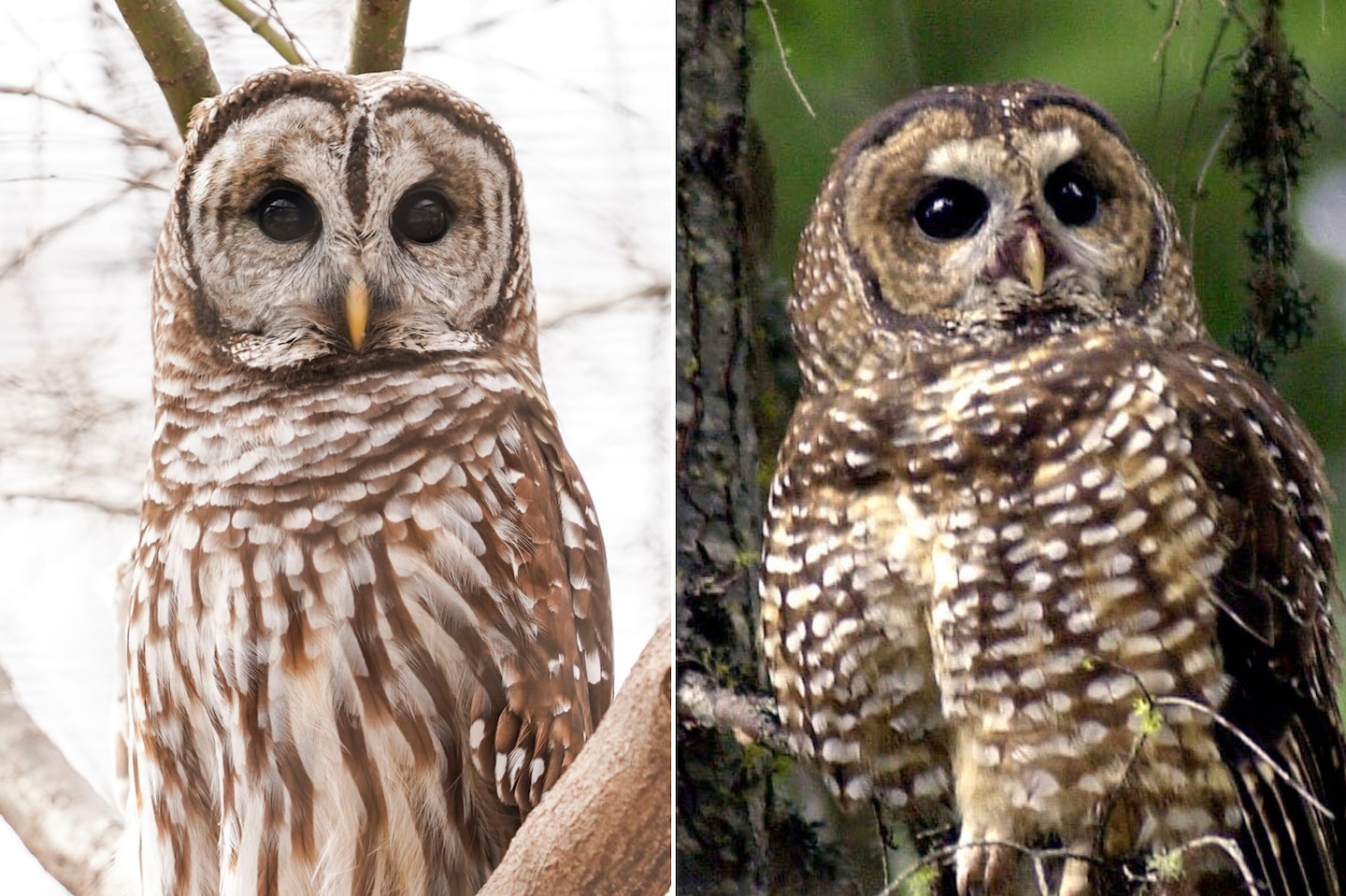
Owls have long captivated the human imagination, their mysterious presence weaving through the fabric of folklore, mythology, and literature. Among these nocturnal enigmas, the barred owl and the spotted owl stand out—not only for their distinctive physical traits but also for the profound symbolic roles they assume in narratives across cultures. The contrast between these two species invites reflection, offering a lens through which writers and readers alike ponder themes of identity, survival, and change. This fascination with barred and spotted owls in literature hints at deeper human preoccupations: the tension between dominance and vulnerability, the clash of the old world with the new, and the shadowy interplay of nature and human influence.
Barred and Spotted Owls: Physicality as Symbolic Foundation
The barred owl, with its bold, horizontal streaks across its chest and large, rounded head, exudes an air of authority and resilience. It is often depicted as a creature of strength and persistence. The spotted owl, smaller and more elusive, bears delicate markings that evoke fragility and rarity. This physical dichotomy frequently underpins their symbolic representation in literary works. Writers exploit their contrasting appearances to evoke themes of encroachment and displacement. The barred owl can embody the invasive force—robust and assertive—marching steadily into new territories. In contrast, the spotted owl often symbolizes an endangered purity or a vanishing way of life threatened by external pressures. This interplay serves as a metaphor for broader social and ecological upheavals.
Owls in Literature: Guardians of Mystery and Wisdom
Across literary traditions, owls have been cast as both harbingers of wisdom and omens of doom. The barred and spotted owls are no exceptions, though their divergent traits frequently dictate nuanced portrayals. The barred owl’s commanding presence often aligns with archetypes of guardianship and knowledge—an enigmatic watcher of the forest who understands secrets beyond human reach. The spotted owl, with its more delicate frame and elusive nature, often occupies a liminal space, representing innocence, mystery, and the fragile balance of ecosystems. Through the barred and spotted owls, literature channels human anxieties about preservation and loss, framing them as cosmic dramas enacted in the natural world.
Ecological Collapse and Symbolic Conflict
The clash between barred and spotted owls in many literary works mirrors real-world ecological struggles, infusing texts with urgent ecological consciousness. This symbolic conflict is often deployed to dramatize the consequences of environmental change and human interference. The barred owl’s proliferation at the expense of the spotted owl can be read allegorically as the overpowering of the delicate by the dominant, the invasive by the native. Writers utilize this tension to craft narratives about survival, adaptation, and the moral complexities of intervention. Beyond mere natural history, the story of these birds resonates as a cautionary tale about ecological arrogance and the precarious thresholds of coexistence.
Mythic Resonance and Cultural Symbolism
In myth and folklore, owls embody a spectrum of meanings—from messengers of the divine to spirits of death. The barred and spotted owls inherit and expand this mythic resonance in literary depictions. The barred owl’s assertive image frequently aligns it with the forces of inevitability and fate, a creature that enforces transformation through disruption. Conversely, the spotted owl’s rarity endows it with an almost sacred aura, often depicted as a symbol of purity standing on the brink of disappearance. The literary utilization of these owls taps into deep-rooted cultural archetypes, allowing narratives to explore existential themes such as mortality, the sanctity of nature, and the reverence of the unseen.
Psychological Dimensions: Fear, Fascination, and Ambiguity
The enduring interest in barred and spotted owls also stems from a psychological fascination with the ambiguous. Owls, with their nocturnal habits and haunting calls, evoke a primal confrontation with the unknown. The barred owl’s boldness can inspire a mixture of awe and intimidation, while the spotted owl’s reticence invites empathy and a protective instinct. Literature reflects this duality, creating characters and motifs that personify the tension between aggression and vulnerability. This ambivalence, embedded in the birds’ symbolic roles, reflects human struggles with aspects of the self—the capable and the fragile, the visible and the hidden, the conqueror and the vanquished.
Owls as Environmental Allegories in Contemporary Literature
Recent literary works have increasingly harnessed the barred and spotted owls as powerful environmental allegories. These narratives delve into the impact of human expansion, climate disruption, and habitat loss. Through the prism of these avian characters, authors illuminate the moral dilemmas inherent in conservation—questions of intervention, sacrifice, and the value of biodiversity. The barred owl, often portrayed as the “invader,” challenges simplistic binaries, pushing readers to confront the complexity of ecological balance. Meanwhile, the spotted owl’s vulnerability underscores the stakes of environmental stewardship and the urgency of protecting endangered species. This allegorical function enriches literature with a clarion call to ecological responsibility.
Symbolic Duality and the Human Condition
Ultimately, the barred and spotted owls in literature serve as a profound duality—a symbolic mirror reflecting contradictions within the human condition. They embody the tension between expansion and restraint, survival and vulnerability, dominance and displacement. Through their stories, literature probes the intricate dance of coexistence, asking difficult questions about identity, change, and the costs of persistence. It is this layered symbolism that continues to fuel fascination, inviting readers to delve beyond surface observations into a deeper understanding of nature’s intertwined narratives and, by extension, our own.