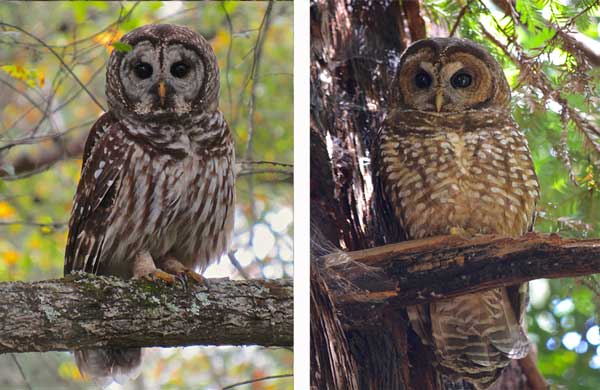
In the shadowy realms of the Pacific Northwest’s dense forests, two enigmatic birds command attention: the barred owl and the spotted owl. Their elusive behaviors and subtle distinctions have intrigued ecologists for decades. Now, a groundbreaking tool is revolutionizing the way researchers observe and understand these avian mysteries. Virtual reality (VR), with its immersive capabilities, promises a profound shift in perspective, unraveling complexities that were once deemed inscrutable. This marriage of cutting-edge technology and natural history ignites a fresh curiosity about how VR is redefining the study of barred and spotted owl behavior.
Immersive Observation: Breaching the Barrier Between Human and Owl
Traditional fieldwork has long posed inherent challenges: weather unpredictability, limited visibility, and the birds’ nocturnal habits hinder exhaustive observation. VR slashes through these obstacles by creating hyper-realistic simulations of the owls’ natural habitats. Researchers can virtually step into the dense coniferous canopies or moss-laden old-growth forests without disturbing the owls or their fragile ecosystems. This immersive vantage point allows ornithologists to observe behaviors such as territorial displays, hunting techniques, and vocal communication with unprecedented clarity and continuity.
More than mere passive observation, VR environments can mimic real-time conditions. Variations in lighting, soundscapes, and seasonal changes are rendered with meticulous fidelity. Scientists can analyze subtle behavioral shifts in response to these variables, enhancing their understanding of the owls’ adaptive strategies. The virtual stage, therefore, becomes a living laboratory bridging the experiential gap between species and human observers.
Simulating Interactions: Decoding Interspecies Dynamics
The overlapping territories of barred and spotted owls create a complex tapestry of interspecies interactions. Competition, territorial disputes, and potential hybridization events are critical focal points in conservation efforts. VR simulations enable researchers to model these interactions in controlled scenarios, testing hypotheses about behavioral outcomes in a safe, repeatable manner. By tweaking environmental factors or stimulus parameters, scientists can witness how one species’ presence influences the other’s behavior in real-time.
These virtual experiments replicate vocal exchanges and visual cues with remarkable precision, offering insights into the subtle negotiation protocols between barred and spotted owls. Observing responses to territorial calls or simulated intrusion events reveals nuanced behavioral hierarchies. This simulation-based approach enriches comprehension of how these owls coexist, compete, and sometimes contest dominance.
Enhancing Behavioral Tracking Through Sensory Augmentation
VR technology fuses sensory augmentation with behavioral tracking, unlocking dimensions of insight previously inaccessible. By integrating biofeedback data—such as heart rate or gaze direction—from owls equipped with miniature sensors, researchers can transpose this physiological information into virtual renderings. This confluence elucidates correlations between internal states and outward behavior patterns.
For example, the intensity of a barred owl’s vocalization can be analyzed alongside corresponding stress indicators, all within a synchronized VR interface. Such multidimensional data capture enables a holistic understanding of the owls’ responses to environmental stressors and social stimuli. The true power of VR lies in synthesizing behavioral observations with underlying physiological states, laying the foundation for a more profound grasp of avian ecology.
Facilitating Collaborative Research Across Geographies
Owl populations span vast, often inaccessible territories. VR platforms break down geographical barriers by offering shared virtual workspaces where international teams can collaboratively scrutinize identical behavioral scenarios. Researchers from disparate fields—ornithology, ecology, computer science—converge in these digital environments to cross-pollinate ideas and methodologies.
Real-time interaction within VR expedites hypothesis testing and data analysis. Complex datasets that would typically require weeks to interpret can now be dissected interactively, with team members manipulating variables and annotating observations in situ. This democratization of access not only accelerates research but deepens the collective insight into barred and spotted owl behaviors.
Informing Conservation Strategies Through Predictive Modeling
Behavioral studies are cornerstone elements in crafting effective conservation plans. VR elevates this by enabling predictive modeling of owls’ responses to environmental changes such as habitat fragmentation, climate fluctuations, or the encroachment of invasive species. These virtual projections provide a dynamic canvas to envision future scenarios and test intervention efficacy before real-world implementation.
In particular, understanding the behavioral adaptations—or vulnerabilities—of barred and spotted owls to shifting ecosystems is crucial for mitigating risk. VR-driven simulations can illuminate the consequences of altered prey availability or nesting site scarcity, informing targeted conservation measures with a degree of foresight unattainable through conventional field studies alone.
Cultivating Public Engagement and Education Through Experiential Storytelling
The potential of VR extends beyond the scientific community into the realm of public education and advocacy. Immersive storytelling experiences bring lay audiences face-to-face with the barred and spotted owls’ enigmatic lives. Stepping into a virtual forest inhabited by these birds fosters empathy and a tangible connection to wildlife conservation.
By witnessing behavioral nuances and ecological interactions firsthand, users develop a deeper appreciation for the complexities of avian life and the urgent need for habitat preservation. This experiential learning approach transforms abstract environmental issues into visceral, memorable encounters, galvanizing public support for conservation initiatives.
The Future Horizon: Integrating Emerging Technologies for Deeper Insights
As VR technology matures, its integration with artificial intelligence, machine learning, and advanced sensor networks promises to further revolutionize behavioral studies. Automated pattern recognition algorithms could assist in identifying previously overlooked behavioral markers or predicting emergent social dynamics among owl populations.
The convergence of these technologies will foster a synergistic feedback loop, continuously refining VR simulations and enriching behavioral datasets. This iterative evolution charts a thrilling trajectory for research, unlocking deeper layers of ecological understanding and facilitating adaptive management practices in real-time.
Virtual reality is not merely a futuristic spectacle; it is a transformative lens, reshaping how barred and spotted owls—these silent sentinels of the forest—are studied and understood. By transcending traditional observational limitations, VR opens a portal to a more intimate and profound communion with nature, fueling curiosity and driving conservation to new heights.