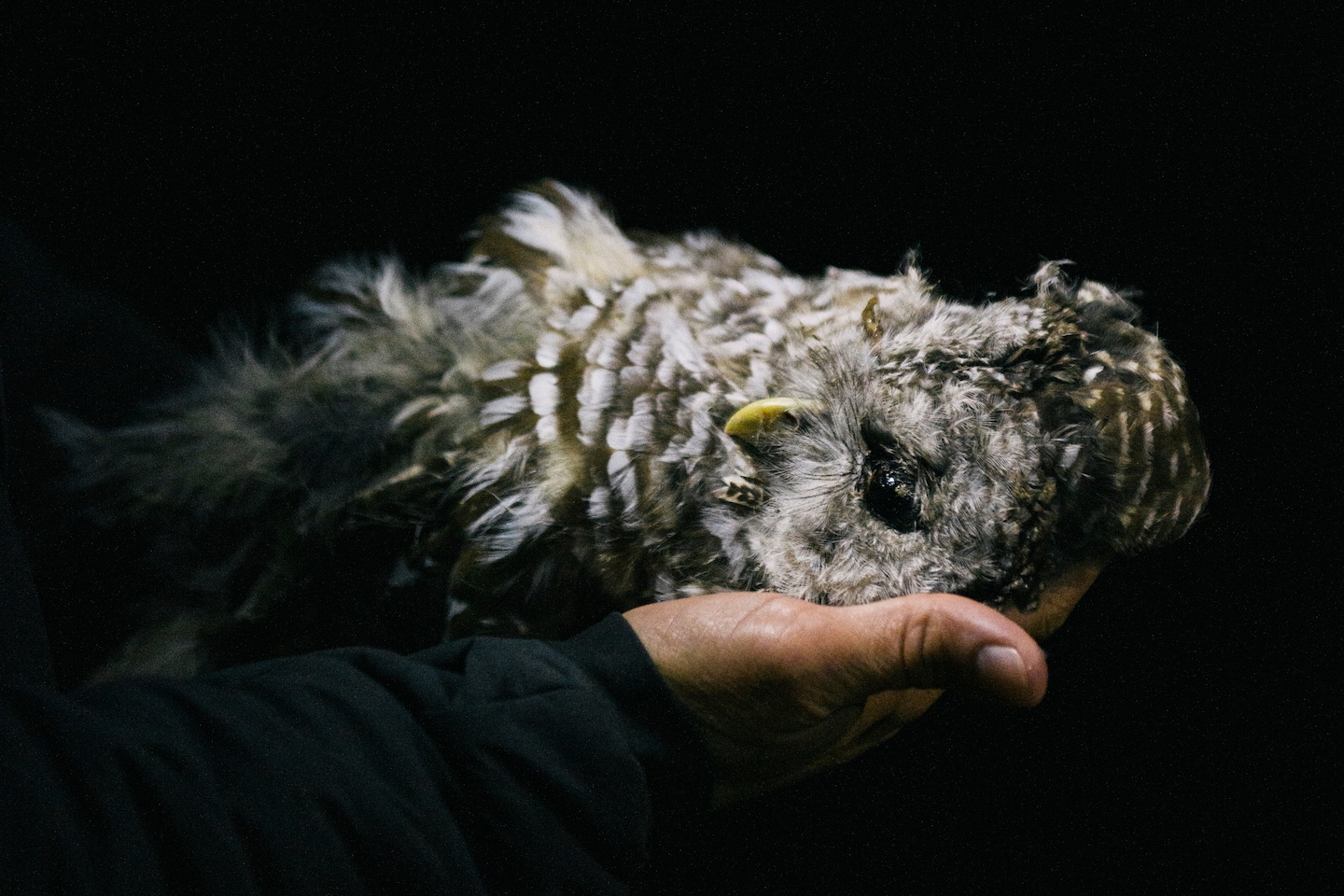
In the intricate web of forest ecosystems along the Pacific Northwest, an invisible battle rages — a conflict not only of survival but of social order and ecological dominance. This struggle centers around two avian species: the native spotted owl and the invasive barred owl. The infiltration and proliferation of barred owls have wrought profound disruptions to the social structures of spotted owls, precipitating a cascade of ecological consequences. Understanding these dynamics requires not only a deep dive into behavioral ecology but also a consideration of conservation challenges and the broader implications for biodiversity.
Ecological Profiles of Barred and Spotted Owls
To grasp the magnitude of disruption, one must first appreciate the distinctive ecological roles and life histories of each species. The spotted owl, an emblematic denizen of old-growth forests, has evolved with a specialized niche. It relies on large tracts of contiguous forest, showcasing strict territoriality and intricate pair bonding behaviors integral to its social fabric. In stark contrast, the barred owl, originating from the eastern United States, exhibits remarkable adaptability. Its broader dietary spectrum and habitat tolerance allow it to thrive in fragmented and diverse environments — often overlapping and expanding into traditional spotted owl territories.
Mechanisms of Social Disruption Among Spotted Owls
Barred owls do not merely coexist with spotted owls; they actively restructure the social landscape through aggressive territorial usurpation and competitive exclusion. The highly territorial spotted owls maintain stable pair bonds and well-defined territories that support complex social interactions including cooperative breeding assistance in some populations. Barred owls, by contrast, exhibit more aggressive territorial behaviors, encroaching on and fragmenting these territories. This invasion results in forced displacement of pairs or individuals, breakdown of established social units, and a decline in breeding success among spotted owls.
Impact on Reproductive Behavior and Pair Bonding
Spotted owl reproductive success hinges on the stability of pair bonds and secure nesting territories. Barred owl encroachment disrupts these essential social constructs. Instances of interspecific competition at nesting sites have been documented, with barred owls often monopolizing preferred nesting locations. The consequent stress and displacement prompt spotted owls to either relocate to suboptimal habitats or experience declines in mating opportunities. This destabilization erodes long-term pair fidelity, undermining the species’ reproductive output and ultimately threatening population viability.
Alterations in Habitat Use and Social Spacing
Habitat fragmentation intensified by barred owl expansion forces spotted owls into narrower ecological niches. Barred owls’ broad tolerance for varying habitats, including younger and more disturbed forests, contrasts with the spotted owl’s dependency on mature canopies. This spatial compression results in altered social spacing patterns — an unnatural congregation of spotted owls in limited refugia. Such crowding accelerates conflicts within spotted owl populations, disrupts territorial boundaries, and weakens traditional social hierarchies, thereby affecting foraging efficiency and intra-species communication.
Behavioral Interactions and Interspecific Competition
The interplay between barred and spotted owls transcends simple competition for space; it encompasses active behavioral antagonism. Barred owls demonstrate dominance through vocal challenges, physical confrontations, and territorial displays that intimidate spotted owls. These interactions not only physically exclude spotted owls but psychologically inhibit their normal behavior patterns, including feeding, mating, and parental care. The resultant shifts in daily activity rhythms and resource allocation place spotted owls at a sustained disadvantage.
Ecological Ramifications of Social Structure Disruption
Disruption of spotted owl social structures reverberates beyond the species itself, unsettling broader ecosystem dynamics. The decline in spotted owl populations, integral apex predators in their niche, can lead to mesopredator release — where smaller predatory species increase unchecked, potentially destabilizing prey populations and plant communities. Further, the invasive barred owl acts as a vector for disease and parasites, introducing novel biotic stressors that compromise not only owls but interconnected species within the forest mosaic.
Conservation Challenges and Management Approaches
The complexity of barred owl impacts poses formidable challenges for conservationists. Ethical considerations emerge when contemplating direct human interventions, such as selective removal or population control of barred owls, to preserve spotted owl populations. These strategies, while contentious, have shown potential in stabilizing spotted owl territories and restoring social structures. Additionally, habitat restoration aimed at enhancing old-growth forest connectivity can attenuate the competitive edge of barred owls. Integrating advanced telemetry, behavioral studies, and community engagement remains paramount for crafting nuanced, adaptive management protocols.
Future Directions in Research and Ecosystem Stewardship
Progress in mitigating barred owl-induced disruption depends on unraveling the finer grains of interspecific social dynamics and ecosystem feedback mechanisms. Emerging research employing bioacoustic monitoring, genetic analyses, and computational modeling offers unprecedented resolution into these interactions. A holistic ecosystem stewardship framework, acknowledging the ethical and ecological intricacies of intervening in species interactions, is imperative. This approach fosters resilience not only for spotted owls but also for the entire forest communities they help underpin.
The narrative of barred and spotted owls encapsulates more than a mere tale of invasive species and native victims. It is a poignant reminder of the delicate balance woven by evolutionary history, behavioral ecology, and human influence. To safeguard these enigmatic owls and their forests demands a passionate commitment to understanding, intervention, and coexistence — a conservation mission as intricate and profound as the owls’ own haunting calls echoing through the twilight woods.