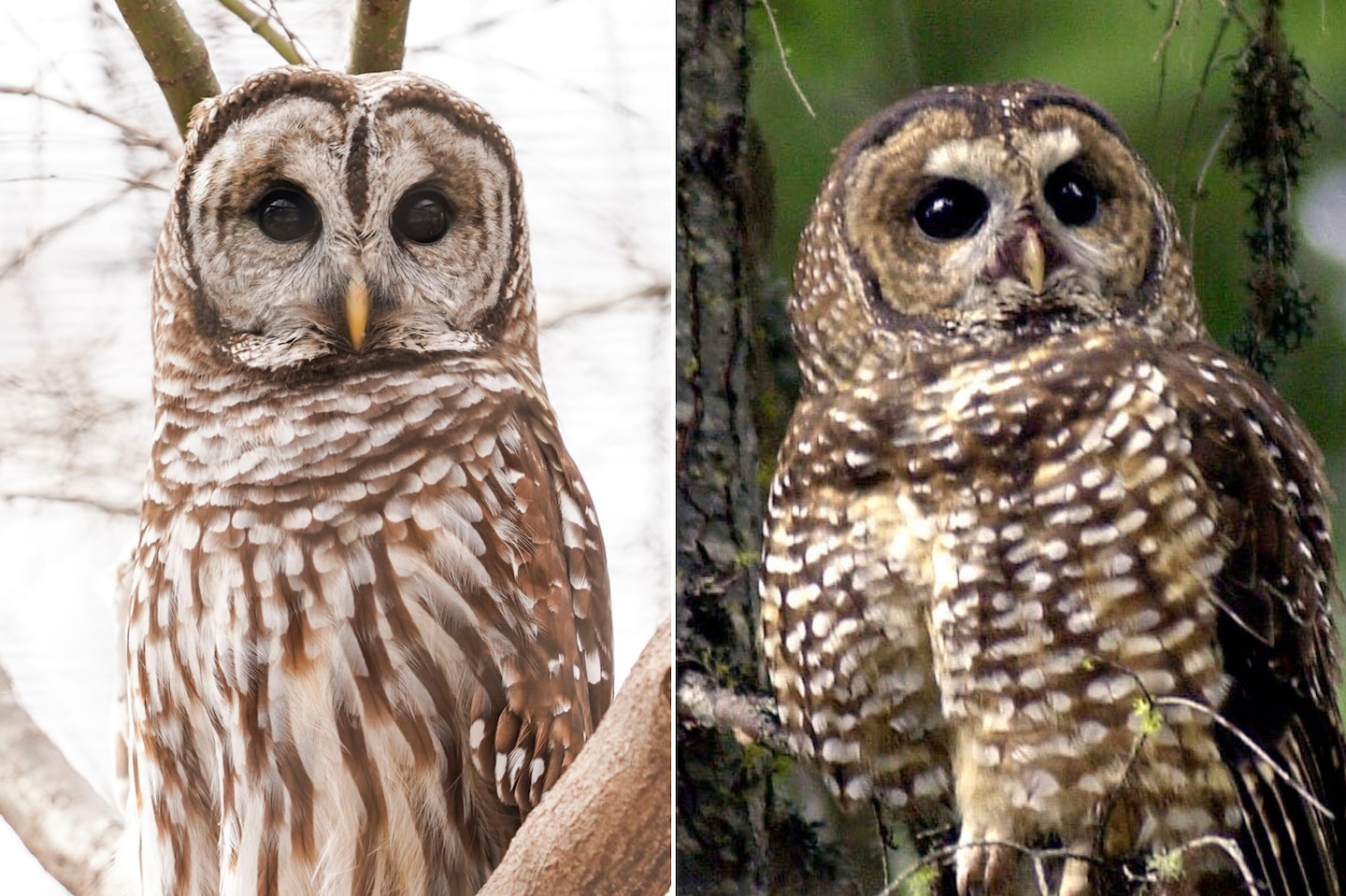
In the dense tapestry of the Pacific Northwest forests, where ancient trees murmur secrets to the wind, a hidden battle unfolds—one that resonates not through claws and feathers alone but in the very language of the night. The barred owl, a strident and invasive presence, has become an unyielding adversary to the native spotted owl, not merely by encroaching upon its territory but by distorting the sacred symphony of communication that defines the spotted owl’s existence. This clash of calls underscores a profound ecological drama, where survival hinges on the whispers and lamentations carried through the shadows.
The Symphony of the Night: Spotted Owl Communication Unveiled
The spotted owl’s vocalizations are a delicate and intricate ballet of sound—an ethereal melody weaving through the moonlit canopy. Their calls, marked by soft hoots and rolling phrases, are more than mere signals; they embody a language richly imbued with territorial demarcations, mating rituals, and familial bonds. Their communication is a nocturnal sonnet, crafted to navigate the complexities of dense forests where visual contact is scarce and danger perpetually lurks. Every call is a brushstroke painting the contours of their world, a beacon affirming identity amidst the vast wilderness silence.
This vocal artistry is finely tuned and species-specific, a unique dialect evolved through millennia. The nuances of pitch, rhythm, and cadence serve as a vital cornerstone for reproductive success and social cohesion within spotted owl populations. It is this very linguistic fabric that barred owls threaten to unravel.
Barred Owls: Aggressive Intruders Distorting the Acoustic Landscape
Enter the barred owl, a noisy usurper whose booming calls ripple through the forest like a disruptive thunderclap. Larger and more adaptable, barred owls have steadily infiltrated the spotted owl’s ancestral domain, bringing with them a brash, overpowering voice that drowns out the subtler sounds of the native avians. Their vocalizations are louder, more insistent, and less nuanced—an intrusion that muddles the forest’s auditory tapestry and casts a deafening pall over the spotted owl’s carefully encoded messages.
This acoustic interference—akin to a raucous mob drowning out a whispered conversation—compromises the spotted owl’s ability to communicate critical information. Territorial claims become obscured, mates struggle to locate each other, and fledgling calls for parental guidance lose their clarity. The barred owl’s voice does not merely compete; it overwhelms, effectively hijacking the sonic environment and sabotaging the longevity of the spotted owl’s lineage.
The Consequences of Acoustic Overlap: Disrupted Reproductive and Territorial Dynamics
Communication is inseparable from survival. When spotlighted owls struggle to convey meaning through their calls, the repercussions ripple far beyond mere ambiguity. Reproductive isolation falters under the pressure of acoustic interference. Spotted owls depend on precise vocal exchanges to establish territories and attract mates; when masked by the cacophonous calls of barred owls, these delicate interactions wane, leading to reduced breeding success.
The loss of distinct territories emerges as a palpable threat, with overlapping calls spawning confusion and territorial disputes. In a world where boundaries are announced through sound, the auditory smog created by barred owls blurs lines, potentially leading to increased conflicts, energy exhaustion, and habitat abandonment. This vocal competition is more than noise pollution—it is a fundamental disruption to the ecological order, an erosion of the spotted owl’s social infrastructure.
Ecological Implications: Beyond Communication to Species Survival
The vocal warfare between barred and spotted owls is emblematic of a larger ecological struggle—a contest for survival writ not only in battles over territory but in the erasure of identity through sound. Communication intricately links behavioral patterns and genetic fitness; thus, its distortion jeopardizes more than just immediate interactions. Long-term viability of spotted owl populations hangs precariously on their ability to maintain their distinct acoustic niche.
Barred owls’ expansion into territories traditionally held by spotted owls has led to population declines not solely due to direct predation or competition for food but as a consequence of their insidious impact on communication networks. The native owls find themselves caught in a silent suffocation, where the essence of their existence is drowned in a sea of alien calls. This auditory dissonance threatens to cascade through generations, compromising resilience in an already vulnerable species.
The Intrinsic Value of the Spotted Owl’s Acoustic Identity
More than a biological curiosity, the spotted owl’s vocalizations encapsulate a profound ecological narrative—one of adaptation, survival, and connection to place. Their soft hoots are the whispered threads weaving together forest ecosystems, interlacing species, habitats, and time itself. Losing their voice—or having it usurped by a more aggressive neighbor—is tantamount to unraveling an irreplaceable chapter of natural heritage.
In this light, the plight of the spotted owl’s communication is a stark reminder of the fragile balance between coexistence and displacement. It challenges us to recognize the fundamental importance of acoustic environments in conservation efforts and to appreciate how the sounds of nature embody the unseen struggles that define life on Earth.
Conclusion: Restoring the Silent Voice Amidst the Noise
The clash between barred and spotted owls is not merely a story of two birds but a resonant metaphor for the fragility of nature’s dialogue. As the barred owl’s clamorous intrusion continues to erode the nuanced conversations of the spotted owl, the forest faces a critical choice: allow the night’s song to be overrun, or find pathways to preserve the whispered elegance that defines an ancient lineage.
Recognizing the intricate role communication plays in the survival of species like the spotted owl compels urgent reflection and decisive action. The restoration of their acoustic sanctuary may hold the key to safeguarding not only a species but the delicate harmony upon which entire ecosystems rely. It is a call—soft yet insistent—to listen deeply, intervene wisely, and ensure that the spots of this elusive owl continue to echo through the silent forests of time.