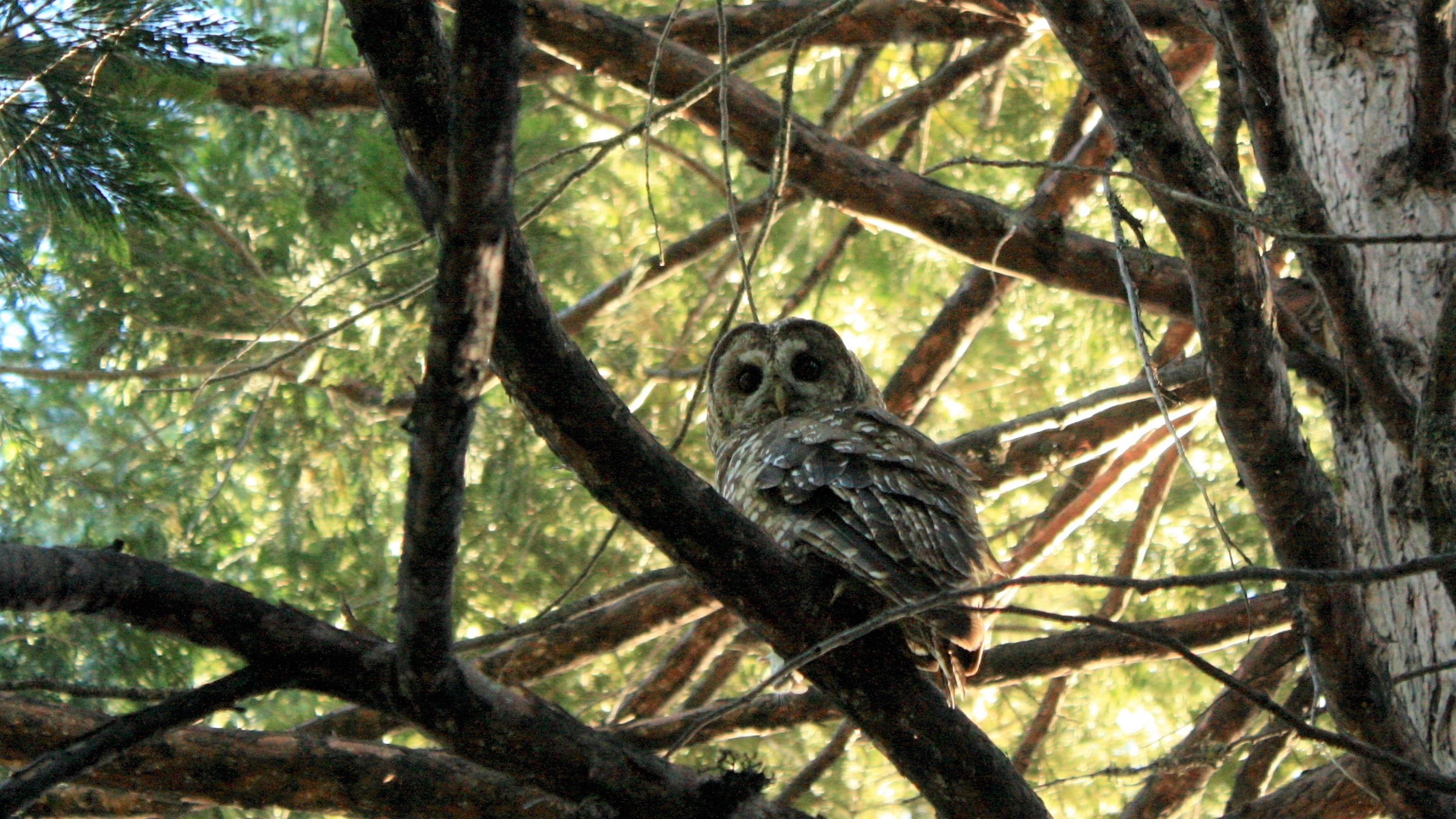
The spotted owl, a creature of quiet dignity and elusive grace, has long captivated the hearts of conservationists and nature enthusiasts alike. Its haunting call echoes through the ancient forests of the Pacific Northwest, a sonnet to the wilderness that once blanketed the land. Yet, beneath its feathered exterior lies a story of resilience, struggle, and the relentless pursuit of knowledge—one that has been shaped, in no small part, by the meticulous work of long-term banding studies. These studies, often overlooked in the grand tapestry of conservation efforts, are the unsung heroes of ecological research, offering insights that transcend the boundaries of ornithology and into the very heart of our relationship with nature.
The Unseen Guardians of the Canopy
Spotted owls are not merely birds; they are sentinels of old-growth forests, their presence a barometer of ecological health. Long-term banding studies have revealed that these owls are not just inhabitants of their environment but its architects, their survival intricately tied to the complex web of old trees, dense canopies, and undisturbed habitats. Each band placed on an owl’s leg is a promise—a promise to unravel the mysteries of migration, longevity, and reproductive success. Over decades, these bands have transformed into data points, painting a portrait of a species in flux, adapting to the relentless pressures of habitat loss and climate change.
The fascination with spotted owls extends beyond their striking facial discs and piercing eyes. There is something almost mythic about their nocturnal existence, a whisper of ancient forests that have stood for centuries. Yet, their survival is no fairy tale. It is a testament to the resilience of nature, but also to the dedication of those who have spent lifetimes studying them. Banding studies have shown that spotted owls are not just survivors; they are survivors with a purpose, their movements and behaviors offering clues to the health of entire ecosystems.
The Data That Speaks Volumes
What makes long-term banding studies so invaluable is their ability to transcend the limitations of short-term research. While annual surveys might capture a snapshot of an owl’s life, decades of data reveal the full arc of its existence—from fledgling to elder, from solitary wanderer to devoted parent. These studies have uncovered patterns that would otherwise remain hidden: the owl that returns to the same nesting site year after year, the juvenile that disperses hundreds of miles only to return to its birthplace, the subtle shifts in territory size in response to environmental stressors.
Consider the case of a female spotted owl, banded as a nestling and recaptured a decade later, now the matriarch of her territory. Her story is not just one of individual triumph but a microcosm of the species’ struggle. Banding data has shown that female owls, in particular, play a pivotal role in the survival of their offspring, their choices of nesting sites and hunting grounds dictating the fate of future generations. These insights are not merely academic; they are the bedrock upon which conservation strategies are built.
The Shadows of Habitat Loss
Yet, the story of the spotted owl is not one of unalloyed triumph. The specter of habitat loss looms large, a dark cloud over the owl’s future. Long-term banding studies have been instrumental in documenting the decline of old-growth forests and the subsequent fragmentation of owl populations. The data is stark: territories that once supported multiple pairs of owls now stand empty, their canopies thinned by logging and development. The owls, it seems, are not just victims of circumstance but canaries in the coal mine, their struggles a harbinger of broader ecological collapse.
What is often overlooked in the discourse on habitat loss is the owl’s role as an indicator species. Their decline is not an isolated tragedy but a symptom of a larger malaise—a planet where the balance between human ambition and ecological integrity has tipped dangerously out of sync. Banding studies have shown that spotted owls are not just passive observers of this change; they are active participants in the struggle for survival, their adaptations a testament to nature’s ingenuity. Some owls have shifted their territories to higher elevations, others have altered their hunting patterns, but these adaptations are not infinite. The data suggests a tipping point, a threshold beyond which even the most resilient owl cannot survive.
The Climate Conundrum
Climate change adds another layer of complexity to the spotted owl’s story. Long-term banding studies have revealed that rising temperatures and shifting precipitation patterns are altering the very fabric of the forests these owls depend on. The timing of prey availability, the moisture levels in nesting cavities, the prevalence of invasive species—all are being disrupted by a climate that is no longer predictable. The owls, creatures of habit and precision, are struggling to adapt to a world that is increasingly chaotic.
What is perhaps most alarming is the way climate change interacts with habitat loss. The two forces are not merely additive; they are multiplicative. A forest that is already fragmented by logging becomes even more vulnerable to the ravages of drought or wildfire. The banding data paints a grim picture: territories that were once stable are now ephemeral, their suitability for owls fluctuating with the whims of the weather. The owls, in turn, are forced into a precarious dance of survival, their movements dictated by forces beyond their control.
The Human Factor: Conservation in Action
Amidst this bleak landscape, there is hope—a flicker of light in the form of conservation efforts. Long-term banding studies have not only documented the decline of spotted owls but have also provided the data necessary to guide recovery efforts. The establishment of protected areas, the restoration of degraded habitats, the reduction of human disturbance—all of these strategies are rooted in the insights gleaned from decades of research. The owls, it seems, are not just passive subjects of study but active participants in their own salvation.
Yet, conservation is not a one-size-fits-all endeavor. The banding data has shown that the needs of spotted owls vary across their range, from the misty forests of the Pacific Northwest to the arid landscapes of California. Some populations require large, contiguous tracts of old-growth forest, while others can persist in smaller, fragmented habitats. The challenge for conservationists is to tailor their efforts to the specific needs of each population, a task that demands both scientific rigor and a deep understanding of the owls’ ecology.
There is also the question of human-wildlife conflict. As development encroaches on owl habitats, the potential for negative interactions increases. Banding studies have documented instances of owls nesting in close proximity to human activity, their survival dependent on the delicate balance between disturbance and tolerance. The data suggests that even small changes in human behavior—such as reducing nighttime lighting or minimizing noise during nesting season—can have a significant impact on owl survival.
The Future: A Call to Action
The story of the spotted owl is a story of resilience, adaptation, and the enduring power of nature. But it is also a story of human responsibility—a reminder that our actions have consequences, and that the choices we make today will shape the world of tomorrow. Long-term banding studies have given us the tools to understand the plight of the spotted owl, but they have also given us the knowledge to act. The question is not whether we can save the spotted owl, but whether we will.
The data is clear: the owls are running out of time. Their habitats are shrinking, their prey is disappearing, and the climate is changing at a pace that outstrips their ability to adapt. Yet, there is still hope. The banding studies have shown that owls can recover when given the chance, their populations rebounding in areas where conservation efforts have been prioritized. The key is to act now, before it is too late, to ensure that the haunting call of the spotted owl continues to echo through the ancient forests for generations to come.
In the end, the spotted owl is more than a species in decline. It is a symbol of the wild places that still exist, a testament to the resilience of nature, and a reminder of our duty to protect the world we share. The banding studies have given us the knowledge to act, but it is up to us to heed their call.