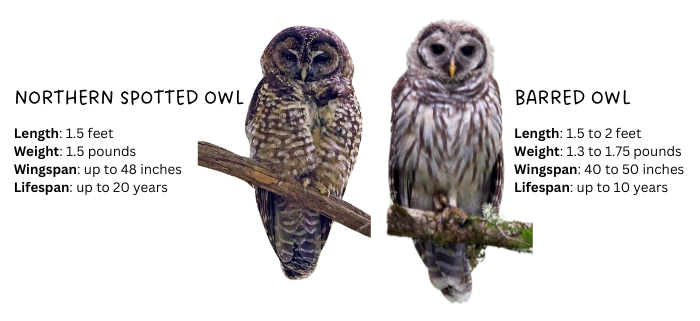
In the shadowed coniferous forests of the Pacific Northwest, a quiet yet profound ecological drama unfolds. On the surface, it is a tale of two owls—the barred owl and the Northern spotted owl. For many, the fascination lies in simply observing these magnificent creatures, their haunting calls piercing the twilight or their ghostly forms gliding silently through dense foliage. But beneath the surface, this common observation reveals a complex and cascading impact on forest ecosystems, conservation challenges, and the delicate balance of nature itself.
The Northern Spotted Owl: A Symbol of Old-Growth Forest Legacy
Endemic to the ancient, moss-laden forests stretching from northern California through Oregon to Washington, the Northern spotted owl has long been a sentinel species. It embodies the health and continuity of old-growth ecosystems—habitats characterized by towering trees, multilayered canopies, and a rich biodiversity of flora and fauna. The owl’s survival hinges on these pristine forest conditions, making it a barometer for ecological integrity. Its elusive nature and specialized habitat requirements add to its allure, captivating naturalists and ecologists alike.
However, decades of logging, urban expansion, and climate perturbations have fragmented and diminished these old-growth sanctuaries. The Northern spotted owl population has plummeted, raising alarms not only about the species itself but also the broader ecological ramifications. This owl is not merely a species at risk; it’s a symbol of an ancient world in peril.
The Barred Owl: An Uninvited Guest Reshaping Forest Dynamics
Once confined to eastern North America, the barred owl has expanded its range westward over the last century. This expansion is no mere geographic curiosity—it represents a formidable biogeographic incursion with profound consequences. Barred owls are opportunistic, adaptable predators capable of thriving in various forest types, including those prized by the Northern spotted owl.
The barred owl’s arrival disrupts the delicate equilibrium. Larger and more aggressive, it competes directly with the Northern spotted owl for territory, food, and nesting sites. This competition often culminates in displacement and diminished reproductive success for the spotted owls. The barred owl’s presence is neither incidental nor benign; it initiates a cascade of ecological pressures that are altering the old-growth ecosystem’s character.
Inter-Species Competition: More Than Just a Battle for Survival
At first glance, the conflict between barred owls and Northern spotted owls may appear as a straightforward competition for resources. Yet, the underlying dynamics are far more intricate. The barred owl’s broad diet, spanning small mammals, birds, and even amphibians, contrasts with the more specialized hunting habits of the Northern spotted owl. This dietary flexibility gives the barred owl a competitive advantage, especially in fragmented or disturbed habitats where resources are more variable.
Moreover, barred owls display greater tolerance for varied environmental conditions and human-altered landscapes, enabling them to exploit niches the spotted owls cannot. This adaptability exacerbates pressure on the Northern spotted owl, forcing it into increasingly marginal habitats. The result is a reduction not only in numbers but in genetic diversity and resilience, intensifying the species’ vulnerability.
Ecological Cascades: Ripples Through the Forest Web
The interplay between barred and Northern spotted owls generates rippling effects throughout the forest ecosystem. Predators influence prey populations, and changes in apex or mesopredator dynamics can cascade downward, unsettling ecological relationships. As barred owls supplant their spotted counterparts, shifts in prey species abundance and behavior may occur, influencing vegetation patterns and the broader forest structure.
These cascading effects challenge traditional conservation paradigms, revealing nature’s interconnectedness and the unforeseen consequences of species displacement. Protecting the Northern spotted owl is not merely about preserving an iconic bird; it entails safeguarding a complex network of biological interactions that sustains forest health.
Conservation Conundrums: Ethical and Ecological Dilemmas
Conservationists face a thorny predicament. In some regions, protective measures for the Northern spotted owl have included controversial management actions against barred owls, such as lethal removal. These interventions stir deep ethical debates about the value of one native species over a recently invasive yet now established one.
These paradoxes highlight the intricate challenges of conservation biology in a rapidly changing world. The question emerges: How to balance the preservation of a vulnerable species with respect for the rights and ecological role of another? The answers are neither simple nor universally agreed upon, underscoring the need for nuanced, science-driven management strategies.
The Broader Implications: Reflections on Human Impact and Ecological Integrity
The saga of barred and Northern spotted owls offers profound insights into humanity’s imprint on the natural world. Range expansions, habitat alterations, and species interactions are increasingly shaped by anthropogenic forces. This scenario forces reflection on our responsibility—to comprehend and mitigate such impacts while honoring the complexity of ecosystems.
In the barred owl’s unwitting dominance, and the spotted owl’s imperiled existence, we see a microcosm of global biodiversity challenges. It teaches us about ecological resilience, adaptation, and the fragile threads that sustain life. Therein lies a powerful fascination—not merely in the owls themselves, but in what their interwoven destinies reveal about nature and our place within it.