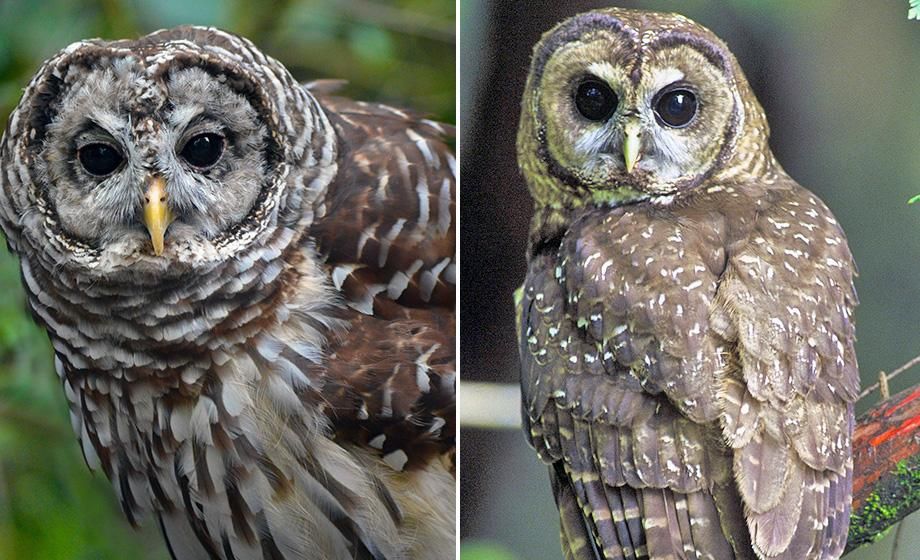
When considering the delicate balance of ecosystems, few stories are as compelling—and as unsettling—as the silent impact of barred owls on spotted owls. While habitat loss and competition often dominate conversations about the decline of spotted owl populations, an underexplored yet critical facet emerges: the role barred owls play in the spread of disease among their threatened cousins. This dynamic does more than hint at ecological complexity; it challenges long-held assumptions and demands a reevaluation of conservation strategies. What if the presence of barred owls is not merely a competitor to spotted owls, but a vector for unseen biological threats that exacerbate their vulnerability?
An Intricate Ecological Entanglement: Barred Owls and Their Expanding Range
Barred owls, once confined primarily to eastern North America, have gradually expanded their range westward over the past century. This geographic shift has brought them face-to-face with spotted owls, a species whose Pacific Northwest territories were previously unchallenged sanctuaries. The encroachment is not simply about territorial disputes; it ornaments the landscape with new interactions that ripple through wildlife health. Barred owls carry with them not just competition for food and habitat, but a repertoire of pathogens and parasites unfamiliar to spotted owls—pathogens that may find a susceptible host eager for invasion due to stressed populations and overlapping habitats.
Pathogens on the Wing: Barred Owls as Reservoirs of Hidden Diseases
What lurks beneath the feathers of barred owls is a compelling tale of microbial hitchhikers. Studies have identified that barred owls harbor various pathogens—some innocuous in their original hosts but potentially devastating when crossing species lines. The transmission of hemoparasites, such as haemosporidian parasites, introduces physiological stress in spotted owls, eroding their fitness over time. Furthermore, barred owls are known carriers of certain viral agents and fungal organisms that can lead to respiratory infections. The reality is that these diseases often remain cryptic in barred owls, who act as asymptomatic reservoirs, but manifest severe symptoms in the more vulnerable spotted owls, exacerbating mortality and morbidity within their populations.
Inter-Species Contact: The Catalyst for Disease Transmission
The manner and frequency with which barred and spotted owls interact are pivotal in understanding disease spread. While direct physical confrontations and territorial disputes draw the most attention, the subtle overlap in nesting sites, roosting trees, and foraging grounds facilitate indirect transmission paths. Shared environments become hotspots for pathogen exchange—fecal contamination, ectoparasite transfer, and even aerosolized pathogens can leap from one species to another. This inter-species contact blurs the lines of disease ecology, transforming what may have been isolated infections into systemic threats for spotted owls.
Physiological and Immunological Disparities: Why Spotted Owls Are More Vulnerable
The susceptibility of spotted owls to diseases borne by barred owls is deep-rooted in physiological and immunological nuances. Spotted owls evolved within relatively stable, less pathogen-rich environments, leading to more specialized—and consequently less robust—immune defenses. In contrast, barred owls have adapted to a wider range of environments, developing broad-spectrum immunity. This immunological imbalance means that pathogens harmless to barred owls can inflict disproportionate damage on spotted owls. Coupled with the chronic stress of habitat loss and competition, immune systems of spotted owls can be compromised, leaving them defenseless against novel infections.
Ecological Domino Effect: The Broader Implications of Disease Transmission
Beyond individual health, the transmission of disease from barred to spotted owls triggers cascading ecological consequences. Reduced spotted owl populations impact predator-prey dynamics, potentially leading to overpopulation of certain prey species and altered forest compositions. These shifts can inadvertently favor barred owls even more, creating a feedback loop that accelerates spotted owl declines. Moreover, pathogen spillover does not remain confined to owls; it can influence other avian species and small mammals, thereby reshaping the entire biological community. The ripple effect punctuates the necessity of addressing disease transmission within conservation agendas.
Reconsidering Conservation: Integrating Disease Ecology into Management Strategies
Traditional conservation approaches have emphasized habitat preservation and population monitoring. While these remain critical, the insidious role of disease necessitates a paradigm shift. Effective management must incorporate pathogen surveillance and informed interventions that consider barred owls not only as competitors but as vectors of biologically destabilizing forces. Targeted disease control, strategic barred owl removal, and habitat modifications that limit interactions can synergize to protect spotted owls more holistically. Conservation biology now calls for multidisciplinary efforts, blending ecology, veterinary science, and epidemiology to tackle this intricate challenge.
A Future Shaped by Understanding: Cultivating Curiosity and Commitment
The story of barred and spotted owls is far more than a tale of two species vying for survival—it is a narrative steeped in complexity, resilience, and hidden biological interplay. Recognizing the role barred owls play in the spread of disease among spotted owls invites curiosity and a reassessment of how we perceive wildlife interactions. It highlights the delicate threads weaving the tapestry of biodiversity and reminds us that conservation is no longer about isolated species, but the interconnected health of entire ecosystems. Armed with this understanding, humanity’s commitment to safeguarding spotted owls must evolve, embracing the unseen battles waged beneath the wings of the formidable barred owl.