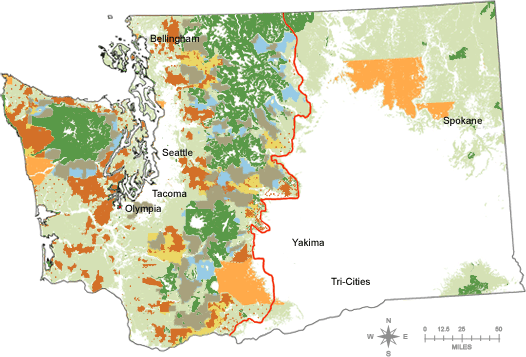
Amid the dense canopies and whispering forests of the Pacific Northwest, the spotted owl emerges as an emblem of wilderness resilience and ecological fragility. This elusive bird, cloaked in mottled feathers that mirror the dappled sunlight filtering through ancient trees, stands at the heart of a profound environmental narrative. The future of spotted owl conservation beckons a transformative journey—complicated, contentious, yet suffused with hope. As we embark on this exploration, it becomes evident that the path ahead is not just about preservation but a radical shift in how humanity perceives its role within the natural world.
Reimagining Habitat Protection: Beyond Traditional Boundaries
For decades, conservation efforts have centered around protecting old-growth forests, the quintessential habitat for spotted owls. Yet, as climate patterns evolve and ecosystems morph unpredictably, a rigid focus on historic territories risks ossifying strategies in a landscape that no longer adheres to former rules. The future calls for a dynamic approach—adaptive management that integrates real-time ecological feedback and predictive modeling to anticipate habitat shifts. This means expanding conservation horizons beyond static reserves to include corridors and transitional zones that facilitate species migration and genetic exchange.
Such a paradigm invites a reevaluation of land-use policies, harmonizing ecological needs with sustainable human activities. It challenges the entrenched notion of wilderness as untouchable relics and encourages stewardship models that blend preservation with regenerative practices. By embracing fluid boundaries and fostering landscape connectivity, conservationists can craft refuges resilient to environmental perturbations, offering the spotted owl a fighting chance in a rapidly changing world.

The Invasive Threat: A New Rival on the Horizon
One of the most palpable challenges confronting spotted owl conservation is the incursion of the barred owl—a species once confined to eastern North America, now an aggressive competitor in western forests. This invasive congener is outcompeting spotted owls for food and habitat, often exhibiting more adaptable behavior and higher reproductive rates. Addressing this biological antagonism demands difficult decisions and controversial interventions.
Targeted removal programs and habitat management tailored to favor spotted owls over barred owls embody the ethical and ecological tightrope that conservationists must walk. The dilemma surges deeper than species survival; it peels back layers on humanity’s responsibility in species introductions and ecosystem imbalances. The future trajectory will likely involve innovative biocontrol measures and integrative science-policy approaches that balance efficacy with moral conscientiousness.
Technological Renaissance: Revolutionizing Conservation Practice
The advent of cutting-edge technology heralds an unprecedented renaissance in wildlife conservation methodology. Remote sensing, drone surveillance, and acoustic monitoring offer granular insights into spotted owl populations and their ephemeral habitats. These technological marvels transform the traditionally labor-intensive and fragmentary data collection into continuous, expansive, and precise ecological intelligence.
Moreover, artificial intelligence algorithms can synthesize multifaceted datasets—from climatic variables to behavioral observations—forecasting trends and informing adaptive strategies with unparalleled sophistication. This fusion of technology and ecology promises a future where conservation decisions are not reactive but proactive, anticipatory rather than remedial. Harnessed ethically, these tools can amplify human stewardship capacity while minimizing invasive interference with the habitats themselves.
Engaging Communities: From Guardianship to Partnership
Conservation success is inextricably linked to the hearts and hands of local communities living in proximity to spotted owl habitats. Historically, conservation has often been a top-down mandate, eliciting resistance or apathy. The future strives for a renaissance of participatory conservation—where local knowledge, cultural values, and economic needs coalesce with scientific imperatives.
Incentivizing conservation through community stewardship programs, eco-tourism, and education fosters a symbiotic relationship between human wellbeing and ecological integrity. Indigenous stewardship practices, rooted in millennia of harmonious interaction with the land, offer invaluable lessons and frameworks for sustainable coexistence. This shift from guardianship to partnership equips conservation with social resilience, ensuring that spotted owl habitats are protected not only by law but by the collective will of communities.
Policy and Funding: Catalysts for Long-term Viability
Robust policies and sustained financial investment remain the lifeblood of effective spotted owl conservation. Yet, fluctuating political climates and competing budgetary priorities often impede the consistency essential for long-term ecological restoration. The future demands visionary policy frameworks that transcend partisan divides, embedding conservation as a non-negotiable societal priority.
Innovative funding mechanisms, such as conservation finance, green bonds, and public-private partnerships, are burgeoning opportunities to mobilize resources. Aligning economic incentives with conservation outcomes can attract broader stakeholder engagement—from corporations to philanthropists—thereby infusing the field with vitality and stability. Cementing legal protections, while fostering flexibility to adapt to emerging scientific knowledge, crystallizes the nexus between governance and ecological stewardship.
Scientific Exploration and Genetic Research: Unlocking Hidden Potentials
As the intricacies of spotted owl biology unravel under the microscope of modern science, new avenues emerge to bolster their resilience. Genetic research not only reveals the population structure and genetic diversity crucial for adaptive capacity but also opens possibilities for assisted gene flow and bioaugmentation. Such interventions are seductive in their promise but rife with ecological and ethical complexities.
Future conservation frameworks will likely integrate genomics with traditional ecological knowledge, navigating the tightrope between intervention and natural processes. This synthesis could forge novel strategies—whether through selective breeding for disease resistance or habitat-specific adaptations—that transcend conventional conservation boundaries, ushering in a biotechnological complement to wilderness preservation.
A Collective Vision: Harmonizing Biodiversity and Human Destiny
The future of spotted owl conservation is a mirror reflecting humanity’s greater ecological narrative—one that challenges us to redefine progress, success, and coexistence. This journey beckons a collective vision, weaving together science, technology, policy, and community into a vibrant tapestry of enduring biodiversity.
At stake is not merely the survival of a single species but the integrity of ecosystems that sustain countless forms of life, including our own. The path forward radiates with challenges that test our ingenuity and ethics, but equally with opportunities to rekindle our kinship with nature. By embracing a holistic, forward-thinking framework, the tale of the spotted owl can evolve from a lament of loss into a triumphant testament of hope and resilience.