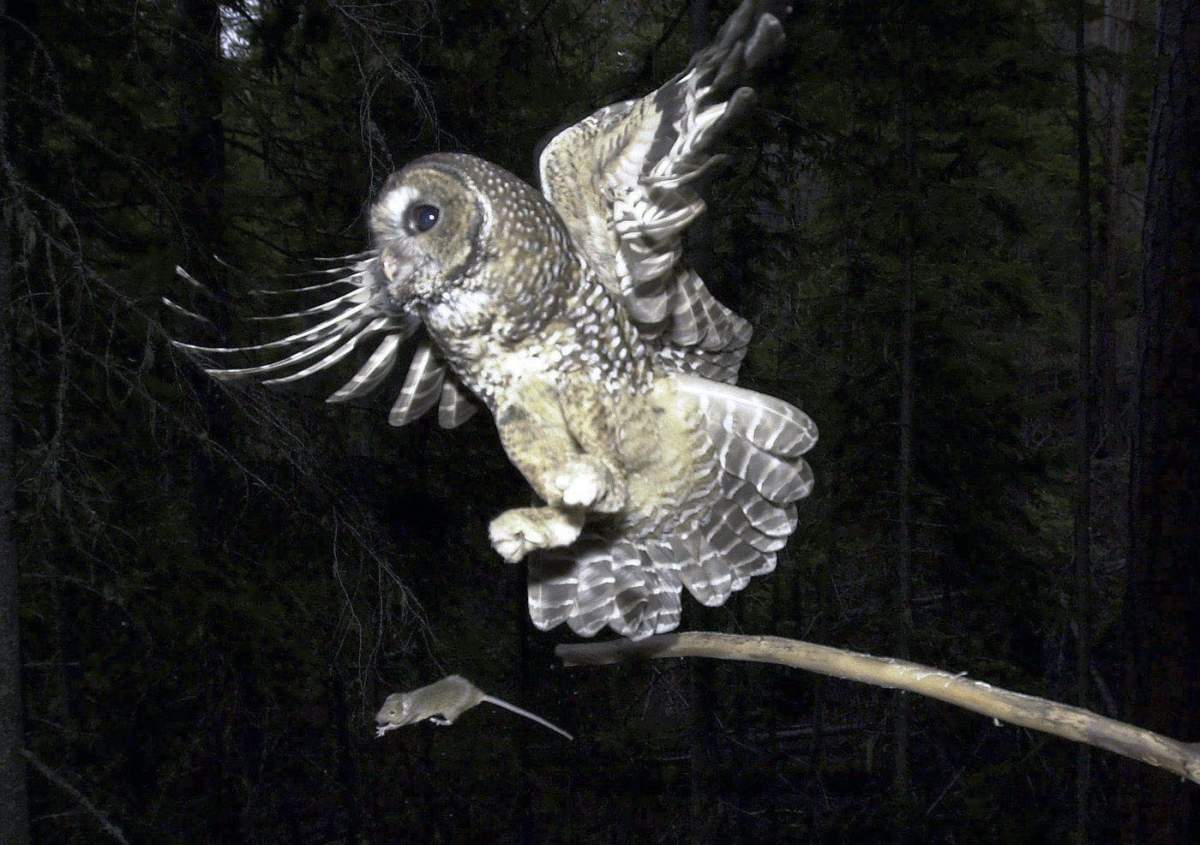
In the dense, mist-shrouded forests of the American West Coast, a quiet but fierce struggle is unfolding—one that pits two remarkable bird species against each other in a battle that challenges our ethical boundaries and conservation priorities. The West Coast spotted owl, a symbol of old-growth forest vitality, faces a dire threat from the barred owl, an invasive cousin whose expanding territory jeopardizes the survival of this vulnerable species. This conflict has sparked an intense public debate revolving around a profoundly unsettling question: Should we kill barred owls to save spotted owls? This dilemma invites us to reconsider our understanding of nature, stewardship, and what it truly means to protect biodiversity in an ever-changing world.
The Ecological Tug-of-War: Barred Owls Invade Spotted Owls’ Sanctuary
At the heart of this issue lies a fascinating yet troubling ecological dynamic. Barred owls, once confined predominantly to eastern North America, have progressively invaded the Pacific Northwest, expanding their range westward over the past century. Their adaptability, robust diet, and aggressive territorial behavior have allowed them to thrive in habitats once dominated exclusively by the reclusive spotted owl.
Unlike the spotted owl, which prefers mature old-growth forests and requires specific habitat conditions, barred owls are more generalist and less selective. This ecological versatility gives barred owls a competitive edge, intensifying pressure on spotted owls by competing for food, nesting sites, and territory. This competition is not merely passive; barred owls have been documented preying upon spotted owls, deepening the stakes for the already declining species.
The Conservation Conundrum: Protecting Natives by Removing Invaders
Conservationists face a quandary: How do you protect a beloved native species when its primary threat is another native species, albeit one that has become invasive in this particular ecosystem? Traditional conservation strategies—habitat preservation, restoration, and protection from human encroachment—have not stemmed the spotted owl’s population decline sufficiently. This reality compels wildlife managers to consider more direct intervention.
In recent years, proposed solutions have included culling the barred owl population within critical spotted owl habitats. This approach involves trapping and euthanizing thousands of barred owls annually to relieve competitive pressure on spotted owls. Such measures are supported by preliminary studies suggesting that removing barred owls can improve breeding success and recruitment of spotted owls. However, the prospect of orchestrating large-scale lethal control of one wild bird species to save another ignites profound ethical and emotional reactions among the public.
Ethical Crossroads: The Moral Implications of Culling One Owl to Save Another
The idea of killing barred owls is unsettling to many, raising thorny questions about the value of individual animal lives versus species preservation. Critics argue that depopulating barred owls—creatures simply exercising natural behaviors in an altered landscape—feels overly manipulative and intrusive. They admonish humanity’s hubris for attempting to “play God” with wildlife populations, invoking fears of slippery slopes and the erosion of compassion towards animals.
Conversely, advocates emphasize a more utilitarian perspective. They contend that without decisive action, the spotted owl faces extinction, which would represent an irrevocable loss to biodiversity and the ecological fabric of the old-growth forests. The nuanced distinction between native and invasive status, while sometimes blurred, holds significance because the barred owl’s expansion is partly a result of human-induced landscape changes facilitating their displacement of spotted owls. Thus, intervention is framed not as cruelty but as a form of restorative justice—a necessary correction in an environment altered by human hands.
Public Sentiment and the Challenge of Consensus
Public opinion surrounding this debate is deeply polarized. Nature enthusiasts and bird lovers often find the idea of directly killing barred owls traumatic and counterintuitive to the ethos of wildlife appreciation. Conversely, conservationists who witness the ongoing devastation of spotted owl populations advocate for pragmatic and sometimes uncomfortable measures.
Environmental organizations, policymakers, and local communities grapple with the complexity of these competing sentiments. The controversy forces a broader societal reckoning with conservation priorities: Is preserving one endangered species worth the sacrifice of another, even if the latter thrives under human-mediated circumstances? Should the intrinsic rights of individual animals outweigh ecosystem-level survival? These questions transcend ecology, touching on philosophy, ethics, and our evolving relationship with nature.
Innovation and Alternatives: Searching for Balance in Intervention
Efforts to mitigate this conflict have also explored less lethal alternatives. Habitat restoration, for instance, aims to expand and connect old-growth forest patches, boosting resources for spotted owls and potentially limiting barred owl encroachment. Scientific research into reproductive control techniques, such as contraceptives or sterilization of barred owls, holds promise but remains in experimental stages.
Moreover, enhanced monitoring through acoustic surveys and telemetry helps wildlife managers make informed decisions about when and where interventions are most needed, enabling targeted and measured responses. Education and community engagement also play vital roles, fostering public understanding and support for difficult conservation choices.
Reframing the Narrative: What This Debate Teaches Us About Conservation
Ultimately, the heated discussion about killing barred owls to save spotted owls serves as a mirror reflecting our broader environmental crises. It challenges simplistic notions of “good” and “bad” species, compelling us to reckon with the tangled legacies of habitat fragmentation, climate change, and human influence on wildlife dynamics.
This debate encourages a shift from viewing nature as a static tableau of pristine wilderness to understanding it as a dynamic, often messy network of relationships that we are inexorably entwined with. Protecting biodiversity in such a context may demand difficult choices, layered with uncertainty and moral complexity.
In facing the barred owl–spotted owl conundrum, we glimpse the intricate tapestry of conservation in the 21st century—a tapestry woven from science, ethics, passion, and pragmatism. It asks us not only how far we are willing to go to save a species but also how thoughtfully we can navigate the tangled paths of coexistence in a human-altered world.