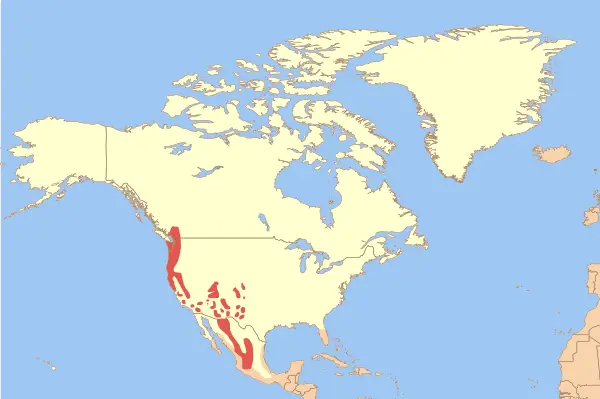
The Pacific Northwest’s ancient forests, where mist clings to towering conifers like a shroud, have long been the domain of the spotted owl—a creature of twilight, of quiet, of secrets woven into the fabric of the land. Yet, as cities sprawl like inkblots across the landscape, this enigmatic bird finds itself caught in the crossfire of progress. Urbanization, that relentless tide of concrete and steel, is not merely encroaching upon the spotted owl’s habitat; it is unraveling the delicate tapestry of an ecosystem that has thrived for millennia. The owl, a silent sentinel of the old-growth woods, is now a poignant symbol of what we stand to lose when nature’s boundaries are erased by human ambition.
The Vanishing Canopy: A Habitat Under Siege
The spotted owl’s existence is inextricably tied to the old-growth forests of the Pacific Northwest, where Douglas firs and western hemlocks rise like cathedral spires, their canopies dense enough to muffle the world below. These forests are not merely trees; they are living cathedrals, their understories a labyrinth of moss-draped branches and ferns that whisper in the wind. For the spotted owl, this is more than shelter—it is a sanctuary where the boundaries between earth and sky blur into obscurity.
Yet urbanization does not merely nibble at the edges of these forests; it devours them. Logging, road construction, and the relentless expansion of cities fragment what remains of these ancient woodlands, leaving the owl with ever-shrinking pockets of wilderness. The owl, a creature of solitude and precision, cannot adapt to the chaos of a landscape carved up by human hands. Its hunting grounds, once vast and unbroken, are now dissected by highways and housing developments, forcing it into a precarious dance of survival in a world that no longer recognizes its rhythms.
The Silent Extinction: Fragmentation and Isolation
Fragmentation is the slow poison of biodiversity. When forests are carved into isolated islands by urban sprawl, the consequences ripple through the ecosystem like cracks in glass. The spotted owl, a species that requires large, contiguous territories to thrive, finds itself marooned in pockets of habitat too small to sustain it. Genetic isolation sets in, weakening populations as inbreeding takes its toll. The owl’s haunting four-note call, once a symphony across the valleys, now echoes in hollow silence.
But fragmentation does more than isolate—it exposes. Edge effects, the ecological equivalent of a wound left untreated, creep into the remaining forest patches. Predators, invasive species, and human disturbances thrive in these transitional zones, further destabilizing the owl’s domain. The owl, a creature of the deep woods, is ill-equipped to navigate this new reality. Its survival hinges on the integrity of the forest, and when that integrity is shattered, the owl becomes a ghost before it is even gone.
The Illusion of Compromise: Conservation in the Age of Development
In the face of such devastation, conservation efforts often feel like bandages on a gaping wound. Protected areas are designated, but they are islands in a sea of development, too small to harbor the owl’s long-term survival. Mitigation measures—buffer zones, wildlife corridors—are proposed, but they are often ignored or underfunded, rendered meaningless by the relentless march of progress. The spotted owl’s plight is not just an environmental issue; it is a moral one, a testament to humanity’s inability to reconcile growth with preservation.
Even the language of conservation betrays a troubling complacency. Terms like “sustainable logging” and “habitat restoration” are wielded like shields, obscuring the fact that the owl’s habitat cannot be restored once it is gone. The owl does not need a “managed” forest; it needs the wild, untamed heart of the old-growth woods. Yet we continue to trade its survival for short-term gains, as if the owl’s existence is negotiable, as if its silence is a price worth paying.
The Cultural Erasure: Losing More Than a Species
The spotted owl is more than a biological entity; it is a cultural touchstone, a creature woven into the myths and stories of the Pacific Northwest’s Indigenous peoples. For generations, the owl has been a symbol of wisdom, of mystery, of the unseen forces that govern the natural world. To lose the owl is to lose a thread in the fabric of human connection to the land—a connection that urbanization severs with alarming efficiency.
Yet the owl’s decline is not just an ecological tragedy; it is a cultural one. When the forests fall, so too do the stories, the traditions, and the spiritual ties that bind communities to the land. The owl’s haunting call, once a lullaby for the wild, becomes a dirge for what we have sacrificed in the name of progress. The Pacific Northwest’s identity, shaped by its ancient forests and the creatures that dwell within them, is being rewritten by bulldozers and cranes.
The Path Forward: Can We Still Listen?
The spotted owl’s fate is not yet sealed, but the window for meaningful action is closing. True conservation requires more than token gestures; it demands a fundamental shift in how we view the land and our place within it. Cities must be reimagined—not as fortresses of concrete, but as living entities that coexist with the wild. Green infrastructure, wildlife corridors, and strict protections for old-growth forests are not luxuries; they are necessities if we are to avert the owl’s extinction.
But perhaps the most urgent change is cultural. We must learn to listen—to the owl’s call, to the whisper of the wind through the trees, to the unspoken plea of a species that has no voice in the halls of power. The spotted owl is not just a victim of urbanization; it is a mirror, reflecting back the consequences of our choices. Will we continue to turn away, or will we finally see the cost of our silence?