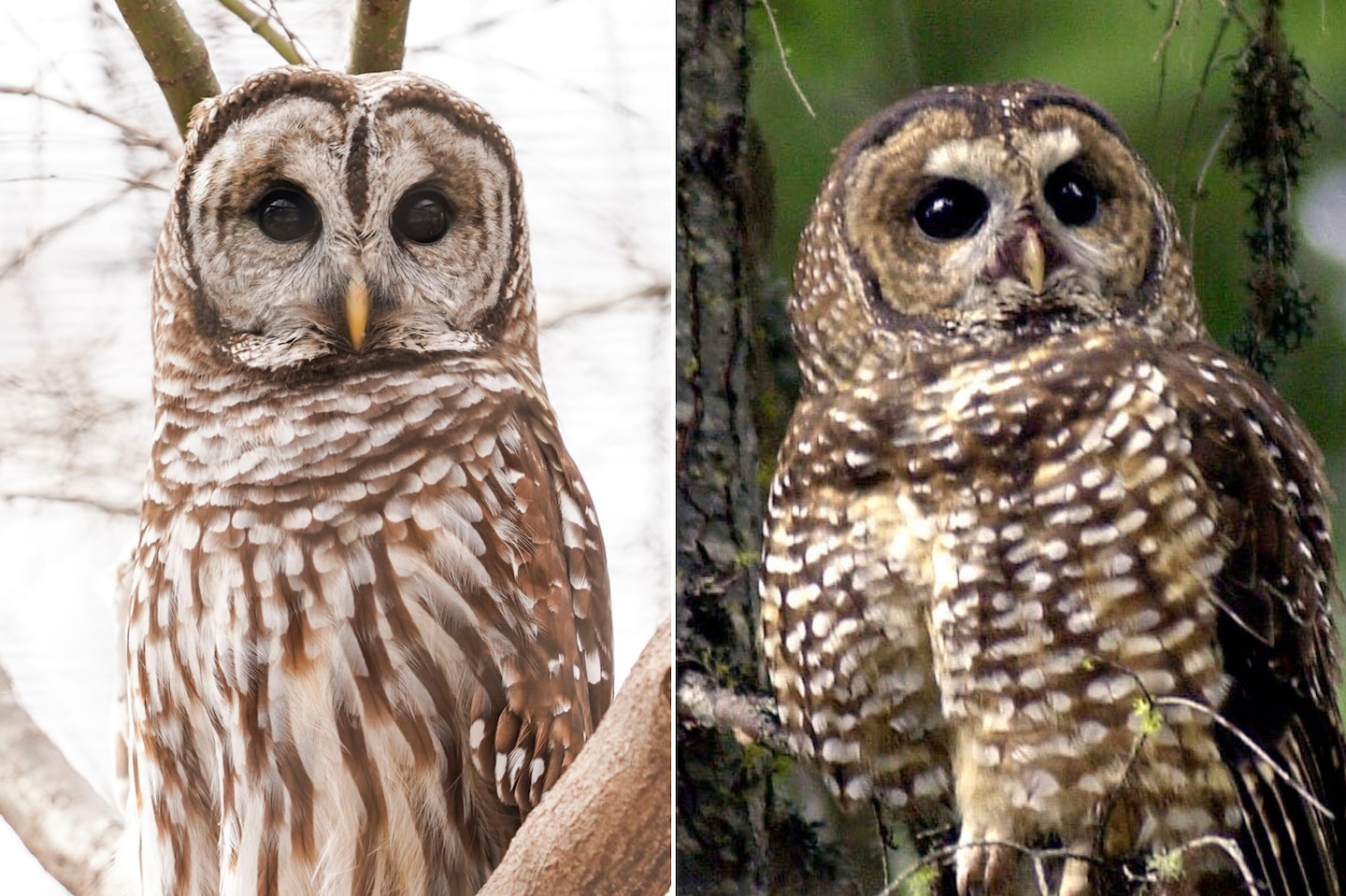
The natural world is a stage of relentless conflict and delicate balance, where every species plays a role in an intricate ecological tapestry. Yet, occasionally, the layers of this tapestry become untangled, and intervention becomes necessary—not to dominate, but to preserve. Such is the impetus behind the controversial barred owl management strategy, a bold and unorthodox approach involving the lethal removal of approximately 450,000 barred owls to rescue the imperiled spotted owl from extinction. This strategy invites a profound reconsideration of conservation ethics, species hierarchies, and humanity’s role as steward of the wild.
Understanding the Ecological Imbalance: Barred Owls Versus Spotted Owls
At first glance, the barred owl (Strix varia) and the spotted owl (Strix occidentalis) may seem like two similar creatures sharing the same forests. However, beneath their overlapping appearances lies a fierce interspecific competition that tiptoes on the brink of displacement. Native to eastern North America, barred owls have expanded their range westward over the past century, encroaching into the prime habitat of the spotted owl, a species endemic to the Pacific Northwest and emblematic of old-growth forest ecosystems.
The barred owl’s adaptability, aggressive behavior, and versatile diet have allowed it to flourish in habitats that were once exclusive to the more reclusive spotted owl. This has led to increased competition for food and nesting sites and, in many cases, direct predation on spotted owls. The steep decline in spotted owl populations underscores the fragile reality: coexistence has become untenable. The barred owl, once a benign participant in its original ecosystem, has transformed into a disruptive force, threatening biodiversity and ecosystem integrity.
The Rationale Behind Lethal Removal: Confronting Hard Truths in Conservation
Conservation is often cloaked in ideals of protection without harm. Yet, the barred owl management strategy forces a confrontation with a less palatable reality: that to save one species, the controlled culling of another may be necessary. The lethal removal of barred owls promises a direct and immediate benefit to spotted owl populations, enabling these fragile birds a fighting chance at recovery.
This strategy is not a cavalier act of eradication but a calculated ecological intervention grounded in scientific research and decades of observation. Previous non-lethal methods, such as habitat protection and restoration, while essential, have failed to halt spotted owl decline amid the encroachment of barred owls. The magnitude of the intervention—targeting nearly half a million barred owls—reflects the necessity of scale and tenacity in confronting the invasive pressures on native wildlife.
Ethical Dilemmas and the Conservation Paradigm Shift
Embarking on a campaign to lethally remove a vast number of barred owls raises profound ethical questions. How does one weigh the life of one creature against another? Is it justifiable to kill a species, albeit invasive, for the preservation of another? These quandaries press deeply on the conscience, promising to reshape conservation philosophy.
Yet, within this complexity lies a transformative dialogue. The strategy challenges traditional notions of conservation as passively protective, advocating instead for a dynamic engagement that acknowledges the sometimes brutal realities of invasive species management. It compels stakeholders to accept that biodiversity preservation may, at times, require active interference that transcends sentimental protectionism.
Implementation: The Mechanics of Managing a Massive Population
Executing the lethal removal of nearly half a million barred owls is a logistical and ecological enterprise of unprecedented scale. It demands meticulous planning, integrating technological tools such as acoustic playback surveys to detect barred owl presence, and humane, efficient methods for removal. Trained wildlife officials navigate dense and often inaccessible old-growth forests, balancing efficacy with minimal disruption to surrounding fauna.
Timing is critical. Seasonal behavior patterns, breeding cycles, and territoriality influence when and how removals happen to maximize impact on barred owl populations without unintended consequences for other species. Monitoring post-removal is equally essential, tracking spotted owl recovery and adjusting strategies in real time to sustain population gains.
Ecological Outcomes: Anticipated Benefits and Potential Risks
The promise of this management strategy lies in the anticipated rebound of spotted owl populations, a potentially pivotal milestone for forest ecosystem conservation. By restoring balance, the spotted owl may resume its crucial role as an indicator species, reflecting the health of old-growth forests and fostering ecosystem resilience.
However, the intervention is not without risks. The removal of a dominant predator could trigger unforeseen trophic cascades, altering prey populations and forest dynamics. Additionally, barred owls exhibit remarkable adaptability; there exists the possibility that their populations may rebound or that other ecological pressures may emerge, complicating conservation outcomes.
A Catalyst for Broader Conservation Conversations
Beyond immediate biological impacts, the barred owl management strategy ignites broader conversations about human intervention in nature. It challenges the conservation community to reconsider objectives, methods, and values underpinning wildlife management. Should the goal be preserving historical species compositions at all costs? Or embracing the fluidity of ecosystems in an era of rapid environmental change? This initiative is a crucible for examining such pivotal questions.
Furthermore, it fosters public engagement and education, galvanizing a collective awareness of the complexities of ecological stewardship, the importance of biodiversity, and the sometimes uncomfortable decisions necessary to safeguard the natural heritage.
Conclusion: A Bold Path Forward Amidst Ecological Complexity
The barred owl management strategy is more than a conservation measure; it is a paradigm shift that challenges complacency and invites a reimagining of how we protect the wild. By confronting difficult decisions with scientific rigor and ethical reflection, this approach offers hope for the spotted owl’s survival and, by extension, the future integrity of the ecosystems they inhabit.
In navigating the tangled web of ecological relationships, humanity must sometimes wield difficult tools. The lethal removal of barred owls, while contentious, underscores a profound truth: preservation may require sacrifice, boldness, and a willingness to embrace complexity in the pursuit of a flourishing, biodiverse future.