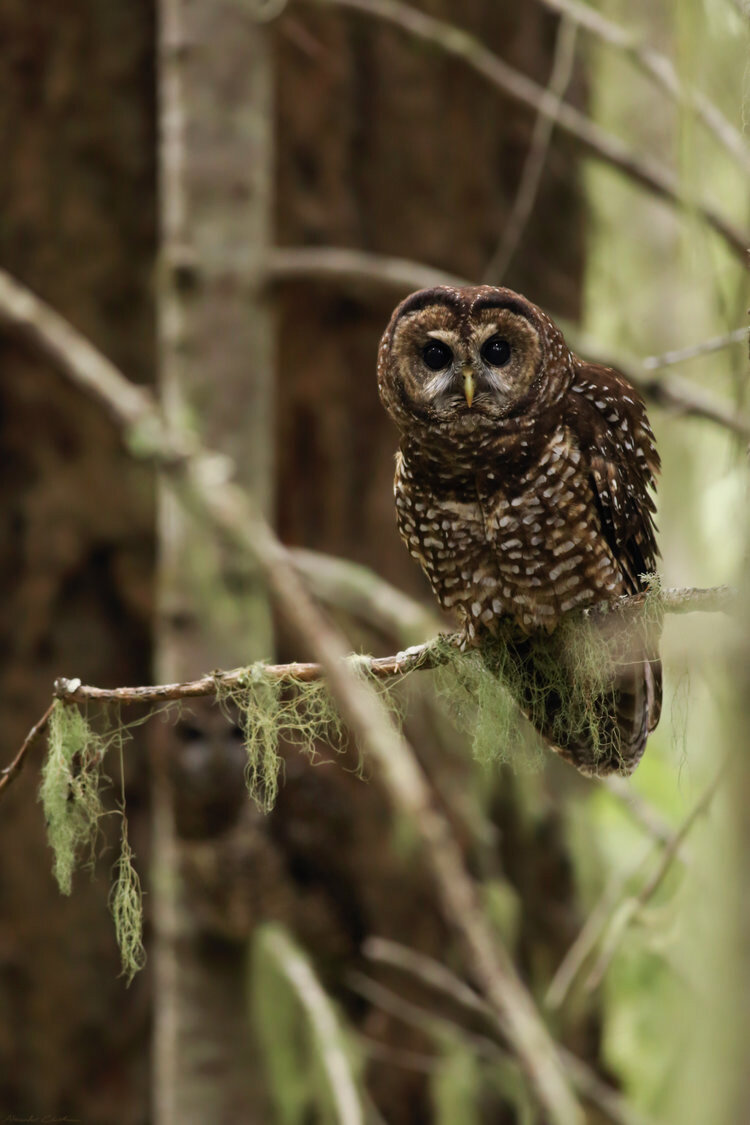
In the vast tapestry of the Pacific Northwest’s verdant wilderness, the Spotted Owl emerges as a silent sentinel—an emblem woven delicately into the old-growth forests that sprawl like ancient cathedrals. This enigmatic bird, with its haunting calls and mottled plumage, is far more than a mere inhabitant of these woods; it is a lynchpin, an ecological keystone shaping the intricate balance of life within these storied landscapes. The Spotted Owl’s role in Pacific Northwest ecosystems is a narrative of interdependence, resilience, and the fragile dance of biodiversity.
The Spotted Owl: The Nocturnal Monarch of Old-Growth Forests
Shrouded in dusky shadow, the Spotted Owl reigns over a nocturnal kingdom defined by towering Douglas firs and ancient cedars draped in moss. Its plumage, a mosaic of shadows and light, mirrors the dappled forest understory, providing near-perfect camouflage. As a species intricately adapted to the labyrinthine structure of old-growth habitats, the owl’s survival is coupled inexorably to these complex ecosystems.
These forests are more than majestic backdrops; they are biodiverse fortresses, their multilayered canopies and abundant snags offering critical hunting perches, nesting hollows, and pathways for quiet movement. The owl’s preference for these habitats underscores its role as a bioindicator—an organism whose presence reveals the health and maturity of the forest. In this sense, the Spotted Owl is a living barometer, signaling shifts in ecological integrity and the balance of natural processes.
Ecological Keystone: Managing Prey and Maintaining Balance
The Spotted Owl occupies a pivotal trophic position as a nocturnal predator, delicately regulating populations of small mammals and other forest floor denizens. Its diet, composed primarily of woodrats, flying squirrels, and other rodents, prevents unchecked population explosions that could otherwise disrupt seed dispersal patterns and overconsume understory vegetation. Like an invisible hand guiding the forest’s rhythm, the owl helps sustain diversity by maintaining equilibrium among competing species.
Without the Spotted Owl, these prey populations may surge in numbers, instigating cascading effects—altered vegetation dynamics, degraded soil quality, and diminished habitat suitability for myriad other creatures. This reverberates through the ecosystem, illustrating how a single predator’s presence can cue an intricate cascade maintaining the forest’s health and vitality.
The Spotted Owl’s Dependence on Old-Growth Complexity
Unlike many adaptable avian species, this owl thrives exclusively within the sanctuary of old-growth complexity. The structural heterogeneity of these forests—characterized by standing dead trees, multi-layered canopies, and intricate understory vegetation—provides unique microhabitats essential for its life cycle. Nesting cavities carved by ancient woodpeckers and the presence of diverse perch sites facilitate its stealth hunting techniques.
This dependence highlights the frailty of the Spotted Owl’s existence. The progressive fragmentation and logging of these expansive forest mosaics strip away vital resources, fragmenting habitats into isolated pockets that challenge dispersal and genetic exchange. The owl’s plight is thus entwined with the broader narrative of conservation, making their survival a litmus test for old-growth forest preservation efforts.
Legacy of the Spotted Owl and Conservation Paradigms
The plight of the Spotted Owl transcends biology and enters the realm of sociopolitical narrative—a poignant symbol in North America’s ongoing dialogue between economic development and environmental stewardship. Its declining numbers have spurred sweeping conservation initiatives, fostering an unprecedented awareness of ecosystem fragility and the ethical imperatives of preservation.
Through legal protections and adaptive management strategies, efforts to curb habitat destruction speak to a larger ecological ethic: one that recognizes the interconnectedness of all species and the long-term consequences of human intervention. The Spotted Owl thus functions not only as an ecological linchpin but also as a symbol inspiring a paradigm shift toward coexistence and sustainable stewardship.
The Metaphorical Forest: The Spotted Owl as a Guardian of Time
Envision the Spotted Owl as the forest’s timekeeper—a creature embodying the slow, deliberate passage of centuries within the Pacific Northwest. Its presence evokes the whispers of ancient trees and the patient unfolding of life through millennia. Like a custodial archivist of the wilderness, the owl preserves the memory inscribed in the rings of timber and the quiet pulse of undergrowth.
It champions an ecological narrative that defies haste, reminding us that the maturity of ecosystems is a mosaic of patience, interdependence, and nuanced relationships. Its declining population mirrors not only the loss of a species but the erosion of ecological memory, urging a profound reflection on the pace and impact of modern change.
A Call to Action: Embracing the Owl’s Ecosystem Wisdom
The Spotted Owl compels us to embrace a stewardship ethic that honors complexity, connectivity, and balance. It challenges us to reconsider land use and resource extraction practices that have long ignored the subtle symphony of forest dynamics. Protection of this emblematic bird is inseparable from safeguarding the broader forest ecosystem—an endeavor demanding collaboration across scientific disciplines, policy frameworks, and community values.
Ultimately, the Spotted Owl stands as a testament to the resilience embedded within nature, even in the face of adversity. By championing its cause, we protect a matrix of life that reverberates through generations, ensuring that the Pacific Northwest’s forests continue to sing with the vibrant chorus of biodiversity and ecological harmony.