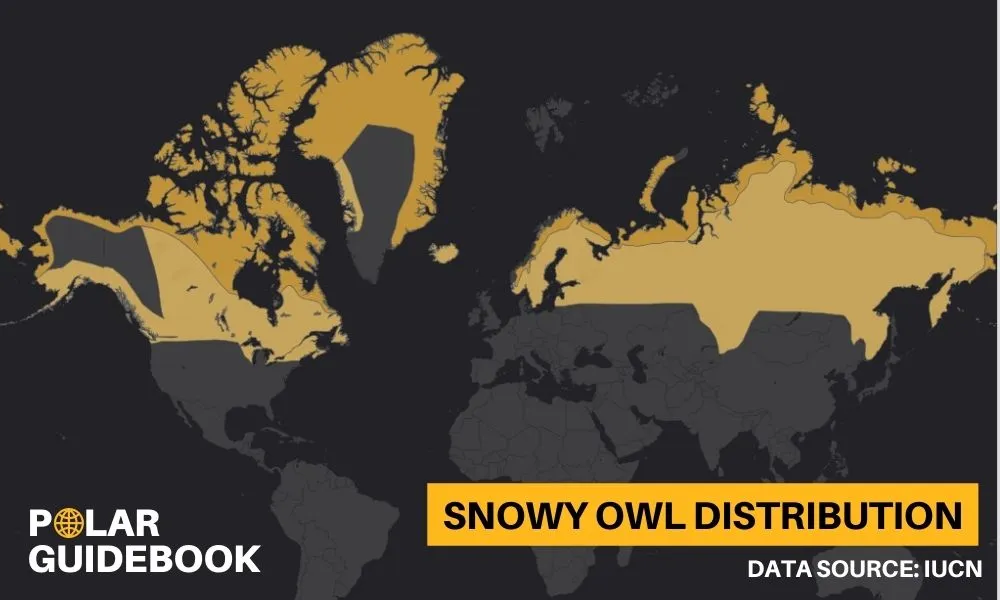
As the Arctic tundra teeters on the brink of profound transformation, the majestic snowy owl—an emblem of the frozen north—finds itself facing an uncertain future. Climate change is not just altering landscapes but is also subtly redrawing nature’s blueprint. The question that now echoes in the corridors of conservation biology and climatology is compelling: where will snowy owls inhabit come 2050? Emerging climate models promise more than mere projections; they unveil a complex narrative of survival, migration, and adaptation that invites us to rethink everything we assume about wildlife and the wild spaces they call home.
The Arctic’s Changing Canvas: A Prelude to Migration
The Arctic environment, traditionally a stronghold for snowy owls, is undergoing metamorphosis at an unprecedented velocity. Rising global temperatures are causing permafrost to thaw, sea ice to recede, and vegetation zones to shift northwards. This climatic upheaval disrupts not only the physical landscape but the entire ecosystem balance. Snowy owls, which depend heavily on the tundra’s frozen vastness for nesting and hunting, are being challenged in profound ways.
Not merely by the alteration in terrain, but by the shifting availability of prey species such as lemmings—whose populations are notoriously sensitive to climatic fluctuations. Changing snow patterns and earlier melts impact lemming cycles, which, in turn, influence snowy owl reproductive success. The intimate dance between predator and prey wavers, underscoring the owl’s precarious foothold in the Arctic ecosystem.
From Arctic Sovereignty to Expanding Frontiers
Climate models suggest a fascinating, if troubling, geographical shift: the core habitats of snowy owls will likely migrate poleward and into higher altitudes, but not without interruptions along the way. The northward expansion of woody shrubs and trees, a process termed ‘greening of the Arctic,’ transforms open tundra into denser vegetation, less hospitable for open-ground nesters like the snowy owl.
Yet, paradoxically, these changing landscapes may offer new territories to colonize. Subarctic and boreal regions, previously too inhospitable or competitive, might become viable habitats. Snowy owls could potentially nest in areas of northern Canada, Alaska, Scandinavia, and Siberia where tundra persists or retreats slowly. These prospective niches ignite curiosity about the adaptability and resilience of a species fiercely linked to the icy perch of tradition.
Climatic Pressures and the Advent of Novel Ecosystems
As the climate alters biological communities, novel ecosystems will emerge—combinations of species and conditions previously unseen. For snowy owls, this heralds a dual-edged reality. On one side lies opportunity: new prey species may become available as ecosystems shift. On the other, competition, predation, and disease dynamics will likely become more complex, challenging the owl’s survival strategies.
The unpredictable nature of these novel ecosystems underscores a need for flexible conservation strategies. Snowy owls may encounter unfamiliar competitors such as hawks and eagles expanding their range northward. Additionally, warmer temperatures could facilitate pathogens or parasites that historically could not thrive in Arctic climates. Understanding how these factors intertwine will be vital to presage the species’ fate with scientific nuance rather than mere speculation.
The Role of Climate Models in Revealing Hidden Patterns
Advanced climate models, driven by satellite data, atmospheric simulations, and ecological parameters, craft intricate mosaics of snowy owl habitat futures. These models transcend simple temperature increases, integrating precipitation changes, vegetation shifts, and prey dynamics. They reveal patterns that are nuanced and often nonlinear, challenging the binary notion of habitat loss versus gain.
One remarkable insight from these models is the temporal fluctuation of habitats, showing not a uniform shift but oscillatory movements in suitable environments tied to multi-decadal climatic cycles. This means snowy owls might face episodic booms and busts in favorable conditions, painting a dynamic portrait of migratory urgency and sanctuary seeking. These intricate forecasts provoke a deeper contemplation of how climate variability—not only climate change—will sculpt survival pathways.
Human Influence: Conservation Amidst Transformation
The shifting geographic destiny of snowy owls compels a recalibration of conservation methodologies. Protected areas designed decades ago may no longer coincide with future hotspots of owl activity. Human development, including mining and infrastructure expansion into northern latitudes, compounds threats by fragmenting potential new habitats. This interplay between anthropogenic pressures and ecological change heightens the precariousness of the owl’s future.
Innovative conservation strategies might require a blend of habitat connectivity initiatives, dynamic management zones, and perhaps assisted migration to ensure populations remain viable. The promise lies in harnessing climate models not just as predictive tools but as guidance systems to anticipate and mitigate threats. The narrative here is one of hope balanced by urgency, compelling stakeholders to act decisively against time’s relentless tide.
Beyond Geography: Cultural and Ecological Significance
The snowy owl is more than a creature of the tundra; it embodies the spirit of the Arctic wilderness. Its potential shift in distribution challenges cultural connections held by Indigenous peoples for generations. These birds are woven into the fabric of northern identity, mythology, and ecological understanding. Preserving their future habitats is simultaneously a cultural imperative.
Ecologically, snowy owls function as apex predators and sentinel species. Their presence—or alarming absence—signals the health of Arctic ecosystems. Understanding where they will live in 2050 isn’t just an academic exercise; it’s a prognostic tool that could illuminate broader environmental transformations, guiding global climate discourse toward more profound ecological awareness.
Envisioning 2050: A Landscape Reimagined
Imagining snowy owls’ habitats in 2050 evokes a landscape both familiar and fantastical. Vast stretches of ice and tundra may be punctuated by emergent foothills and woodland perimeters. These new frontiers might present the snowy owl with challenges that demand evolutionary, behavioral, and ecological agility.
The complexity of this forecast invites us to challenge our preconceived notions of stability in nature. It inspires a shift in perspective—from viewing habitats as static refuges to understanding them as fluid and ever-changing mosaics. This conceptual recalibration is essential as we strive to coexist with changing wildlife dynamics in a climate-altered world.
Ultimately, the snowy owl’s projected migratory pathways and habitat transformations beckon a narrative rich with mystery, resilience, and tension. Their story highlights the profound interconnectedness of climate systems and biological destiny—reminding us that the future of the wild is a collective reflection of our actions today.