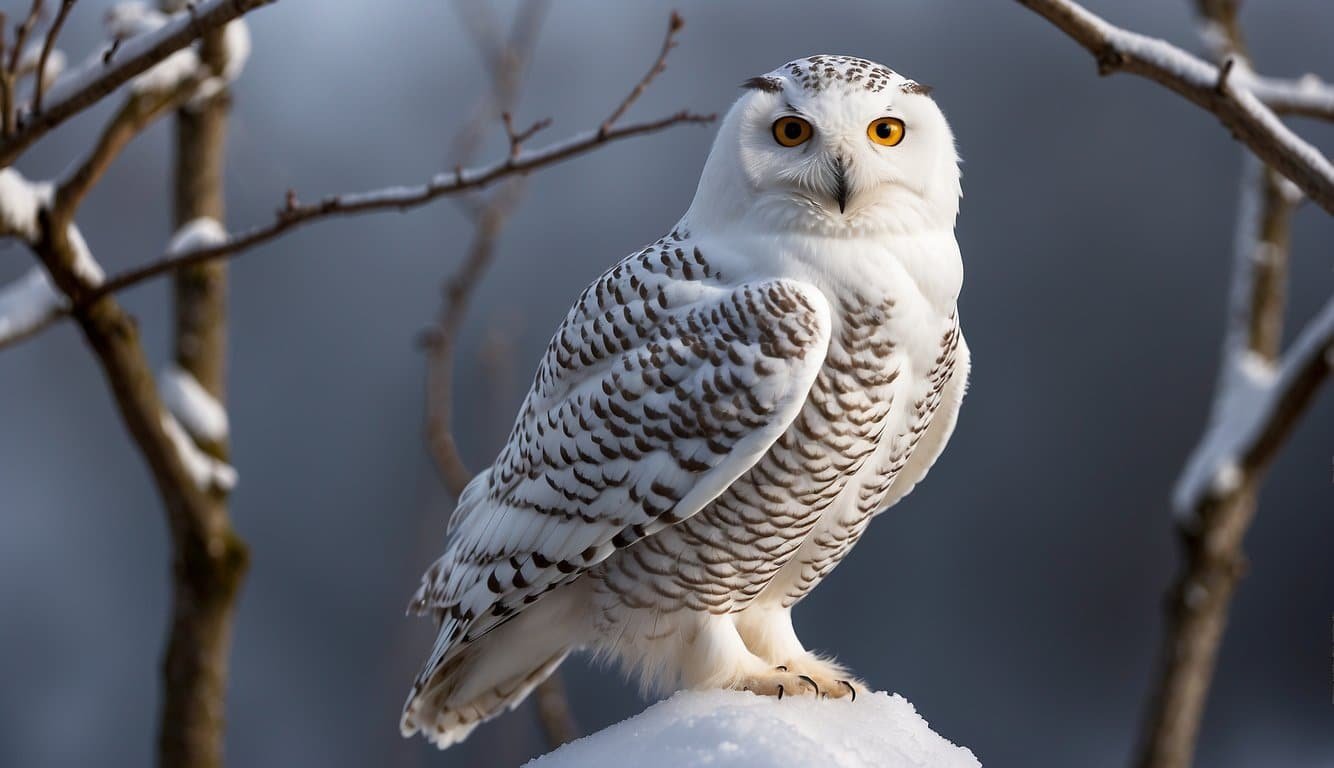
The enigmatic appearance of the snowy owl, with its striking white plumage flecked with dark bars, has long captivated observers and naturalists alike. At first glance, this majestic bird appears almost ghostly against its frigid tundra backdrop, seamlessly blending into the snow-laden landscape. This distinctive camouflage not only triggers a common observation—how effortlessly it vanishes into its environment—but also invites us to explore the fascinating scientific intricacies underlying this adaptive coloration. Delving into the patterns, pigments, and evolutionary advantages of the snowy owl’s plumage reveals a story as intricate as the Arctic environment it inhabits.
The Visual Paradox: White Feathers in a Harsh World
The snowy owl’s predominantly white feathers present an apparent paradox. While white plumage intuitively suggests vulnerability in a world of predators and prey, it actually serves as an unparalleled tool for concealment. The Arctic’s vast expanses of snow and ice create an environment where stark whiteness becomes a formidable shield rather than a visual handicap. This camouflage is not merely about blending in; it is about survival in the grueling polar wilderness. The feathers’ reflective properties help the owls remain unseen by both prey and predators during the long Arctic day.
Structural Composition: More Than Just Color
At the microscopic level, the snowy owl’s feathers boast intricate structural adaptations that contribute to their coloration and functionality. Unlike pigments alone, the scattering of light through specialized keratin and air-filled vacuoles within the feather barbules produces the luminous whiteness we recognize. This structural coloration, combined with dense feather layering, enhances insulation against brutal cold. Moreover, the feathers’ fur-like texture muffles sound, enabling the owl to glide silently during nocturnal hunting, an attribute critical for sneaking upon unsuspecting prey in an environment where sound travels far.
Pigmentation Patterns: Subtle Variations with Deep Significance
While many snowy owls appear predominantly white, the subtle interplay of dark bars and spots across their plumage is far from random. These varying pigmentation patterns are influenced by factors such as age, sex, and geographical location. Juveniles and females typically exhibit more pronounced barring, which provides enhanced camouflage amidst the rocky outcrops and sparse vegetation that transect Arctic snowfields. Males, on the other hand, often sport cleaner white plumage, which may play a role in mating displays or territorial signaling. These markings break up the bird’s outline, disrupting visual detection and furthering its capacity for concealment.
Seasonal Shifts: Camouflage in Flux
Unlike many migratory birds, snowy owls exhibit remarkable stability in their habitat choice, remaining in polar or near-polar regions year-round, though some migrate southward during intense winters. Their plumage undergoes gradual molting cycles that subtly respond to seasonal shifts. In autumn and winter, plumage tends to be thicker and more pristine white, coinciding with the snowy landscape. The retained barring patterns may also lighten during these periods, optimizing camouflage against snowfields stretching endlessly across tundra. This seasonal modulation underscores the dynamic relationship between feathers and environment—a biological dance finely tuned over millennia.
The Evolutionary Journey: Natural Selection and Plumage Adaptation
The snowy owl’s plumage stands as a triumph of natural selection, shaped by the rigors of Arctic ecosystems. Early ancestors likely possessed darker feathers suited for forested or rocky terrains. As climate shifts pushed these owls into more open and snowy habitats, selective pressures favored individuals with paler, more reflective feathers. This gradual shift in pigmentation not only enhanced survival rates but also carved a niche distinct from other raptor species, reducing competition. The interplay of environment and genetic adaptation is a testament to evolutionary ingenuity, revealing how seemingly simple coloration is in fact a complex trait honed by time.
Camouflage Beyond Survival: Behavioral Synergy
Plumage is only one facet of the snowy owl’s camouflage strategy. Behavioral adaptations intricately complement their feathered disguise. These owls often perch motionlessly on snow mounds or stare from near-invisible vantage points, blending seamlessly with their backdrop. Their low-profile flight and tendency to nest on open ground facilitate stealth. Consequently, the plumage serves as a canvas, and behavior the brushstroke, painting an image of near-invisibility. This synergy challenges the casual observer’s expectation of owls as nocturnal, forest-dwellers, highlighting the unique ecological niche that snowy owls occupy.
Human Fascination: Aesthetic Mystery Meets Scientific Inquiry
There lies an almost hypnotic allure in the snowy owl’s plumage. For centuries, this bird has inspired art, literature, and cultural symbolism as an embodiment of purity, wisdom, and the untamed wilderness. The visual impact of its white feathers, contrasted against the stark Arctic, evokes a sense of awe and reverence. Yet behind this aesthetic appeal is a science-driven narrative of adaptation and survival. Unraveling the details of snowy owl plumage not only satisfies natural curiosity but also deepens our appreciation for the delicate balance between organism and environment. It reveals the extraordinary lengths to which life strains to persist and thrive against overwhelming odds.
Conservation Considerations: Preserving an Arctic Icon
In the face of climate change and habitat alteration, the snowy owl’s pristine camouflage may become imperiled. Melting ice and diminishing snow cover could compromise the effectiveness of its white plumage, exposing these owls to increased predation and hunting challenges. Understanding the science behind their coloration aids conservation efforts by highlighting the critical connection between habitat integrity and species survival. Protecting these ethereal hunters requires more than preserving land; it demands safeguarding the continuity of the Arctic’s seasonal tapestry that sustains their extraordinary camouflage.
Ultimately, the snowy owl’s plumage is a sublime testament to nature’s capacity for complex, interwoven adaptation. It is a vivid reminder that beneath the seeming simplicity of white feathers lies a profound evolutionary story—one that speaks of survival, subtlety, and sublime beauty in the heart of one of the Earth’s most formidable realms.