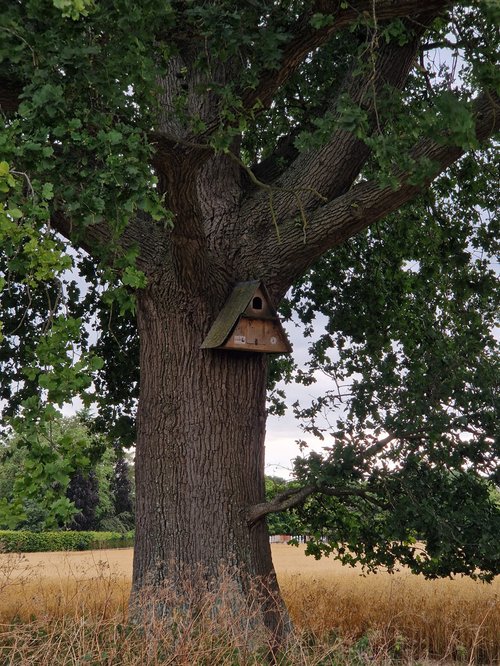
Imagine a world where every forest, from the dense canopies of the Pacific Northwest to the ancient woodlands of Europe, stands inviolate—untouched by saw, blade, or fire. In this untarnished sanctuary, the delicate ballet of ecosystems unfolds unperturbed, echoing the primordial harmony of nature. Central to this natural symphony are the owls: silent sentinels of the night, whose survival and thriving intricately intertwine with the fate of these forests. But what transformations would these enigmatic avians witness in their habitats if all forests were safeguarded with unwavering commitment? This exploration promises not only a reimagining of landscapes but a profound shift in our perception of coexistence and ecological stewardship.
Revitalization of Microhabitats: A Sanctuary for Diversity
Protected forests would breathe vitality back into the microhabitats so essential for owl survival. These environments—moss-laden tree hollows, thick understory thickets, and expansive old-growth branches—serve as critical nesting and roosting sites. Without the ceaseless encroachment of deforestation, the architectural complexity of trees would deepen. Mature oaks, towering pines, and sprawling maples would mature unimpeded, fostering a labyrinth of niches. This saturation of structural variety nurtures not only a broader prey base but also ensures secure breeding grounds, reducing predation risk and human disturbance. In these undisturbed enclaves, owls could orchestrate their life cycles with restored regularity and resilience.
Amplification of Prey Populations: A Flourishing Food Web
The interdependence of owls and their prey is elemental; a protected forest stirs a dynamic resurgence of myriad small mammals, insects, and amphibians—the very sustenance of these raptors. Under the canopy’s protective veil, rodents such as voles and mice would flourish, insects like beetles and moths would emerge in abundance, and amphibians would find pristine water sources. This relative abundance fosters a robust food web, where owls can specialize or diversify their diets depending on available resources. The consequence is a balanced predator-prey relationship that rekindles natural selection processes, ultimately reinforcing the ecosystem’s stability and complexity.
Mitigation of Human Disturbance: Encouraging Natural Behaviors
Human intrusion has long fractured the nocturnal serenity that owls depend upon. Logging trails, recreational hikers, and light pollution introduce stressors that disrupt hunting efficiency and reproductive success. Shielded forests promise a retreat where human footprints fade into the backdrop, allowing owls to reclaim their obscure, twilight dominion. This seclusion encourages authentic behavior patterns—silent flights, intricate courtship hoots, and territorial defense become undiluted expressions of their innate instincts. Moreover, reduced noise pollution sharpens their extraordinary auditory perception, enabling more effective prey detection and survival.
Climate Buffering and Microclimate Stability: Guardrails Against Environmental Flux
The protective embrace of expansive forests functions as an ecological thermostat, mitigating temperature extremes and preserving humidity. For owls, whose physiological and ecological thresholds are finely tuned, this buffering creates stable microclimates favorable for both endurance and reproduction. Cooler, shaded nesting sites reduce thermal stress on eggs and fledglings, while moisture-rich air supports the proliferation of amphibious prey. Forest protection thus acts indirectly yet profoundly, fostering conditions that limit physiological strain and enhance reproductive viability over generations amidst a rapidly shifting climate paradigm.
Genetic Corridors and Population Connectivity: Ensuring Long-Term Viability
Fragmented habitats erect invisible walls, isolating owl populations and curtailing gene flow. Protected forests, forming contiguous corridors, dismantle such barriers, enabling safe passage between territories. This connectivity serves as lifelines for genetic diversity, which is crucial for adaptive potential and disease resilience. Owls traversing uninterrupted landscapes can recolonize depleted areas and maintain robust populations. The genetic vigor stemming from unhindered migratory patterns not only secures individual species’ futures but also fortifies the intricate web of interspecies relationships inherent in balanced forest ecosystems.
Cultural and Spiritual Reconnection: Reawakening Human-Owl Relationships
Beyond the ecological permutations, protected forests kindle a renaissance of cultural and spiritual affinity with owls. In many traditions, owls symbolize wisdom, mystery, and guardianship of the night. Pristine forests act as living cathedrals where this symbolism transcends abstraction—visitors and indigenous communities can witness these majestic birds in their element. This tangible connection fosters reverence, inspiring conservation ethos and broader environmental mindfulness. Thus, the act of forest protection reverberates beyond biology; it awakens a deeper human consciousness aligned with the nocturnal sentinels of the woods.
Challenges and Considerations: The Complexity Beneath the Canopy
While the prospect of universal forest protection evokes optimism, it necessitates grappling with nuanced ecological realities. Protection policies must consider differential owl species requirements—some favor dense old growth, others edge habitats created by natural disturbance. Fire regimes, an intrinsic aspect of many forest ecosystems, must be balanced to prevent stagnation or overly dense underbrush that could alter prey availability or accessibility. Human communities dependent on forests require equitable inclusion in conservation frameworks to harmonize livelihood and wildlife needs. Embracing these complexities ensures protection transcends idealism and translates into tangible, adaptive stewardship.
A Vision of Coexistence: Owls Thriving in a Revered Wilderness
Envision a future where forests are not mere remnants of a vanishing world but thriving bastions of life. In this reimagined realm, owls—as emblematic denizens—symbolize the profound success of global conservation. Their haunting calls echo through a symphony of rejuvenated habitats, thriving prey populations, and intricate interspecies dialogues. The protection of forests promises not only a shield for biodiversity but a reclaiming of wonder, reminding humanity of its integral place within nature’s grand mosaic. This shift in perspective fosters curiosity and compels action, as we fathom that safeguarding continuous forests elevates owls from precarious survival to symbols of ecological triumph.