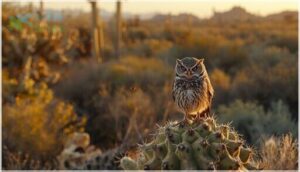
The Southwest’s arid landscapes, dotted with saguaro sentinels and whispering mesquite groves, cradle one of nature’s most diminutive yet resilient wonders: the elf owl. No larger than a sparrow, this nocturnal acrobat flits between desert oases, its high-pitched trills echoing through the twilight like a secret language of the wild. Yet, despite its tenacity, the elf owl faces mounting threats—habitat fragmentation, climate-induced drought, and the encroachment of human development. In this precarious dance between survival and extinction, corporate sponsorship emerges not as a mere financial lifeline, but as a catalyst for transformation, bridging the chasm between profit and preservation. This is the story of how businesses, far beyond the boardroom, can become stewards of the desert’s fragile magic.
The Plight of the Elf Owl: A Desert Jewel on the Brink
Perched in the hollows of ancient saguaros or the abandoned burrows of woodpeckers, the elf owl (*Micrathene whitneyi*) is a master of adaptation. Its diminutive stature—barely six inches tall—belies a fierce tenacity, as it preys on insects with the precision of a feathered surgeon. Yet, this adaptability is tested by the relentless march of urban sprawl and agricultural expansion. The Southwest’s once-vast desert ecosystems are now dissected by roads, power lines, and sprawling subdivisions, leaving the elf owl’s habitat fragmented like a shattered mosaic.
Climate change compounds these challenges. Prolonged droughts desiccate the desert’s ephemeral water sources, while rising temperatures disrupt the delicate balance of nocturnal insect populations—the owl’s primary sustenance. Conservationists warn that without intervention, the elf owl’s range could contract by as much as 30% within the next two decades. The stakes are clear: this tiny titan of the twilight is not just a species at risk, but an indicator of the health of an entire ecosystem. When the elf owl falters, the desert’s symphony of life begins to fade.
Corporate Sponsorship as a Conservation Catalyst
In an era where sustainability is no longer a buzzword but a business imperative, corporate sponsorship has evolved from philanthropy to partnership. Companies are no longer content to write checks and walk away; they are embedding themselves into conservation efforts, leveraging their resources, influence, and innovation to drive meaningful change. For the elf owl, this means a multi-pronged approach where businesses don’t just fund protection—they redefine it.
Consider the power of corporate co-creation. A solar energy firm, for instance, might not only offset its carbon footprint but also invest in habitat restoration projects along transmission corridors, ensuring that the desert’s corridors remain unbroken. Meanwhile, a craft brewery could sponsor “Owl-Friendly Brews,” where a portion of proceeds funds nest box installations in brewery-adjacent wildlands. These are not isolated gestures but strategic alliances where conservation becomes a core value, woven into the fabric of corporate identity.
Innovative Sponsorship Models: Beyond the Checkbook
The most impactful corporate sponsorships are those that transcend traditional philanthropy, embracing models that align with both business objectives and ecological needs. One such approach is the “Conservation-as-a-Service” model, where companies sponsor long-term ecological monitoring programs. For example, a tech startup might fund GPS tracking collars for elf owls, providing real-time data that informs habitat management strategies. This not only advances conservation science but also positions the company as a leader in data-driven sustainability.
Another frontier is the integration of conservation into supply chains. A real estate developer, for instance, could commit to “Owl-Safe Development,” where new projects incorporate native landscaping, artificial nest boxes, and wildlife corridors as standard features. This not only mitigates environmental harm but also enhances property values by appealing to eco-conscious buyers. Meanwhile, a retail giant could launch a “Desert Defender” line of products, with proceeds funding habitat restoration. The key lies in making conservation an organic extension of business operations, rather than an afterthought.
The Role of Employee Engagement: Mobilizing the Workforce
Corporate sponsorship isn’t just about dollars and data—it’s about people. The most successful initiatives tap into the passion of employees, transforming them from passive observers into active conservationists. Imagine a tech company where teams participate in “Owl Habitat Hackathons,” designing innovative solutions like solar-powered nest box monitors or AI-driven insect tracking systems. Or a manufacturing plant where workers volunteer to plant native shrubs and install artificial burrows in nearby conservation areas.
These programs do more than bolster biodiversity; they foster a culture of purpose. Employees who see their company’s commitment to conservation firsthand are more engaged, more loyal, and more likely to advocate for sustainability in their personal lives. For the elf owl, this means a groundswell of support that extends far beyond the corporate headquarters, creating a ripple effect of awareness and action.
Partnerships with Indigenous Communities: Honoring Traditional Stewardship
The Southwest’s deserts are not just ecological wonders—they are cultural tapestries, woven by the hands of Indigenous peoples for millennia. Corporate sponsorships that honor and collaborate with these communities can yield outcomes far greater than those achieved in isolation. A mining company, for example, might partner with a Native American tribe to co-manage a conservation easement, ensuring that traditional ecological knowledge guides habitat restoration efforts. This approach not only preserves biodiversity but also upholds the cultural heritage of the land.
Such partnerships require more than superficial engagement; they demand respect, reciprocity, and a willingness to listen. Companies must be prepared to cede control, allowing Indigenous communities to lead the way in conservation strategies that align with their values and traditions. For the elf owl, this means a future where its survival is intertwined with the wisdom of those who have called the desert home for generations.
Measuring Impact: The Metrics of Success
In the world of corporate sponsorship, impact is king. But how do we quantify the success of efforts to save the elf owl? The answer lies in a blend of scientific rigor and storytelling. On the scientific front, metrics might include the number of nest boxes installed, the growth of owl populations in sponsored habitats, or the reduction in human-wildlife conflicts. Companies can also track indirect benefits, such as the increase in biodiversity in restored areas or the improvement in local water quality.
Yet, numbers alone cannot capture the full scope of impact. Here, storytelling becomes a powerful tool. A corporate sponsor might produce a documentary following the journey of a rescued elf owl, or launch a social media campaign that brings the desert’s nocturnal wonders to life for audiences worldwide. These narratives not only amplify the message of conservation but also create an emotional connection that drives long-term support.
The Future: A Blueprint for Corporate Conservation
The story of the elf owl is not just a tale of survival—it is a blueprint for how businesses can become forces for good. The path forward requires bold thinking, unwavering commitment, and a willingness to embrace unconventional partnerships. Companies must move beyond the confines of traditional CSR (Corporate Social Responsibility) and adopt a “Conservation-Centric” mindset, where ecological health is as integral to success as financial performance.
For the Southwest’s elf owl, this future holds promise. With corporate sponsorship as a driving force, the desert’s twilight symphony may yet endure, its high-pitched trills a testament to the power of collaboration between humans and nature. The question is no longer whether businesses can afford to invest in conservation, but whether they can afford not to.