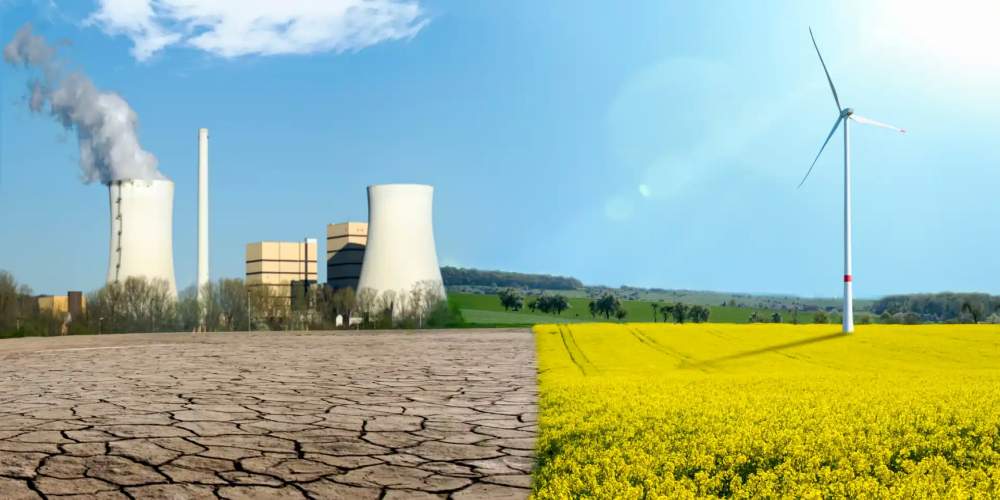
The wind whispers through the ancient oaks, carrying with it a question that has begun to haunt the twilight hours of conservationists and ornithologists alike: What if the very energy that powers our future is silently eroding the wings of our nightly sentinels? Owls, those enigmatic creatures of the dark, have long been the guardians of ecological balance, their presence a barometer of environmental health. Yet, as the world pivots toward renewable energy, a paradox emerges—one where the promise of sustainability casts a long, unyielding shadow over these nocturnal titans. The impact of renewable energy on owl populations is not a tale of villainy, but a complex narrative of unintended consequences, where the clash between progress and preservation demands our urgent attention.
The Silent Wings of Disruption: Wind Turbines and the Owl’s Perilous Dance
Picture this: a vast expanse of rolling hills, where the wind’s breath is harnessed to spin the blades of colossal turbines. To the untrained eye, it’s a symphony of modern ingenuity. To the owl, it is a death sentence in slow motion. Wind turbines, while champions of clean energy, have become inadvertent reapers of the night. The phenomenon is known as barotrauma—a violent internal injury caused by rapid pressure changes as the birds fly too close to the spinning blades. But the threat doesn’t end there. The sheer force of the blades can cause blunt force trauma, reducing these majestic hunters to mere statistics in the ledger of renewable energy’s collateral damage.
Owls, with their low-frequency hearing and silent flight, are uniquely vulnerable. They rely on stealth to ambush prey, but the low-frequency hum of turbines can mask the sounds of approaching danger, leaving them disoriented and exposed. Research has shown that certain species, like the Bubo bubo (Eurasian eagle-owl), are particularly susceptible, their territories often overlapping with prime wind farm locations. The irony is stark: the same energy that aims to heal the planet may be fracturing the delicate balance of ecosystems that owls have maintained for millennia.

The Fragmented Canopy: Solar Farms and the Loss of Nocturnal Havens
As the sun climbs higher in the sky, solar farms sprawl across once-wild landscapes, their gleaming panels reflecting a future where energy is abundant and clean. Yet, beneath this metallic expanse, a different story unfolds. Owls, creatures of the dusk and dawn, find their habitats fragmented by the relentless march of progress. The installation of solar arrays often involves clearing vast tracts of land, stripping away the underbrush and shrubs that serve as critical hunting grounds for these birds. The loss of vegetative cover doesn’t just displace prey—it erodes the very fabric of the ecosystem that owls depend on.
Worse still, the heat generated by concentrated solar power (CSP) plants can create thermal traps, where unsuspecting insects and small mammals—prime owl prey—are drawn into zones of lethal temperatures. The result? A silent culling of the food web, leaving owls to starve in landscapes that, on the surface, appear to be thriving. The juxtaposition is jarring: a technology designed to harness the sun’s bounty may be starving the night’s most efficient predators.
The Electrified Web: Power Lines and the Invisible Predator
Renewable energy doesn’t just manifest in towering turbines or sprawling solar arrays—it also weaves an invisible web across the skies: power lines. While these arteries of electricity are essential for transmitting energy from remote renewable sources to urban centers, they pose a lethal threat to owls. The birds, with their broad wingspans and poor maneuverability in tight spaces, often collide with these lines, meeting their end in a tangle of metal and feathers. But the danger doesn’t stop at collisions. Electrocution is a silent killer, as owls perch on uninsulated poles or transformers, their talons bridging live wires and grounding them in a fatal circuit.
In regions where renewable energy projects have proliferated, owl populations have been observed in steep decline. The Strix occidentalis (spotted owl), for instance, has seen its numbers dwindle in areas crisscrossed by new power infrastructure. Conservationists are now racing to retrofit power lines with avian-safe designs, but the challenge is Herculean—balancing the need for energy transmission with the survival of species that have ruled the night for eons.
The Paradox of Progress: Can We Power the Future Without Plunging the Night into Darkness?
The question lingers like a specter over the renewable energy revolution: Is there a way to harness the power of wind and sun without extinguishing the embers of the night? The answer, fortunately, is not a resounding no—but a cautious, hopeful yes. Innovations are emerging that could mitigate the impact on owl populations. Smart turbine designs, for example, use AI-driven systems to detect approaching birds and temporarily shut down blades during critical migration periods. Similarly, solar farm landscaping techniques are being pioneered to create microhabitats that support prey species, ensuring that even in the shadow of panels, life thrives.
Yet, the path forward is fraught with complexity. Renewable energy projects are often sited in remote, ecologically sensitive areas where owls still reign supreme. The challenge lies in striking a balance—one where energy needs do not come at the cost of biodiversity. This demands not just technological ingenuity, but a fundamental shift in how we perceive progress. It requires us to ask: What is the true cost of our green utopia? And more importantly, are we willing to pay it?
The Owl’s Lament: A Call to Reimagine Our Relationship with the Night
To understand the impact of renewable energy on owl populations is to confront a mirror held up to our own contradictions. We chase sustainability with one hand, while the other inadvertently tightens the noose around the necks of the wild. But this is not a story of despair—it is a story of awakening. Owls, after all, have survived ice ages and human expansion. They are survivors, adaptable and resilient. The question is whether we, as stewards of this planet, can rise to the challenge of preserving their world as we forge ours.
The night is not just a time of day—it is a sanctuary, a realm where owls have ruled for millennia. As we stand on the precipice of an energy revolution, we must ask ourselves: Will we let the shadows of our ambition swallow the last whispers of the wild? Or will we, instead, rewrite the narrative—one where progress and preservation walk hand in hand under the watchful gaze of the owl’s golden eyes?