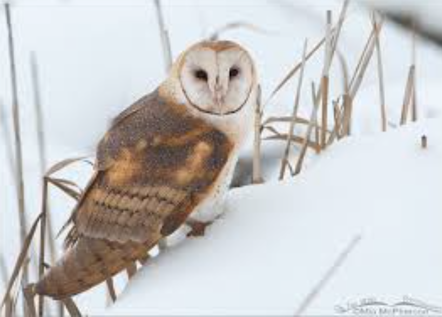
The silent sentinels of the night, owls, glide through the darkness with an almost supernatural grace. Their piercing gaze, a fusion of ancient wisdom and keen survival instinct, has watched over forests and fields for millennia. Yet today, these guardians of the twilight face an unprecedented threat—not from predators, but from the invisible hand of climate policy. It’s a paradox: the very measures designed to heal the planet may, if misaligned, unravel the delicate tapestry of habitats these birds depend on. To understand this, we must step beyond the well-trodden paths of carbon accounting and policy jargon, and instead, listen to the whispers of the wind through the trees, the rustle of leaves in the warming air, and the silent plea of an owl’s territory shrinking under the weight of human ambition.
The Thermostat of the Wild: How Climate Policy Reshapes Temperature Zones
Imagine climate policy as a colossal thermostat, its dials turned not by human hands alone, but by the collective breath of nations. Each adjustment—whether toward mitigation or adaptation—sends ripples through the natural world. For owls, whose existence is finely tuned to the rhythm of temperature, this is no small matter. The boreal forests of Canada, home to the great gray owl, are experiencing winters that no longer pack the same icy punch. Snowpack, once a reliable blanket insulating the ground, now melts prematurely, exposing burrows to frost and predators. Meanwhile, in the Mediterranean, the barn owl’s traditional hunting grounds are becoming drier, their prey—small mammals—forced into nocturnal retreats to escape the scorching days. Policy decisions that delay emissions reductions or favor short-term economic gains over long-term ecological stability are, in effect, dialing up the heat on these nocturnal hunters. The owl, a creature of habit and precision, finds itself adrift in a world where the seasons no longer behave as they once did.
Migration in Reverse: The Great Unraveling of Habitat Corridors
Owls are not migratory in the traditional sense; they are rooted, territorial, and fiercely loyal to their hunting grounds. Yet climate policy, with its unintended consequences, is forcing a migration in reverse—one where habitats vanish before the birds can adapt. Consider the European tawny owl, whose range once stretched from the misty highlands of Scotland to the dense woodlands of Poland. Today, as policies prioritize afforestation with fast-growing, non-native species, the owl’s preferred old-growth forests are cleared or fragmented. The corridors that once allowed young owls to disperse and establish new territories are severed. Worse still, some conservation policies inadvertently favor generalist species over specialists, turning owl habitats into ecological deserts where only the adaptable thrive. It’s as if the planet’s natural highways are being bulldozed, leaving only detours that lead to nowhere. The owl, a creature of patience and precision, must now navigate a landscape where the rules of survival have been rewritten by human hands.

The irony is stark: policies meant to protect biodiversity often overlook the nuanced needs of species like owls. A reforestation project that plants a monoculture of pine may sequester carbon, but it offers no hollows for nesting tawny owls. A renewable energy initiative that installs wind turbines in migratory pathways may reduce fossil fuel dependence, but it fragments the night skies owls rely on for silent flight. The result is a patchwork of habitats, stitched together by good intentions but torn apart by ecological myopia.
The Invisible Hand of Policy: Subsidies, Incentives, and the Owl’s Silent Struggle
Subsidies are the invisible scaffolding of modern economies, and climate policy is no exception. Yet these financial incentives, designed to steer industries toward sustainability, often cast long shadows over owl habitats. Take the case of agricultural subsidies in the American Midwest, where corn and soybean monocultures stretch to the horizon. These policies, intended to bolster food security, have transformed the landscape into a sea of grain, leaving little room for the meadows and hedgerows that once sustained barn owls. The owls, now forced to hunt in a monoculture desert, face starvation as their prey—rodents and insects—disappear under the weight of pesticides and habitat loss. Meanwhile, subsidies for biofuels have led to the conversion of wetlands into energy crops, draining the marshes where short-eared owls once hunted. The owl’s struggle is not against nature’s cruelty, but against the unintended consequences of human ingenuity.
Even well-intentioned policies can backfire. Carbon credits, meant to offset emissions, have led to the creation of vast plantations of fast-growing trees in regions where owls once thrived. These plantations, while absorbing CO2, offer no respite for species that depend on the complex structure of native forests. The owl, a creature of the old growth, finds itself marooned in a landscape of green deserts, where the only thing growing is the temperature—and its desperation.
The Silent Alarm: Owls as Canaries in the Climate Policy Mine
In the 19th century, miners carried canaries into the depths of the earth as early warning systems for toxic gases. Today, owls serve a similar role, their decline a silent alarm for the failures of climate policy. Their presence—or absence—reveals the health of an ecosystem in ways that satellite imagery and carbon reports cannot. The snowy owl, once a winter visitor to the northern United States, is now a rare sight, its Arctic habitat melting beneath its talons. The burrowing owl, a denizen of the American West, faces habitat loss from both agricultural expansion and urban sprawl, its underground homes paved over in the name of progress. These birds are not just indicators; they are storytellers, their fate a parable of what happens when policy outpaces ecology.
Yet their warning is often ignored. Policymakers, ensnared in the web of lobbyists and economic forecasts, may see owls as mere collateral damage in the grand scheme of climate action. But the owl’s decline is not a footnote—it is a symptom of a deeper malaise. When a species that has survived ice ages and human encroachment begins to falter, it is a sign that the planet’s immune system is weakening. The owl’s disappearance is not just a loss for biodiversity; it is a loss for the human spirit, a reminder that nature’s balance is not something to be trifled with.
Policy with Talons: Crafting Solutions That Protect the Night’s Guardians
So how do we rewrite climate policy to safeguard the owls? The answer lies not in grand gestures, but in the quiet art of ecological precision. Policies must move beyond carbon accounting and embrace the intricacies of habitat connectivity. Reforestation efforts should prioritize native species, creating mosaics of forest that allow owls to hunt and nest undisturbed. Agricultural subsidies must be retooled to reward biodiversity, not just yield. Wind farms, while a vital part of the renewable energy transition, should be sited with care, avoiding the migratory pathways of owls and other nocturnal species.
But perhaps the most critical shift is one of perspective. Climate policy must stop treating nature as a resource to be managed and start seeing it as a partner to be respected. Owls are not just indicators of ecological health; they are keystones, their presence shaping the very fabric of their habitats. When an owl vanishes, the ripple effects are felt across the food web—rodents multiply, insects thrive unchecked, and the balance of the ecosystem unravels. To protect the owl is to protect the forest, the meadow, and ultimately, the planet.
The night belongs to the owls, and it is our duty to ensure that their reign continues. Climate policy, if crafted with wisdom and humility, can be the shield that guards their territories. But if it remains blind to the nuances of the wild, it will be the architect of their demise. The choice is ours—and the owls, with their ancient gaze, are watching.