In the quiet, undulating landscapes of Europe, where ancient woodlands whisper secrets to the wind and farmlands stretch like patchwork quilts under the vast sky, a quiet revolution is taking flight. Not with the roar of engines or the clamor of industry, but with the soft, determined flutter of wings. Owl nest box programs—once a niche conservation effort—have burgeoned into a cornerstone of biodiversity restoration, rewriting the ecological narrative of a continent. These unassuming wooden sanctuaries, perched in trees and barns, are not merely shelters; they are lifelines. They are promises. Promises of ecological balance restored, of predator-prey dynamics recalibrated, and of humanity’s role as both steward and participant in the natural world. This is the story of how Europe’s owl nest box initiatives have transcended their humble origins to become a testament to what happens when passion meets purpose—and when the night skies begin to hum with life once more.
The Silent Symphony of the Night: Why Owls Matter More Than You Think
To understand the magnitude of nest box programs, one must first grasp the pivotal role owls play in European ecosystems. These raptors are not merely charismatic symbols of wisdom; they are apex predators of the night, the unseen regulators of rodent populations that would otherwise spiral into agricultural and public health crises. A single barn owl, for instance, can consume over 2,000 rodents in a year—each one a potential crop destroyer or disease vector. Yet, their habitats are vanishing. Intensive farming, urban sprawl, and the loss of old-growth trees have left these birds homeless, their natural nesting cavities sealed by modernity. Enter the nest box: a simple, yet ingenious solution that bridges the gap between scarcity and survival. By providing artificial homes, conservationists have not just saved individual owls; they’ve reignited an ecological rhythm, a silent symphony where every hoot and screech is a note in the grand composition of life.
The Alchemy of Wood and Will: How Nest Boxes Are Engineered for Success
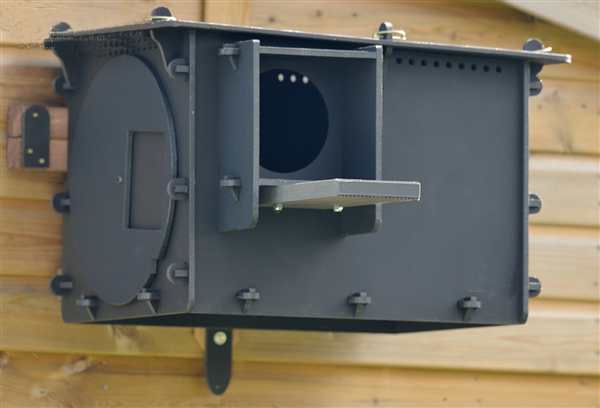
The craftsmanship behind these nest boxes is nothing short of alchemical. Each design is a carefully calibrated equation of form and function, tailored to the specific needs of different owl species. Barn owls, with their preference for wide, open spaces, thrive in boxes mounted high on barns or trees, their entrances wide enough to accommodate their broad wingspans. Little owls, smaller and more secretive, seek out boxes with narrow, concealed entry points, mimicking the crevices of their natural cliffside habitats. The materials? Often locally sourced timber, untreated to avoid chemical leaching, with drainage holes to prevent waterlogging and ventilation slits to regulate temperature. Some innovators even incorporate recycled plastics or composite materials, reducing environmental footprints while enhancing durability. The result is a network of micro-habitats, each one a tiny fortress against the encroaching tide of habitat loss. And yet, the true magic lies not in the boxes themselves, but in what they represent: a fusion of human ingenuity with the raw, unyielding will of nature to persist.
From Skepticism to Surge: The Cultural Shift Behind the Movement
It wasn’t long ago that nest box programs were met with raised eyebrows and polite nods—well-meaning, perhaps, but ultimately peripheral to the “real” work of conservation. That perception has undergone a seismic shift. Today, these initiatives are celebrated as symbols of grassroots environmentalism, embraced by farmers, schoolchildren, and policymakers alike. The turning point came when data began to speak louder than skepticism. Studies revealed that regions with active nest box programs saw rodent damage plummet by up to 70%, while owl populations stabilized or even rebounded in areas where they had been on the brink. Farmers, once wary of sharing their land with predators, now host nest boxes as proudly as they do their crops. Communities have adopted “Owl Adoption” schemes, where locals sponsor boxes in exchange for updates on their feathered tenants. Even corporate sponsors have joined the fray, funding large-scale installations as part of their sustainability pledges. This cultural metamorphosis is a reminder that conservation is not a top-down directive but a communal awakening—a realization that the health of the land is inseparable from the health of its inhabitants.
The Ripple Effect: How One Box Can Reverberate Through an Ecosystem
The impact of a single nest box extends far beyond its immediate occupant. Consider the barn owl, a species whose presence alone can trigger a cascade of ecological benefits. As owls hunt, they thin rodent populations, reducing pressure on crops and lowering the risk of zoonotic disease transmission. Their pellets, rich in undigested bones and fur, become a nutrient source for soil-dwelling organisms, enriching the earth itself. Even the mere act of nesting in a box can alter local bird behavior, as smaller birds adjust their foraging patterns to avoid predation, inadvertently redistributing seed dispersal and pollination efforts. In some regions, the return of owls has coincided with the resurgence of other nocturnal species, from hedgehogs to bats, all beneficiaries of a balanced, predator-rich environment. This ripple effect underscores a fundamental truth: conservation is not about saving one species in isolation, but about restoring the intricate web of relationships that sustain life. A nest box is not just a home; it’s a catalyst for ecological harmony.
Challenges and Controversies: The Thorns in the Nest Box Revolution
Of course, no revolution is without its detractors or dilemmas. Critics argue that nest boxes, while beneficial, are a bandage on a gaping wound—symptomatic of deeper systemic issues like habitat fragmentation and pesticide overuse. Others point to the risk of overcrowding, where too many boxes in a small area can lead to competition, stress, or even the spread of disease among owl populations. There are also concerns about the long-term durability of boxes, with some deteriorating within a few years without proper maintenance. And then there’s the ethical question: are we, in our zeal to “help,” inadvertently altering natural selection, creating a dependency that could weaken the owls’ ability to adapt? These are not trivial concerns. They demand rigorous monitoring, adaptive management, and a willingness to question even our most well-intentioned interventions. The nest box movement, for all its successes, must remain humble—a tool, not a crutch, in the broader toolkit of conservation.
The Future Hoot: What Lies Ahead for Europe’s Owl Nest Box Programs
The horizon for nest box programs is ablaze with possibility. Emerging technologies are poised to revolutionize how we monitor and manage these initiatives. Smart nest boxes, equipped with motion sensors and cameras, can provide real-time data on occupancy, breeding success, and even the health of chicks. Drones are being deployed to survey remote areas, identifying prime locations for new installations where owls have yet to reclaim their territory. Genetic research is unlocking secrets of owl migration and disease resistance, allowing conservationists to tailor boxes to the specific needs of local populations. Meanwhile, citizen science projects are democratizing the movement, empowering individuals to contribute to data collection and habitat restoration. The goal is not just to sustain owl populations, but to weave them back into the fabric of Europe’s landscapes, where they belong. And as the night skies grow louder with the calls of these magnificent birds, one thing becomes clear: the nest box revolution is only just beginning.
The story of Europe’s owl nest box programs is, at its core, a story about second chances. It’s about the land remembering what it once held, and humanity remembering its place within that memory. These unassuming wooden structures are more than shelters; they are symbols of resilience, proof that even in an age of ecological crisis, there is room for hope—and for the quiet, determined work of restoration. So the next time you hear the haunting call of an owl on a still European night, listen closely. It’s not just a sound. It’s a promise kept.