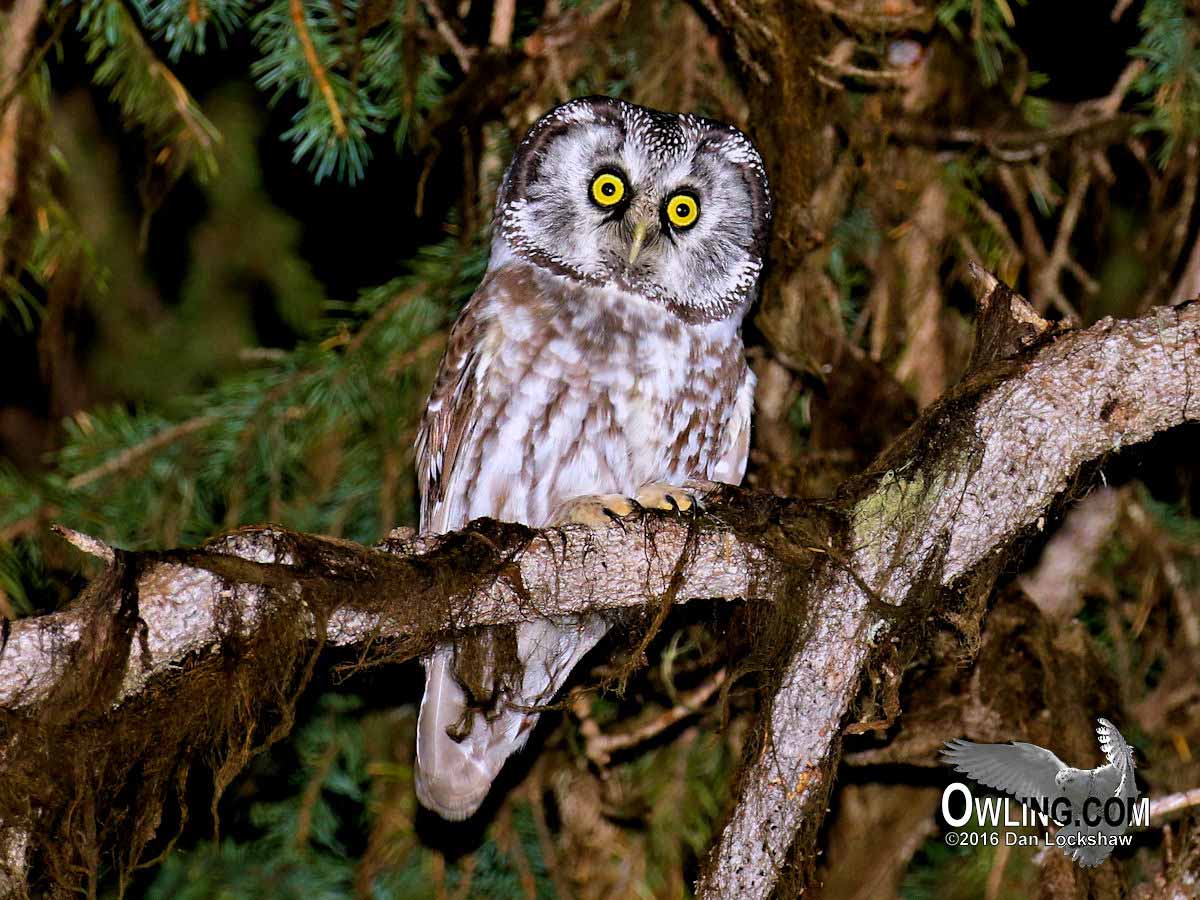
The boreal owl, a diminutive yet enigmatic denizen of the northern woodlands, is a creature of whispers and shadows. Often described as the “ghost of the northern forests,” this small owl, with its piercing yellow eyes and intricate feather patterns, embodies the mystique of the taiga. Its presence is felt more than seen, a fleeting glimpse in the dim light of dusk or dawn, a sudden rustle in the undergrowth that vanishes as quickly as it appears. The boreal owl’s elusive nature fuels a fascination that transcends mere ornithological interest—it taps into something primal, a connection to the wild, untamed heart of the wilderness.
The Phantom of the Pines: A Master of Stealth
The boreal owl’s reputation as a phantom is no accident. Cloaked in a mottled plumage of browns and whites, it blends seamlessly into the bark of coniferous trees, its silent flight a marvel of evolutionary adaptation. Unlike its larger cousins, the boreal owl does not rely on brute strength or intimidation; instead, it thrives on subtlety. Its wings are fringed with soft, serrated edges that muffle the sound of its flight, allowing it to approach prey with the stealth of a specter. This stealth is not merely a hunting tactic—it is a survival strategy in a world where every rustle could mean danger.
Yet, the boreal owl’s stealth is not just about survival; it is about dominance. In the dense, dark forests of the north, where visibility is limited and sound carries unpredictably, the owl’s ability to move unseen grants it a unique advantage. It is the unseen predator, the silent observer, the ghost that haunts the edges of human perception. This mastery of concealment is what makes the boreal owl so captivating—a creature that exists on the fringes of our awareness, always just out of reach.
The Call of the Wild: A Haunting Melody
If the boreal owl’s presence is felt more than seen, its voice is heard more than anything else. The male boreal owl’s call is a series of high-pitched whistles, a haunting melody that echoes through the forest like a ghostly lament. To the uninitiated, it sounds almost otherworldly, a sound that seems to belong to the forest itself rather than any living creature. This call is not just a means of communication; it is a declaration of territory, a siren song that lures females and warns rivals of its presence.
The boreal owl’s vocalizations are particularly striking because they defy the expectations of such a small bird. In a world where size often dictates volume, the boreal owl’s voice carries with surprising clarity, piercing the stillness of the northern night. This paradox—of a tiny creature producing such a powerful sound—only deepens the mystery. Is it a trick of the wind, a trick of the mind? Or is it the true voice of the wilderness, a reminder that nature’s wonders are not always what they seem?
The Northern Realm: A Harsh and Beautiful Existence
The boreal owl’s domain is the boreal forest, a vast and unforgiving expanse that stretches across the northern hemisphere. Here, the winters are long and brutal, the summers fleeting and intense. The trees stand tall and silent, their branches heavy with snow or burdened by the weight of summer’s brief abundance. It is a landscape of extremes, where survival is a daily challenge and only the most adaptable thrive. For the boreal owl, this is not a barrier but a sanctuary—a place where its stealth and resilience are not just assets but necessities.
Life in the boreal forest is a testament to the owl’s ingenuity. It nests in the cavities of old trees, a refuge from the elements and predators alike. Its diet is as varied as it is opportunistic, ranging from voles and mice to small birds and even insects. Yet, despite its adaptability, the boreal owl is not invincible. Climate change, habitat destruction, and competition with other predators all pose threats to its existence. In this fragile balance, the boreal owl is a symbol of resilience—a creature that has endured for millennia, adapting to the ever-changing rhythms of the natural world.
The Owl’s Role: A Keystone of the Ecosystem
Beyond its role as a predator, the boreal owl is a keystone species, a creature whose presence shapes the entire ecosystem. By controlling populations of small mammals, it prevents overgrazing and maintains the balance of plant life. Its nesting habits create opportunities for other species, from insects that inhabit its abandoned cavities to birds that benefit from the reduced competition for resources. In this way, the boreal owl is not just a ghost of the forest—it is a guardian, a silent steward of the northern wilderness.
Yet, the owl’s influence extends beyond the physical. In many cultures, the boreal owl is seen as a symbol of wisdom, intuition, and the unseen forces of nature. Its elusive nature and haunting calls have inspired myths and legends, tales of omens and prophecies. To encounter a boreal owl is to glimpse the mysteries of the wild, to feel the pulse of a world that exists beyond human understanding. In this sense, the boreal owl is more than a creature—it is a bridge between the seen and the unseen, the known and the unknown.
The Allure of the Unseen: Why We Are Drawn to the Boreal Owl
There is something deeply human about our fascination with the boreal owl. In a world that is increasingly dominated by technology and artificial light, the owl represents a connection to the wild, untamed heart of nature. Its elusiveness speaks to our own desire for mystery, for the thrill of the chase, the joy of discovery. To glimpse a boreal owl is to be reminded that there are still wonders in the world that cannot be tamed or controlled.
Moreover, the boreal owl embodies the paradox of the natural world—small yet mighty, silent yet powerful, unseen yet ever-present. It challenges our perceptions of what it means to be a predator, a survivor, a creature of the wild. In its quiet way, it asks us to look deeper, to see beyond the surface, to embrace the mysteries that surround us. And perhaps, in doing so, we find a reflection of our own humanity—a reminder that there is magic in the world, if only we are willing to look for it.