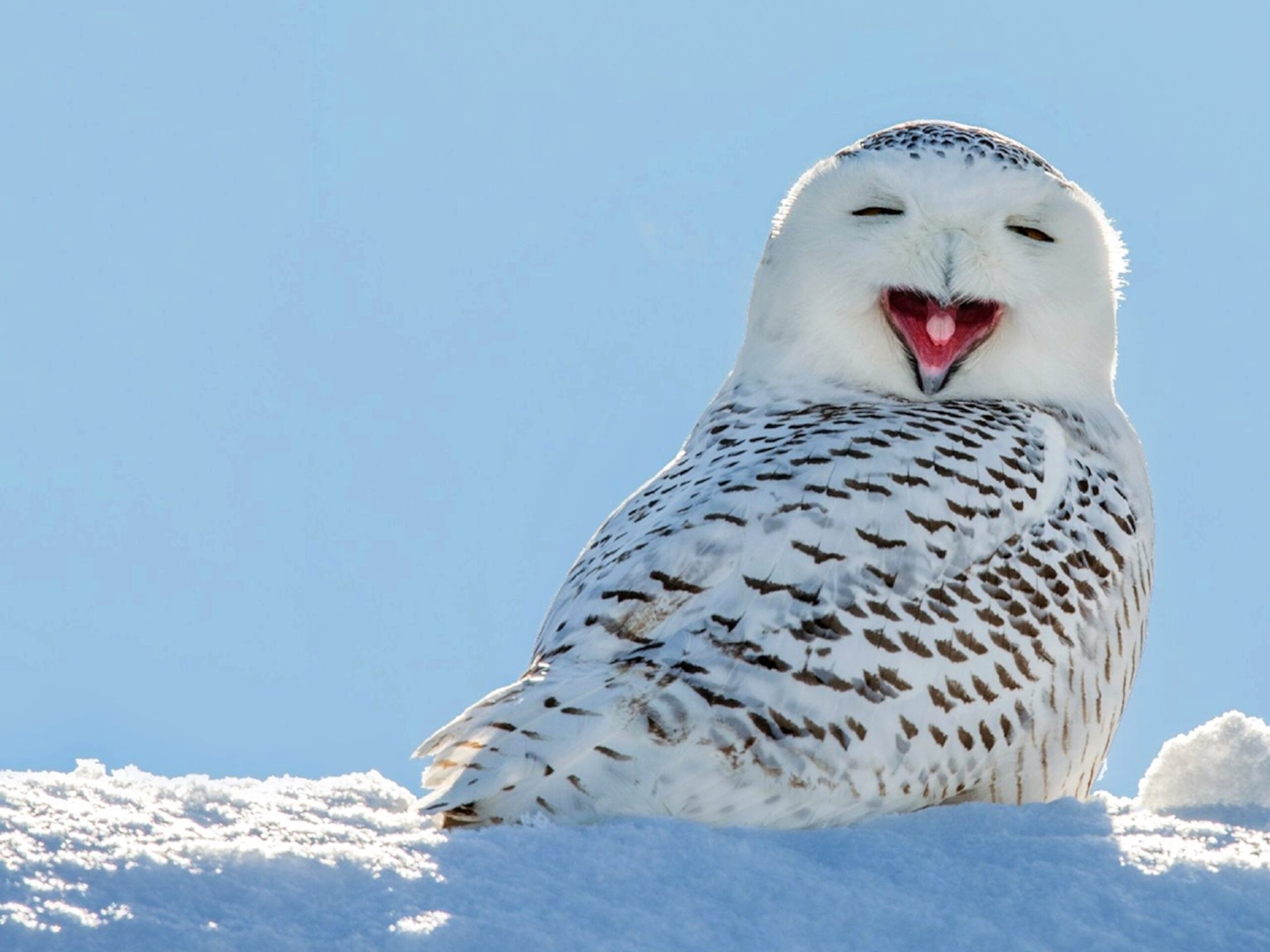
The winter landscape is a silent symphony of frost-kissed stillness, where the air hums with the crisp clarity of a frozen dawn. Beneath this hushed expanse, a ghostly figure glides—its snowy plumage a spectral echo of the moonlit tundra. The snowy owl, a winter’s sentinel, embodies the untamed elegance of the season, a living paradox of resilience and ethereal grace. For those who venture into the cold, owl watching becomes more than a pastime; it is a pilgrimage into the heart of nature’s most enigmatic theater, where survival and beauty intertwine like the branches of a frost-laden tree.
The Arctic Phantom: Why Snowy Owls Command the Winter Stage
Few creatures embody the stark allure of winter quite like the snowy owl (*Bubo scandiacus*). Clad in a cloak of ivory and silver, it is the embodiment of Arctic mystique—a bird that transforms the bleakest of landscapes into a canvas of living art. Unlike their nocturnal kin, snowy owls are diurnal, their golden eyes scanning the horizon with the intensity of a lighthouse beam cutting through a storm. They are wanderers, nomads of the frozen expanse, drifting southward in irruptive years when lemming populations wane, their presence a harbinger of nature’s unyielding cycles.
To witness a snowy owl perched atop a fence post or a frozen dune is to glimpse a creature untethered from time. Its feathers, adapted to insulate against temperatures that would freeze lesser beings solid, are a marvel of evolutionary ingenuity. Each barb, each interlocking filament, traps warmth like the threads of a winter’s quilt woven by unseen hands. And yet, for all its hardiness, the snowy owl remains a paradox—a bird of the Arctic that thrives in the cold but is drawn to the temperate zones by the siren song of scarcity.
The Silent Hunt: Mastery of the Winter Predator
The snowy owl is not merely a survivor; it is a virtuoso of the hunt. In the dead of winter, when the earth lies dormant and prey is scarce, it employs a strategy as cunning as it is patient. Unlike other owls, which rely on stealth and surprise, the snowy owl often hunts by day, its keen vision piercing the glare of a low winter sun. It quarters the land like a spectral farmer, its wings a whisper against the wind as it scans for movement in the snow—a vole’s burrow, a mouse’s trail, the flicker of a rabbit’s ear.
When it strikes, the owl descends with a fluidity that belies its size. Its talons, powerful enough to crush bone, close around its quarry with surgical precision. There is a brutality to this act, yet it is tempered by the owl’s almost regal demeanor. It does not gloat. It does not rush. It is, in every sense, a creature of purpose, a winter’s executioner whose very existence is a testament to the brutal efficiency of nature.
Beyond the Snowy Owl: Winter’s Other Feathered Specters
While the snowy owl may be the star of the winter aviary, it is far from alone in its frozen domain. The winter landscape teems with avian wonders, each a jewel in the crown of the cold season. The great gray owl (*Strix nebulosa*), a phantom of the boreal forests, drifts through the trees like a living shadow, its piercing gaze unnervingly human. Its plumage, a tapestry of grays and whites, blends seamlessly with the bark of ancient pines, making it a master of concealment.
Then there is the boreal owl (*Aegolius funereus*), a pocket-sized predator whose high-pitched trill echoes through the winter night like a ghostly serenade. Smaller still is the saw-whet owl (*Aegolius acadicus*), its name a nod to the sound of its call, which resembles the whetting of a saw on stone. These diminutive owls are the unsung heroes of the winter woods, their presence a reminder that even in the harshest of seasons, life persists in the most unexpected forms.
The raptors, too, make their presence known. The rough-legged hawk (*Buteo lagopus*), with its feathered legs and piercing stare, patrols the open fields like a sentinel, its wings held in a distinctive dihedral as it rides the thermals. And let us not forget the majestic gyrfalcon (*Falco rusticolus*), the Arctic’s answer to the peregrine, a bird of such power and grace that it seems to defy the very laws of aerodynamics.
The Art of Owl Watching: A Dance with the Unseen
To truly appreciate the magic of owl watching, one must adopt the mindset of a tracker, a silent observer who moves through the world with the reverence of a pilgrim. The best owl watchers are those who understand that patience is not merely a virtue—it is a necessity. Owls, after all, are creatures of habit. They return to the same perches, the same hunting grounds, the same silent sentinel posts year after year. To find them, one must learn their language: the language of the wind, the language of the snow, the language of the land itself.
Begin at dawn, when the world is still wrapped in the hush of night’s lingering embrace. The air is sharp with the scent of pine and frost, and the first light of day paints the horizon in hues of rose and gold. Walk slowly, your footsteps muffled by the snow, your eyes scanning the branches and fence posts for the telltale silhouette of an owl. Listen, too—for the soft *hoo-hoo-hoo* of a great horned owl, or the eerie whistle of a saw-whet. The winter woods are alive with sound, if only you know how to listen.
And when you finally spot one—a snowy owl perched on a fence, its eyes gleaming like twin embers in the cold—pause. Take a breath. Let the moment wash over you. This is not just an encounter; it is an exchange. The owl, in its quiet majesty, is offering you a glimpse into a world most humans never see. It is a reminder that even in the depths of winter, life endures, fierce and unyielding, a flame that refuses to be extinguished.
The Winter Owl’s Gift: A Lesson in Resilience
There is something profoundly humbling about watching an owl in winter. It is a lesson in adaptability, in the art of thriving against the odds. The snowy owl, with its ability to survive in temperatures that would kill a human in minutes, is a masterclass in resilience. It does not complain. It does not falter. It simply *is*—a living testament to the indomitable spirit of nature.
In a world where change is the only constant, the owl stands as a symbol of steadfastness. It is a creature of extremes, a bird that dances on the edge of survival, yet does so with a grace that is almost otherworldly. To witness it is to be reminded that beauty and hardship are not mutually exclusive. They are, in fact, two sides of the same coin—a coin that nature flips with unerring precision.
So when the first snow falls and the world is transformed into a glittering wonderland, remember to look beyond the obvious. Look beyond the bare branches and the frozen ponds. Look to the skies, to the fence posts, to the silent sentinels perched in the distance. For in the heart of winter, the owls are watching. And if you’re lucky, they might just let you watch them back.