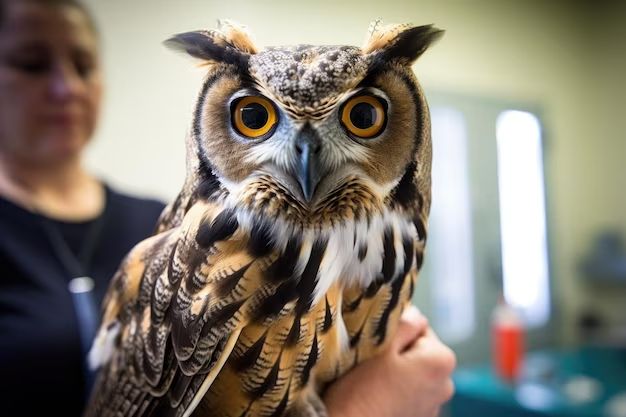
Imagine a realm where the silent sentinels of the night — owls — possess the longevity of ancient trees, their lives stretching out to a century or more. What if these enigmatic creatures, emblematic of wisdom and mystery, could live for 100 years? This notion conjures a tapestry of ecological, evolutionary, and cultural reverberations, as their prolonged existence would ripple through the very fabric of ecosystems. The implications for population dynamics alone are profound, reshaping how these nocturnal sovereigns interact with the environment and with one another. Their lives, usually fleeting in the natural order, would become elongated epics, narrating undreamed stories of survival, adaptation, and intricate balances.
The Owl’s Lifespan: From Ephemeral Flicker to Eternal Glow
Typically, owls dwell in the shadowy veil of the night for a much shorter period compared to the century envisioned here. Most owl species live between 5 to 15 years in the wild, their existence often a delicate dance with predation, disease, and environmental adversity. To envision owls with lifespans stretching to 100 years is to breathe life into a mythic creature — one that defies the common narrative of life’s brevity. Such extended longevity is akin to turning a fleeting spark into an enduring flame that ignites generations of both owls and ecosystems.
This shift from ephemeral to enduring life would challenge biological constraints. Longer life means more cumulative experience in hunting, nesting, and territory establishment. The wisdom held within their gaze would transform from instinctual programming to the nuanced knowledge born from decades of survival. Owls would move from youthful vigor through middle-aged mastery to ancient venerability, becoming living archives of their environments.
Ripples in Population Growth and Structure
The alteration in lifespan alone would trigger profound population dynamics. Usually, owl populations maintain equilibrium through relatively rapid turnover — high juvenile mortality balanced by multiple breeding cycles. But when individuals live for 100 years, generations overlap extensively. This leads to a thickening of demographic layers where elder owls co-exist alongside hatchlings, creating complex, multi-generational communities.
One might picture these populations like an ancient forest, where towering elders overshadow saplings but also protect and shade them. With fewer deaths per year, population growth could become more stable; however, it might also slow due to territorial fidelity and reduced breeding frequency in older owls. In ecological terms, the carrying capacity of an area for owls could compress; territories may be fiercely defended for decades, limiting space for younger owls to establish themselves and reproduce.
Such dynamics might introduce a form of demographic inertia. The population’s age structure would skew older, which could generate both resilience — through accumulated survival skills — and vulnerability if elder owls begin to falter simultaneously. Intergenerational knowledge transfer might mitigate some risks, with elder owls possibly influencing fledgling success in unprecedented ways.
Ecological Dominoes: Predator-Prey Equilibriums Reimagined
Owls serve as apex nocturnal predators, regulating populations of rodents, insects, and even small birds. Increasing their lifespan to a century would sculpt new contours in predator-prey relationships. Ordinarily, owl predation fluctuates with seasonal population dynamics and owl turnover. But long-lived owls could exert a more constant, perhaps even stabilizing pressure on prey populations.
Extended predation pressure could lead to evolutionary responses among prey species—heightened vigilance, altered reproductive strategies, or migrations to less-assertive territories. The continuous presence of veteran owls, seasoned hunters with refined predatory skills, might outpace the adaptive capacities of their prey, resulting in localized prey declines or shifts in distribution patterns.
Conversely, by reigning longer over specific territories, owls might help maintain healthy ecosystem balance, preventing prey overpopulation and subsequent vegetation degradation. They would become ecological keystones, the “grandmaster chess players” continuously recalibrating the board of biodiversity with timeless precision.
Reproductive Strategies and Lifecycles: The Slow Dance of Time
Longer lifespans naturally alter reproductive strategies. With extended life, owls might adopt a K-selected reproductive approach—investing more in fewer offspring with higher survival rates, rather than producing numerous offspring with lower survival odds. Reproductive frequency might diminish as physical maturation stretches and recovery between breeding seasons lengthens.
This slow dance of reproduction could see clutch sizes shrink but parental care intensify, creating a more nurturant environment for fledglings to flourish. Multi-decade pair bonds could form, deepening social complexity and cooperation between mates rare in shorter-lived species. The owl’s hoot might shift from a simple call to a resonant melody that echoes a lifetime of partnership, experience, and shared survival.
Genetic Diversity and Evolutionary Consequences
A century-long life exerts nuanced pressures on evolutionary trajectories. On one hand, fewer generations per century could slow evolutionary change at the population level. Genetic drift might wane as older owls maintain homeostasis within their gene pools for extended periods. On the other hand, accumulated mutations and epigenetic factors could introduce slow but persistent biological innovations.
Extended lives also paint a complex portrait regarding genetic bottlenecks and diversity. Where traditionally rapid generation turnover facilitates genetic mixing, elongated lifespans might cause localized inbreeding if dispersal decreases due to long territorial occupancy. This could threaten genetic health but also foster unique regional adaptations, sculpted slowly over decades.
Cultural and Symbolic Resonance: Owls as Timeless Oracles
Beyond ecology, the cultural implications of century-lived owls breathe new life into human imagination. Owls have long symbolized wisdom, mystery, and guardianship across cultures. If these birds spanned a century in life, their identity as oracles of the night would deepen exponentially.
The metaphor of owls as keepers of time would acquire literal weight. Their eyes would witness a century of moonrises and forest secrets, their silent flights chronicling changing climates and landscapes. To humans, these owls would become living mythologies—embodiments of the passage of time itself, bridging past, present, and future.
Conclusion: The Dawn of an Age-Old Night
What if owls could live for 100 years? This tantalizing question unfurls an intricate web of ecological balances, evolutionary puzzles, and cultural enchantments. These long-lived nocturnal phantoms would transition from fleeting denizens of the night into timeless guardians—stalwart, wise, and deeply intertwined with the rhythms of the natural world. Their population dynamics would shift from rapid turnover to enduring stability, their ecological roles deepening into pillars of balance. They would become a living testament to longevity’s power, illuminating how time colorizes the tapestry of life in both shadow and light.